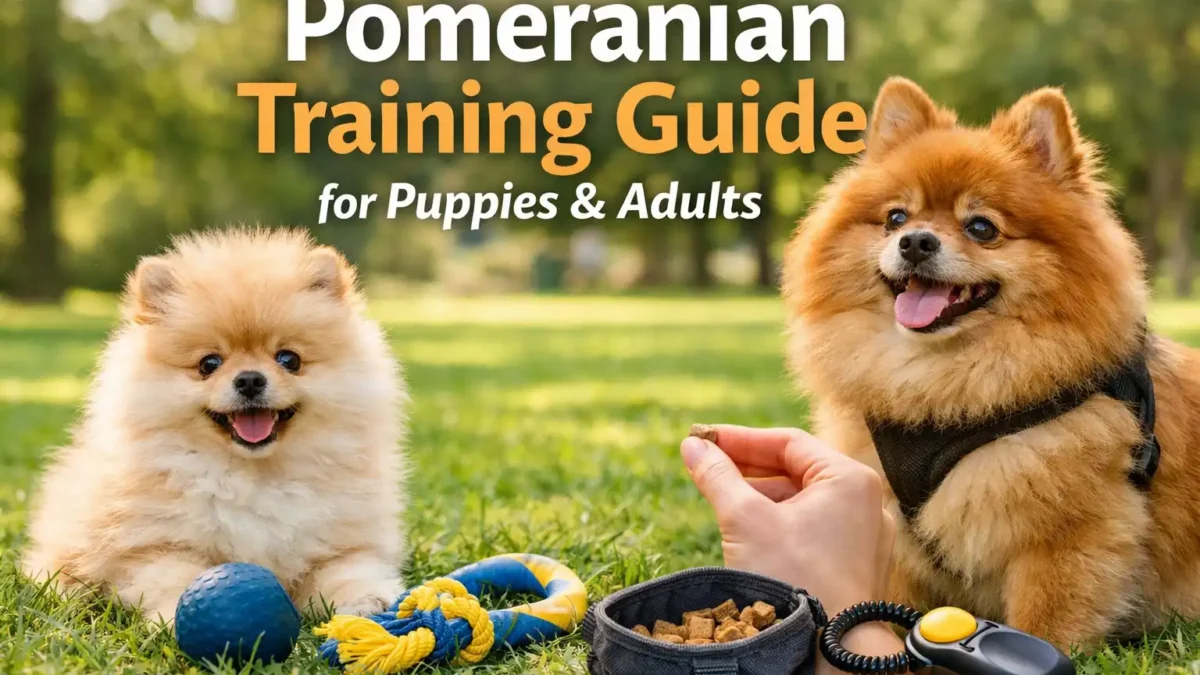
Pomeranian Training Guide: How to Train Puppies and Adult Dogs
Pomeranians may be small in size, but they have big personalities. They are intelligent, alert, and confident dogs, which makes training both rewarding and, at times, challenging. Many owners assume that because pomeranians are small and cute, training is optional. In reality, proper training is essential for helping them become calm, well-mannered, and confident companions.
This pomeranian training guide is designed for both puppy owners and those with adult dogs who may have missed early training. It focuses on practical, everyday training that fits into real homes, including busy households and families with other pets. The goal is not perfection, but consistency and understanding.
By the end of this guide, you will understand how pomeranians learn, why certain behaviours develop, and how to train your dog step by step using clear, kind, and effective methods. Whether you are dealing with barking, house training issues, or basic obedience, this guide gives you a strong foundation to train your pomeranian with confidence.
Why Training a Pomeranian Matters
Training a pomeranian is not just about teaching tricks. It is about safety, good behaviour, and building a strong bond between you and your dog. Because pomeranians are small, many owners ignore training problems at first. Over time, these small problems can turn into big habits.
Here is why training really matters for this breed:
- pomeranians are very confident and can try to control situations
- barking can become excessive if limits are not set early
- untrained small dogs can become fearful or aggressive
- good training makes daily life calmer and easier
- trained dogs feel more secure and less stressed
Training also helps prevent what many people call “small dog syndrome.” This happens when a small dog is allowed to do things a larger dog would never be allowed to do. Clear rules help your pomeranian understand what is expected and reduce confusion.
Good training is not about being strict or harsh. It is about being clear, patient, and consistent. When a pomeranian knows what behaviour brings rewards, they learn faster and behave better.
Understanding Pomeranian Behaviour and Learning Style
To train a pomeranian well, you first need to understand how they think and learn. Pomeranians are smart dogs. They learn quickly, but they also like to make their own choices. This is why some owners think their dog is stubborn, when the dog is actually just confident.
Here are some key traits that affect training:
- pomeranians are intelligent and alert
- they learn fast when rewards are clear
- they can ignore commands if training is not consistent
- they are sensitive to tone and mood
- harsh words can make them fearful or defensive
Pomeranians respond best to calm voices, short training sessions, and rewards like treats, praise, or play. Yelling or repeating commands many times usually makes training slower, not faster.
Training also feels different depending on your dog’s age. Puppies and adult pomeranians do not learn in the same way.
| Training factor | Pomeranian puppy | Adult pomeranian |
|---|---|---|
| attention span | very short | longer but selective |
| learning speed | fast but forgetful | slower but more stable |
| common mistakes | overexcitement | ignoring commands |
| training focus | basics and habits | fixing old behaviours |
Understanding these differences helps you set realistic goals. When your expectations match your dog’s ability, training becomes less stressful for both of you.
Step-by-Step Pomeranian Training Method
Training a pomeranian works best when it is simple, short, and consistent. This breed learns fast, but they can also get bored quickly. Small steps done every day bring the best results.
Before starting, keep these basic rules in mind:
- train for 5 to 10 minutes at a time
- train 1 to 3 times a day
- always reward good behaviour right away
- use the same words for commands
- stay calm and patient
Here is a simple training plan to follow:
| Training goal | What to do | How often | Expected progress |
|---|---|---|---|
| house training | take outside after meals and naps | every day | 2–4 weeks |
| sit and stay | reward when your dog sits calmly | daily | 1–2 weeks |
| come when called | call name and reward instantly | daily | 2–3 weeks |
| leash walking | reward walking beside you | daily walks | 3–4 weeks |
| barking control | reward quiet moments | daily | gradual improvement |
Start with one or two goals only. Do not try to teach everything at once. When your pomeranian does something right, reward them immediately with a treat, praise, or gentle play. Timing is very important. If the reward comes late, your dog may not understand what they did right.
If your dog ignores a command, do not shout or repeat it many times. Instead, pause, get their attention, and try again later. Training should feel positive, not stressful.
Common Pomeranian Training Problems and Solutions
Even with good training, pomeranians can develop problems. This is normal, especially for first-time owners. The key is to understand why the problem happens and how to fix it calmly.
Here are the most common issues and what you can do:
| Problem | Likely cause | What to do |
|---|---|---|
| too much barking | boredom or alert nature | reward quiet moments and add more play |
| ignoring commands | training not consistent | use the same words and reward faster |
| separation stress | strong attachment | practise short alone times slowly |
| fear of strangers | poor social exposure | introduce new people gently |
| toilet accidents | missed routine | take outside more often and reward success |
One mistake many owners make is expecting fast results. Pomeranians need time to build habits. If a problem comes back, it does not mean training failed. It usually means your dog needs more practice or clearer rules.
Stay patient and keep sessions short. Small improvements every week are a good sign that training is working.
For further guidance on positive, reward-based dog training, you can explore the which explain humane training methods in simple language for everyday dog owners: https://www.aspca.org/pet-care/dog-care/dog-training-basics.
Related Article
Pomeranian Dog Full Guide: Temperament, Care & Cost 2026
[…] Pomeranian Dog General Training Guides […]