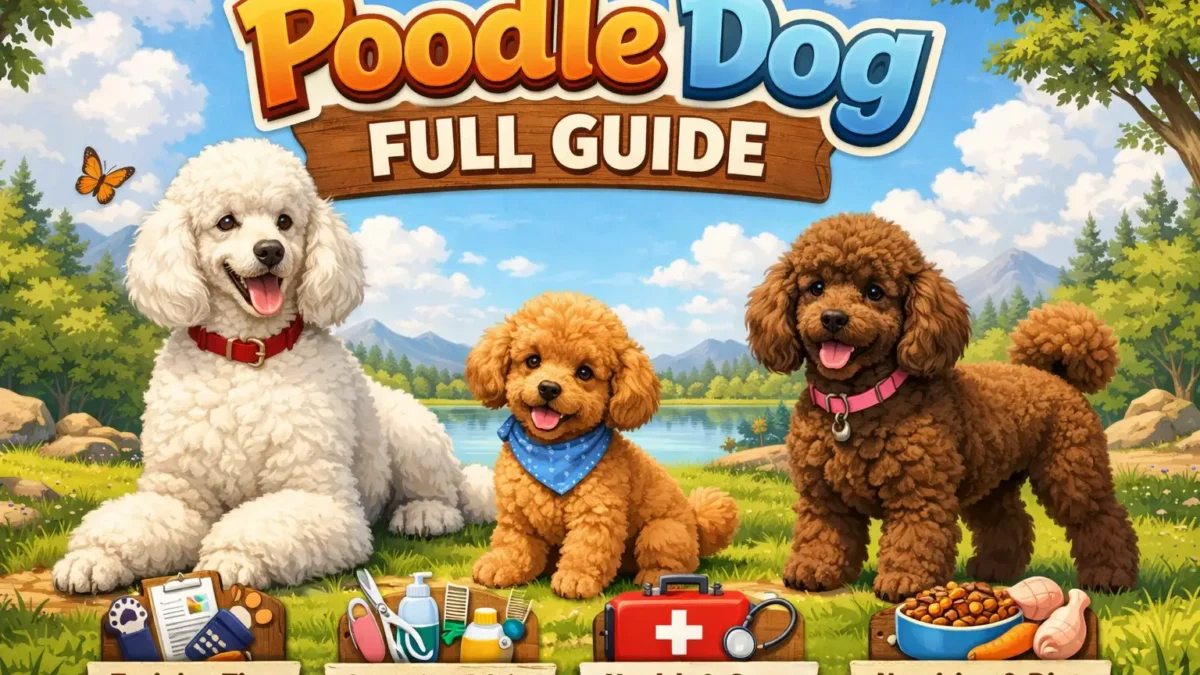
Poodle Dog: Complete Breed Guide, Temperament, Size, Care & Costs
The Poodle dog is one of the most intelligent, versatile, and misunderstood dog breeds in the world. Often stereotyped as a glamorous show dog, the Poodle is, in reality, a highly capable working breed with deep historical roots, strong athletic ability, and exceptional problem-solving skills. This combination of brains, beauty, and adaptability is what has kept the Poodle consistently popular across families, competitors, and professionals alike.
Despite being widely associated with France, the Poodle’s true origins trace back to Germany, where the breed was developed as a water retriever. The name itself comes from the German word “Pudel,” meaning “to splash,” which reflects the dog’s original role retrieving waterfowl from lakes and marshes. French hunters later refined the breed, popularized its distinctive grooming styles, and elevated it to national-dog status—hence the common confusion about its country of origin.
This working background explains many modern Poodle traits that surprise first-time owners. Poodles were bred to think independently in challenging environments, follow complex hand signals, and work closely with humans for long periods. As a result, today’s Poodles are not only quick learners but also emotionally perceptive, highly alert, and deeply bonded to their people. These traits make them outstanding companions—but they also mean the breed does poorly when under-stimulated or treated as purely ornamental.
Modern Poodles are recognized in three size varieties: Standard, Miniature, and Toy. Importantly, these are not separate breeds but variations of the same dog, sharing the same intelligence, temperament tendencies, and coat type. The primary differences lie in physical size, energy output, and suitability for certain living environments. Standard Poodles retain the strongest connection to the breed’s working roots, while Miniature and Toy Poodles were developed later to suit urban life and companionship without sacrificing intelligence.
Understanding the Poodle’s origin is essential to understanding the dog itself. This is a breed that thrives when given purpose, structure, and mental engagement. Whether living in an apartment or a house with a yard, the Poodle is not content being a passive pet. Its history as a working retriever still lives on—in its movement, its focus, and its need to interact meaningfully with the world around it.
Poodle Dog Size, Appearance, and Coat Type
Poodles come in different sizes, but all of them share the same elegant look and smart expression. Knowing the size, body shape, and coat type helps people choose the right Poodle for their home and lifestyle.
Poodle Sizes at a Glance
There are three Poodle sizes, and the difference is mainly height and weight—not personality.
| Poodle Size | Height Range | Weight Range | Best Living Setup |
|---|---|---|---|
| Standard Poodle | Over 15 inches | 40–70 pounds | Houses, active homes |
| Miniature Poodle | 10–15 inches | 10–15 pounds | Apartments or houses |
| Toy Poodle | Under 10 inches | 4–7 pounds | Apartments, small homes |
Standard Poodles are the largest and most athletic. Miniature and Toy Poodles are smaller but still energetic and smart.
Body Shape and Movement
Poodles have a lean, athletic body. They are not heavy or bulky dogs. Their legs are long, their chest is deep, and their posture looks proud and balanced. When a Poodle walks or runs, the movement is smooth and light, not clumsy.
This body shape comes from their history as water dogs. They were built to swim, jump, and move quickly.
Coat Type and Texture
The Poodle’s coat is one of its most famous features.
- The coat is curly and dense
- Some Poodles have a corded coat, where curls form rope-like strands
- Hair keeps growing and does not fall out the same way as other breeds
Because of this, Poodles are often called low-shedding, but this does not mean zero care.
Do Poodles Shed or Cause Allergies?
Poodles shed very little, which is why many people think they are hypoallergenic. While no dog is 100% allergy-free, Poodles are usually a better choice for people with mild allergies because:
- Loose hair stays trapped in the curls
- Less dander spreads around the home
Regular grooming is important to keep the coat clean and healthy.
Poodle Coat Colors
Poodles come in many colors, including:
- White
- Black
- Brown
- Apricot
- Cream
- Red
- Gray
Some colors change slightly as the dog grows older, which is normal for this breed.
The Poodle’s size options, clean coat, and graceful look make it easy to see why the breed fits many homes and lifestyles.
Poodle Dog Temperament, Personality, and Behavior
Poodles are known as one of the smartest dog breeds in the world. But they are not just smart—they are also very emotional, alert, and people-focused dogs. This means they do best when they are treated as part of the family, not just as pets.
What Poodles Are Like in Daily Life
Poodles love to be around their owners. They enjoy learning new things and like having a job to do, even if that job is just playing games or going on walks. Because they are so smart, they can get bored easily if nothing is happening around them.
Here is a simple look at common Poodle personality traits and what they mean in real life:
| Trait | Level | What This Means for Owners |
|---|---|---|
| Intelligence | Very High | Learns fast, needs mental games |
| Energy | Medium to High | Needs daily walks and play |
| Affection | High | Loves being close to family |
| Sensitivity | High | Responds best to kind training |
| Alertness | Medium | Notices sounds and strangers |
Behavior With Family and Children
Poodles are usually very loving with family members. They often form a strong bond with one person but still stay friendly with everyone in the home.
With children, Poodles can be gentle and playful when:
- Children are taught to be calm and kind
- Play is supervised, especially with small Poodles
Standard Poodles are stronger and better for active kids. Toy Poodles are more fragile and need gentle handling.
Behavior With Strangers and Barking
Poodles are naturally alert dogs. They may bark when someone new comes to the door. This does not mean they are aggressive. Most Poodles warm up once they see there is no danger.
Early social time with new people helps reduce fear or nervous barking later in life.
Behavior With Other Pets
Most Poodles do well with:
- Other dogs
- Cats (especially if raised together)
They usually do not have a strong hunting drive, but early training helps keep calm behavior around smaller animals.
Separation Anxiety and Being Alone
Because Poodles love their people, some may struggle when left alone for long hours. Signs can include:
- Barking
- Chewing
- Restlessness
Teaching a Poodle to be calm alone and giving them toys or puzzles can help a lot.
Overall, Poodles are best for people who enjoy interaction, learning, and daily engagement with their dog.
Poodle Dog Care, Exercise, Training, and Health
Taking care of a Poodle is very rewarding, but it does require time and attention. Poodles are smart dogs, and they need both body exercise and brain exercise to stay happy and healthy.
Daily Exercise and Mental Needs
Poodles need daily movement. The amount depends on their size, but all Poodles enjoy being active.
- Standard Poodles need longer walks and active play
- Miniature Poodles enjoy walks, games, and short runs
- Toy Poodles need less space but still need daily play
Mental exercise is just as important. Puzzle toys, training games, and learning new tricks help prevent boredom.
Here is a simple look at daily care needs:
| Care Area | Need Level | What It Means |
|---|---|---|
| Exercise | Medium to High | Daily walks and play |
| Mental Stimulation | High | Games, toys, training |
| Training | Easy to Moderate | Learns fast with kindness |
| Grooming | High | Regular brushing and trims |
Training a Poodle
Poodles are very easy to train because they learn quickly. They enjoy pleasing their owners and doing tasks.
Training works best when:
- Lessons are short and fun
- Praise and treats are used
- Harsh punishment is avoided
Because they are sensitive, yelling or rough handling can make a Poodle scared or nervous.
Grooming and Clean Care
Poodles do not shed much, but their hair keeps growing. This means grooming is very important.
Basic grooming includes:
- Brushing several times a week
- Professional grooming every 4 to 8 weeks
- Cleaning ears to prevent infection
- Trimming nails and brushing teeth
If grooming is skipped, the coat can become tangled and painful.
Health and Lifespan
Poodles are generally healthy dogs, but like all breeds, they can have some health problems.
Most Poodles live 12 to 15 years, and smaller Poodles often live longer.
Common health concerns include:
| Health Issue | Seen In | Simple Notes |
|---|---|---|
| Hip Problems | Standard Poodles | Affects movement |
| Eye Issues | All sizes | Regular eye checks help |
| Ear Infections | All sizes | Due to floppy ears |
| Dental Problems | Toy Poodles | Needs regular cleaning |
Regular vet visits, good food, and proper care help Poodles live long and healthy lives.
Poodles do best with owners who enjoy daily routines and spending time with their dog.
Is the Poodle Dog Right for You? Cost, Pros & Cons, and Alternatives
Before choosing a Poodle, it is important to know if this breed truly fits your lifestyle. Poodles are wonderful dogs, but they are not the best choice for everyone.
Who Poodles Are Best For
Poodles do very well with people who:
- Want a smart and trainable dog
- Enjoy spending time with their pet every day
- Are okay with regular grooming
- Like teaching tricks or playing games
They can live happily in:
- Family homes
- Apartments (Miniature and Toy Poodles)
- Homes with seniors
- Active homes with daily walks
Poodles may struggle in homes where they are left alone for long hours every day.
Cost to Own a Poodle Dog
Poodles are not cheap dogs to own, mainly because of grooming and health care.
Here is a simple cost overview:
| Cost Type | What to Expect |
|---|---|
| Puppy Price | Medium to high, depends on breeder |
| Grooming | Regular cost every month |
| Food | Medium |
| Vet Care | Medium |
| Training | Low to medium |
The grooming cost is usually the biggest long-term expense.
Poodle Pros and Cons
Here is a quick look at the good and challenging sides of owning a Poodle:
| Pros | Cons |
|---|---|
| Very intelligent | Needs mental activity |
| Easy to train | Can get bored easily |
| Low shedding | Grooming takes time |
| Good family dog | Sensitive to harsh treatment |
| Lives long | May develop separation anxiety |
Similar Breeds to Consider
Some people also look at breeds similar to Poodles. Here is a quick comparison:
| Breed | Grooming Needs | Energy Level | Best For |
|---|---|---|---|
| Poodle | High | Medium to High | Smart, active owners |
| Labradoodle | Medium to High | High | Families |
| Portuguese Water Dog | High | High | Very active homes |
| Bichon Frise | High | Medium | Small homes, seniors |
Each breed has its own strengths, so it is good to compare before deciding.
Final Thoughts
The Poodle dog is a smart, loving, and loyal companion. This breed is best for people who want an active relationship with their dog and are ready for regular grooming and daily interaction.
If you want a dog that learns fast, stays close to family, and fits many living spaces, a Poodle may be a great choice.
For more detailed and official breed information, standards, and care tips, you can visit the American Kennel Club’s Poodle breed page here: https://www.akc.org/dog-breeds/poodle-standard