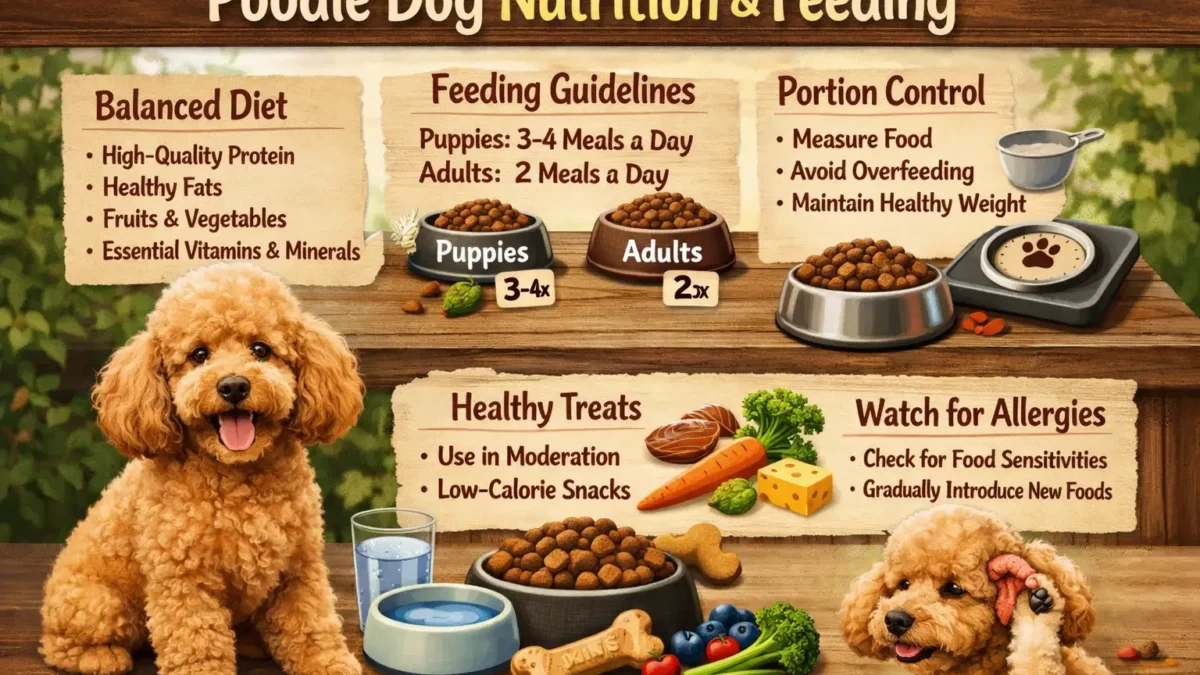
Poodle Dog Nutrition & Feeding Guide
Poodles are smart, active dogs with unique health needs. What you feed them affects their energy, digestion, coat quality, and how well they age. A good diet helps prevent common problems like allergies, weight gain, and dull coats.
This guide is made to help you choose the right food and feeding style for your Poodle—whether you have a Toy, Miniature, or Standard. It focuses on simple rules you can follow every day, not confusing science.
Why Poodles need the right diet
- Poodles often have sensitive digestion and skin
- They have fast metabolisms, especially smaller sizes
- Their curly coat depends on good fats and protein
- They can gain weight easily if overfed
Even small feeding mistakes can show up as itching, loose stool, low energy, or weight changes.
Poodle sizes and nutrition differences
Poodles come in three sizes, and each one burns calories a bit differently.
| Poodle Size | Typical Weight | Metabolism | Common Nutrition Issues |
|---|---|---|---|
| Toy Poodle | 4–6 lbs (2–3 kg) | Very fast | Low blood sugar, picky eating |
| Miniature Poodle | 10–15 lbs (4.5–7 kg) | Moderate | Sensitive stomach, allergies |
| Standard Poodle | 40–70 lbs (18–32 kg) | Slower | Joint stress, weight gain |
Smaller Poodles usually need more frequent meals, while Standard Poodles need careful portion control to avoid obesity.
What this means for feeding
- One-size-fits-all feeding does not work for Poodles
- Quality matters more than large portions
- Small changes in diet can make a big difference
Getting the basics right sets the foundation for everything else—nutrients, portions, food choices, and special diets.
What Nutrients Poodles Need for Optimal Health
Poodles stay healthy when their food gives them the right balance of nutrients. These nutrients help with muscle strength, digestion, skin, coat, and energy. Too little or too much of one nutrient can cause problems over time.
You do not need to be a nutrition expert. You just need to understand the basics.
Main nutrients Poodles need every day
Poodles need three main types of nutrients in their food.
| Nutrient | Why it matters for Poodles | Simple signs of a problem |
|---|---|---|
| Protein | Builds muscles, supports immune system, keeps coat strong | Weak muscles, dull coat |
| Fat | Gives energy, supports skin and coat health | Dry skin, low energy |
| Carbohydrates | Helps digestion and provides steady energy | Loose stool if too much |
Protein should come from animal sources like chicken, lamb, fish, or turkey. Poodles do best with moderate to high protein, not extremely high levels.
Healthy fats are very important for Poodles because of their curly coat and sensitive skin.
Important vitamins and minerals for Poodles
Poodles also need small amounts of vitamins and minerals to stay healthy.
| Nutrient | What it helps with |
|---|---|
| Omega-3 & Omega-6 | Skin health, shiny coat, less itching |
| Calcium & Phosphorus | Strong bones and teeth |
| Zinc | Skin repair and immune health |
| Vitamin E | Skin protection and cell health |
Most good-quality dog foods already contain these. Extra supplements are usually not needed unless a vet suggests them.
Common nutrition sensitivities in Poodles
Many Poodles are sensitive to certain foods. This does not mean they are allergic, but their stomach or skin may react.
Common signs of sensitivity:
- Itchy skin or frequent licking
- Loose stool or gas
- Ear infections
- Picky eating
Some Poodles do better with:
- Simple ingredient foods
- One main protein source
- Avoiding too many fillers
Nutrition is about balance, not extremes. A steady, well-balanced diet keeps Poodles feeling good and looking healthy.
How Much to Feed a Poodle and How Often
Feeding the right amount is just as important as choosing the right food. Too much food can lead to weight gain. Too little can cause low energy and health problems. The goal is to feed just enough for your Poodle’s size, age, and activity level.
Daily calorie needs for Poodles
Poodles need different calories based on their size and weight. Use this table as a starting point. These are daily totals, not per meal.
| Poodle Size | Weight Range | Daily Calories (approx.) |
|---|---|---|
| Toy Poodle | 4–6 lbs | 150–250 calories |
| Miniature Poodle | 10–15 lbs | 350–550 calories |
| Standard Poodle | 40–70 lbs | 1,000–1,600 calories |
Active Poodles may need more. Calm or indoor Poodles may need less.
How often to feed a Poodle
Feeding schedules help with digestion and energy.
| Life Stage | Meals Per Day |
|---|---|
| Puppy (up to 6 months) | 3–4 meals |
| Adult | 2 meals |
| Senior | 2 smaller meals |
Toy Poodles may need smaller meals more often to avoid low blood sugar.
Using body condition to adjust food
Instead of only trusting the bag label, look at your dog’s body.
| Body Condition | What you should notice |
|---|---|
| Underweight | Ribs very easy to see, low energy |
| Ideal | Ribs easy to feel, clear waist |
| Overweight | No waist, ribs hard to feel |
If your Poodle is gaining weight, reduce food slightly. If losing weight, increase slowly.
Helpful feeding tips
- Measure food with a cup or scale
- Do not free-feed all day
- Adjust food after changes in activity
- Treats count as calories
Feeding the right amount keeps your Poodle active, healthy, and comfortable.
Best Food Choices for Poodles: What to Feed and What to Avoid
Choosing the right food helps your Poodle stay healthy, active, and comfortable. There is no single “best” food for all Poodles, but some choices work better than others depending on age, size, and health.
Types of dog food for Poodles
Different food types have different benefits. This table helps you compare them.
| Food Type | Pros | Cons | Best for |
|---|---|---|---|
| Dry food (kibble) | Easy to store, good for teeth, affordable | Some brands use fillers | Most healthy Poodles |
| Wet food (canned) | Tasty, good for hydration | More expensive, soft texture | Picky eaters, seniors |
| Fresh food | High quality, real ingredients | Costly, short shelf life | Sensitive stomachs |
| Raw food | High protein, shiny coat | Safety risks if not handled right | Only with vet guidance |
| Homemade food | Full control of ingredients | Hard to balance nutrients | Only with vet recipe |
Most owners do well with a high-quality kibble that meets AAFCO standards, sometimes mixed with a little wet or fresh food.
Grain-free vs grain-inclusive food
Grain-free food is not always better. Many Poodles digest grains like rice or oats just fine.
Grain-free may help:
- Some dogs with allergies
- Dogs sensitive to certain grains
Grain-inclusive may be better for:
- Most healthy Poodles
- Dogs without food reactions
Always focus on ingredient quality, not marketing words.
Safe foods and foods to avoid
Some human foods are safe in small amounts. Others are dangerous.
| Safe foods (small amounts) | Foods to avoid |
|---|---|
| Cooked chicken | Chocolate |
| Plain rice | Grapes and raisins |
| Carrots | Onions and garlic |
| Apples (no seeds) | Xylitol (sugar substitute) |
| Plain pumpkin | Alcohol |
Never feed spicy, salty, or sugary foods.
Treat and water tips
- Treats should be less than 10% of daily calories
- Use small treats for training
- Always provide fresh, clean water
- Dry food dogs still need plenty of water
Good food choices help prevent many health problems before they start.
Special Diets, Common Feeding Problems, and Practical Feeding Tips
Some Poodles need special feeding plans. Others have small feeding problems that are very common. The good news is that most of these issues can be fixed with simple changes.
Special diets for Poodles
Some Poodles need extra care with food.
| Condition | Diet focus | What to avoid |
|---|---|---|
| Food allergies | Limited ingredients, single protein | Multiple proteins, fillers |
| Sensitive stomach | Easy-to-digest foods | Sudden food changes |
| Overweight | Lower calories, high fiber | Free feeding, extra treats |
| Senior Poodles | Moderate protein, joint support | Very high-fat foods |
| Very active Poodles | Higher calories | Low-energy diets |
Always make diet changes slowly to avoid stomach upset.
Common feeding problems and solutions
| Problem | Likely cause | Simple fix |
|---|---|---|
| Poodle won’t eat | Too many treats, stress | Reduce treats, keep routine |
| Loose stool | Fast food switch | Change food slowly |
| Weight gain | Overfeeding | Measure food |
| Always hungry | Boredom, low fiber | Add fiber, more play |
| Gas | Poor digestion | Simpler ingredients |
Safe food switching tips
- Change food over 7–10 days
- Mix old and new food slowly
- Watch stool and appetite
- Stop and slow down if problems appear
When to see a vet
- Long-term weight loss or gain
- Ongoing vomiting or diarrhea
- Severe itching or skin problems
- Sudden loss of appetite
Feeding your Poodle does not need to be stressful. Simple routines and balanced food choices go a long way.
For more detailed standards on balanced dog food and feeding guidelines, you can also refer to the Association of American Feed Control Officials (AAFCO), which sets the nutritional rules most quality dog foods follow.