Pug Dog Age Calculator to Human Years (Age Chart Explained)
Pug Dog Age Calculator to Human Years
If you’ve ever wondered how old your Pug is in human years, you’re not alone. Pugs age very differently from humans, especially during their early years, which is why a Pug-specific dog age calculator is far more accurate than using general dog-age rules.
This calculator converts your Pug’s age into a realistic human-age equivalent by accounting for how quickly Pugs mature as puppies and how their aging slows as adults. Instead of relying on outdated myths, it reflects modern veterinary understanding of canine aging—particularly for small, brachycephalic breeds like Pugs.
To understand how this calculator works, it helps to first see how Pug aging progresses across different life phases.
How Pug Age Is Calculated
| Pug Age Range | Aging Speed | Human Age Comparison |
|---|---|---|
| 0–1 year | Very rapid growth | From infancy to teenage years |
| 1–2 years | Fast maturation | Late teens to early 20s |
| 3+ years | Gradual aging | Steady adult aging |
In the first year of life, a Pug matures extremely fast—physically and developmentally—reaching a stage comparable to a human teenager. After the first two years, aging slows and becomes more gradual, which is why older Pugs don’t “age seven years” every birthday.
Using this calculator, you can quickly estimate your Pug’s age in human years and then use the age chart below to see where your dog falls in terms of life stage, health needs, and care priorities.
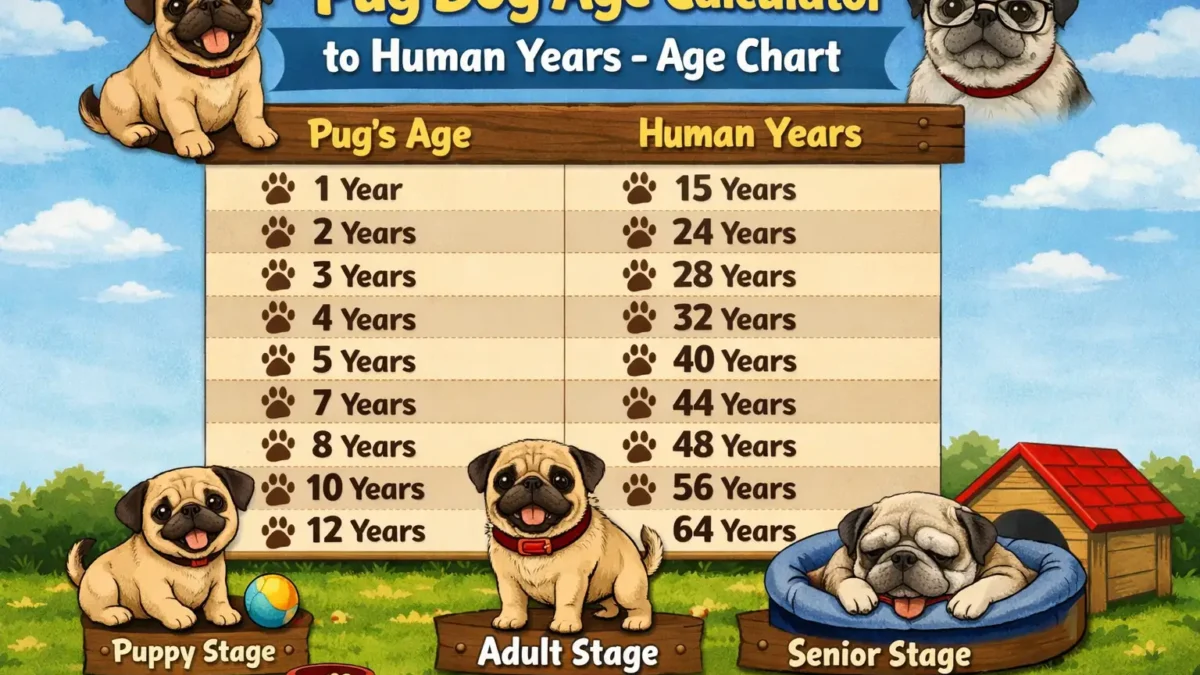
Pug Age to Human Years Chart
This Pug age to human years chart gives you a quick and easy way to understand how old your Pug is in human terms. Instead of guessing or using the old 7-year rule, this chart shows a more realistic comparison based on how Pugs actually age.
You can simply find your Pug’s age in years and see the closest human age and life stage. This makes it easier to understand your dog’s behavior, energy level, and health needs.
Pug Dog Age to Human Age Chart
| Pug Age (Years) | Human Age Equivalent | Life Stage |
|---|---|---|
| 1 | About 15 years | Puppy |
| 2 | About 24 years | Young adult |
| 3 | About 28 years | Adult |
| 4 | About 32 years | Adult |
| 5 | About 36 years | Adult |
| 6 | About 40 years | Mature adult |
| 7 | About 44 years | Mature adult |
| 8 | About 48 years | Mature |
| 9 | About 52 years | Mature |
| 10 | About 56 years | Senior |
| 11 | About 60 years | Senior |
| 12 | About 64 years | Senior |
| 13 | About 68 years | Senior |
This chart shows that Pugs age quickly in their early years and then age more slowly as adults. For example, a 2-year-old Pug is already similar to a young adult human, while a 10-year-old Pug is closer to a human in their mid-50s.
Remember, this chart is an estimate. Things like weight, diet, exercise, and overall health can affect how fast a Pug ages.
Why the 7-Year Rule Does Not Work for Pugs
You may have heard that 1 dog year equals 7 human years, but this rule is too simple and not correct—especially for Pugs.
Dogs do not age at the same speed throughout their lives. Pugs grow very fast as puppies, then their aging slows down as they get older. Humans age slowly as children and then steadily as adults. Because these patterns are different, a straight “multiply by 7” rule does not match real life.
Here’s why the 7-year rule fails for Pugs:
- Pugs reach adult size and maturity much earlier than humans
- The first two years of a Pug’s life equal many human years
- After early adulthood, Pugs age more slowly than the rule suggests
- Small breeds like Pugs age differently than large dogs
Simple Comparison
| Method | What It Assumes | Why It’s Not Accurate |
|---|---|---|
| 7-year rule | Dogs age evenly every year | Dogs age fast early, slow later |
| Modern method | Aging changes over time | Matches how Pugs really age |
For example, using the 7-year rule, a 2-year-old Pug would be only 14 in human years. In reality, that Pug is closer to a 24-year-old human. This big difference is why many owners feel confused when their young Pug acts like an adult already.
Modern age calculators use changing aging speed, not a fixed number. This gives a much better idea of your Pug’s real life stage.
Pug Life Stages and What Each Age Means
Knowing your Pug’s age in human years is helpful, but it’s even more important to understand what that age means in daily life. Pugs go through clear life stages, and each stage comes with different needs, energy levels, and health changes.
Below is a simple breakdown of Pug life stages, so you can easily see what to expect as your dog grows older.
Pug Life Stages and Aging Milestones
| Pug Age | Life Stage | What You May Notice |
|---|---|---|
| 0–1 year | Puppy | Fast growth, high energy, learning basic training |
| 2–4 years | Young adult | Very playful, strong, curious |
| 5–7 years | Adult | Calmer behavior, steady routine |
| 8–9 years | Mature | Less energy, more rest time |
| 10+ years | Senior | Slower movement, more sleep, health checks needed |
Puppy Pugs (0–1 year) grow very fast. This is when training, social skills, and healthy habits are most important.
Adult Pugs (2–7 years) are usually active but more settled. This is often their healthiest time of life.
Senior Pugs (8+ years) may slow down. You might notice stiffness, weight gain, or changes in hearing and vision. These are normal signs of aging, but they should always be watched closely.
Understanding these stages helps you care for your Pug in the right way at the right time.
How to Help Your Pug Live a Longer, Healthier Life
Knowing your Pug’s age is useful, but how you care for your Pug matters even more. Small daily habits can help your Pug stay healthy, active, and comfortable as they grow older.
Here are simple and easy ways to support your Pug at every age.
Age-Based Care Tips for Pugs
| Pug Age | Main Focus | Simple Care Tips |
|---|---|---|
| Puppy | Growth and learning | Regular vet visits, gentle training, healthy food |
| Adult | Weight and activity | Daily walks, portion control, playtime |
| Senior | Comfort and health | Soft bedding, joint care, more vet checkups |
Healthy weight is very important for Pugs. Extra weight puts stress on their joints and makes breathing harder. Feeding the right amount and avoiding too many treats can help your Pug live longer.
Exercise should match your Pug’s age. Young Pugs enjoy play and short walks. Older Pugs still need movement, but slower walks are better.
Vet visits matter more as your Pug ages. Senior Pugs should see the vet more often to catch health problems early.
Comfort at home helps senior Pugs. Soft beds, easy access to water, and a calm routine make a big difference.
By understanding your Pug’s age and giving the right care, you can improve both their quality of life and lifespan.
For more trusted, breed-specific health and lifespan information, you can also visit the American Kennel Club’s official Pug breed profile, which offers veterinary-reviewed insights on Pug care, health concerns, and longevity.