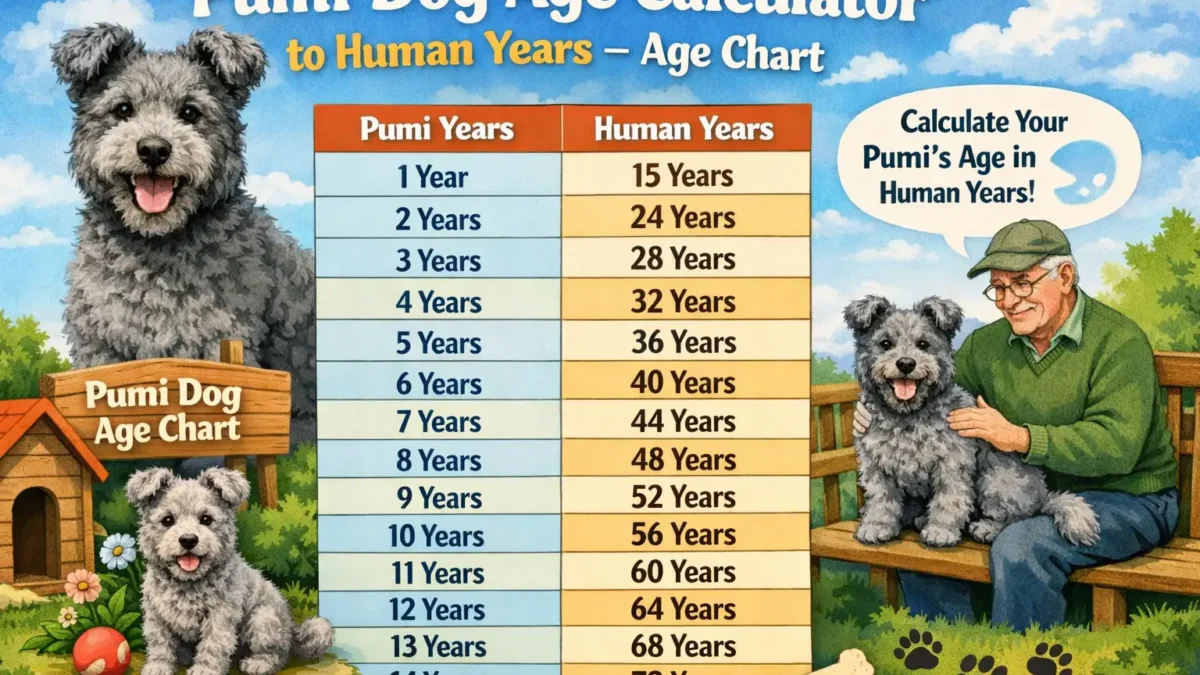
Pumi Dog Age Calculator: Convert Pumi Years to Human Years (Age Chart)
Understanding how a Pumi dog ages compared to a human is the foundation of any accurate age calculator. Dogs and humans do not age at the same pace, and the difference is especially noticeable during a dog’s early years.
Why dog years don’t match human years
The common idea that one dog year equals seven human years is outdated and misleading. Dogs mature much faster than humans in their first years of life, then age more slowly as adults. A one-year-old Pumi is already comparable to a young adult human, not a seven-year-old child.
How Pumi aging is different from human aging
Pumi dogs:
- Reach physical maturity within their first 1–2 years
- Experience rapid biological aging early in life
- Age more gradually during adulthood
- Enter senior years earlier than humans on a calendar basis
Humans, by contrast, develop slowly over decades, with aging spread more evenly across the lifespan.
Why breed size matters for aging
The Pumi is considered a medium-sized dog, and size plays a major role in how dogs age:
- Medium breeds age more slowly than large and giant breeds
- They typically live longer than large dogs
- Their senior years arrive later than in giant breeds but earlier than in small breeds
This size-based aging pattern is why a breed-aware age calculator is far more accurate than generic dog-age formulas.
What this means for Pumi owners
When you calculate your Pumi’s age in human years, the result reflects:
- Faster aging in puppyhood
- A long, stable adult phase
- Gradual changes as your dog reaches senior status
This is why a 5-year-old Pumi may feel “middle-aged” rather than old, while a 10-year-old Pumi is clearly entering senior territory.
Pumi Dog Age Calculator: Convert Pumi Years to Human Years
A Pumi dog age calculator helps you understand how old your dog is in human years. Instead of using guesswork, this calculator follows how dogs actually grow and age.
This section explains the idea behind the calculator in simple terms, so anyone can understand how the result is reached.
How the Pumi age calculator works (simple explanation)
Dogs age very fast in their first years and much slower later in life. Because of this, the calculator does not multiply your dog’s age by a fixed number. Instead, it adjusts the result based on how dogs age at different stages.
The Pumi is a medium-sized breed, so the calculator uses aging patterns that match medium dogs, not small or giant breeds.
What information the calculator uses
The calculator looks at a few basic things to give a realistic result:
| Calculator Input | What It Means |
|---|---|
| Pumi’s age | Your dog’s real age in years |
| Breed size | Medium-sized dog (Pumi) |
| Aging pattern | Fast early aging, slower adult aging |
| Final result | Estimated human-age equivalent |
You simply enter your Pumi’s age, and the calculator shows what that age means in human years.
Why this method is more accurate
This approach works better than the old “7-year rule” because:
- Puppies mature much faster than humans
- Adult dogs stay healthy for many years
- Aging slows down after early adulthood
That is why a 2-year-old Pumi is already like a young adult human, while a 7-year-old Pumi is closer to middle age, not elderly.
This calculator gives you a realistic age, not an exaggerated one.
What this number helps you understand
Knowing your Pumi’s human-age equivalent helps you:
- Choose the right food
- Adjust exercise levels
- Plan vet checkups
- Spot early signs of aging
Pumi Dog Age Chart (Dog Years to Human Years)
Many readers prefer a quick chart instead of using a calculator every time. This Pumi dog age chart lets you see your dog’s age in human years at a glance.
Remember, these numbers are estimates, not exact math. They follow how medium-sized dogs like the Pumi grow and age over time.
Pumi dog age to human age chart
| Pumi Age (Dog Years) | Human Age Equivalent | Life Stage |
|---|---|---|
| 1 year | About 15 years | Puppy / Teen |
| 2 years | About 24 years | Young Adult |
| 3 years | About 28 years | Adult |
| 4 years | About 32 years | Adult |
| 5 years | About 36 years | Adult |
| 6 years | About 40 years | Adult |
| 7 years | About 44 years | Mature Adult |
| 8 years | About 48 years | Mature Adult |
| 9 years | About 52 years | Senior |
| 10 years | About 56 years | Senior |
| 11 years | About 60 years | Senior |
| 12+ years | 64+ years | Senior / Geriatric |
How to read this chart
- Look for your Pumi’s real age on the left
- Move across to see the human age equivalent
- Check the life stage to understand what changes to expect
For example:
- A 2-year-old Pumi is like a young adult human
- A 5-year-old Pumi is similar to a middle-aged adult
- A 10-year-old Pumi is clearly in the senior stage
Why early years count more
You may notice that the jump from 1 to 2 years is bigger than later years. That’s because:
- Puppies grow and mature very fast
- Adult dogs age more slowly year by year
This is normal and happens in most medium-sized dog breeds.
Pumi Dog Life Stages and What Each Age Means
Knowing your Pumi’s life stage helps you understand what your dog needs right now. Even if two dogs are the same age, their needs can change a lot as they grow older.
Below is a simple way to understand what usually happens at each stage of a Pumi’s life.
Pumi life stages explained
| Life Stage | Age Range | What Owners Usually Notice |
|---|---|---|
| Puppy | 0–1 year | Fast growth, lots of energy, learning rules |
| Young Adult | 1–4 years | Very active, strong body, quick learning |
| Adult | 5–8 years | Calm behavior, steady energy, full maturity |
| Senior | 9+ years | Slower movement, more rest, age-related changes |
Puppy stage (0–1 year)
Pumi puppies grow very fast. During this time:
- Bones and muscles develop quickly
- Training and social skills are very important
- Energy levels are very high
This stage sets the base for your dog’s future health.
Adult stage (1–8 years)
Most Pumi dogs spend many years as healthy adults. Owners often notice:
- Strong bodies and sharp minds
- High but more controlled energy
- Stable behavior and habits
This is usually the longest and healthiest stage of a Pumi’s life.
Senior stage (9 years and older)
When a Pumi becomes a senior, changes happen slowly:
- More sleep and less stamina
- Stiffer joints or slower walking
- Possible changes in hearing or sight
Not all senior dogs feel “old,” but care needs often increase with age.
Understanding these stages helps you:
- Adjust food and exercise
- Plan vet visits at the right time
- Notice early signs of aging
Pumi Dog Lifespan, Longevity, and Healthy Aging Tips
Pumi dogs are known for being active, smart, and long-living compared to many other breeds. Knowing their average lifespan helps owners plan better care at every age.
How long do Pumi dogs usually live
Most Pumi dogs live between 12 and 15 years. Some may live longer with good care, while others may age faster due to health or lifestyle factors.
Here is a simple comparison to give you context:
| Dog Type | Average Lifespan |
|---|---|
| Pumi dog | 12–15 years |
| Other medium-sized dogs | 10–14 years |
| Large dog breeds | 8–12 years |
This shows that Pumi dogs often live longer than many medium and large breeds.
What affects a Pumi’s lifespan
Several things can influence how long and how well a Pumi lives:
- Genetics and family history
- Healthy body weight
- Daily exercise and mental activity
- Quality food suited to age
- Regular vet checkups
No dog ages the same way, even within the same breed.
Simple tips to help your Pumi age well
As your Pumi gets older, small changes can make a big difference:
- Keep meals balanced and avoid overfeeding
- Adjust exercise as energy levels change
- Visit the vet more often in senior years
- Watch for changes in movement, vision, or behavior
- Give mental games to keep the brain active
Early care helps reduce age-related problems later.
When to talk to your vet
You should speak with your vet if you notice:
- Sudden weight loss or gain
- Trouble standing or walking
- Big changes in sleep or mood
- Confusion or disorientation
These signs do not always mean serious illness, but they should be checked.
For more detailed and trusted information about the Pumi breed, including history, temperament, and official standards, visit the American Kennel Club’s Pumi breed profile on their website: https://www.akc.org/dog-breeds/pumi/