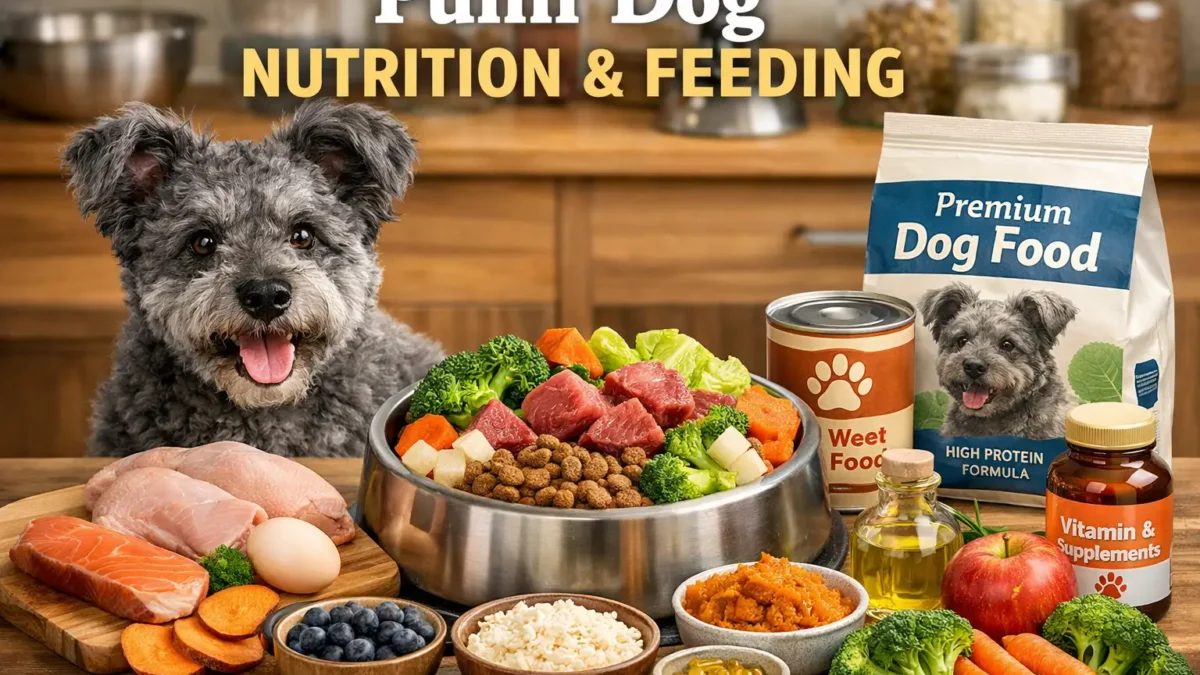
Pumi Dog Nutrition & Feeding: What to Feed, How Much, and Common Feeding Mistakes
Feeding a Pumi dog correctly isn’t just about filling a bowl twice a day — it’s about fueling a high-energy, intelligent herding breed with the right balance of nutrients for long-term health, stamina, and mental sharpness.
Pumis were bred to work. They’re alert, athletic, quick-thinking dogs with faster metabolisms than many companion breeds of similar size. When nutrition is off — even slightly — it often shows up quickly as excess hyperactivity, digestive upset, poor coat quality, stubborn weight gain, or inconsistent energy during training and exercise.
This guide is designed to help you answer the real questions Pumi owners have, such as:
- What should I actually feed my Pumi day to day?
- How do I balance calories for an active but compact dog?
- Why does my Pumi seem hungry all the time — or picky instead?
- How do diet choices affect coat, digestion, and behavior?
Proper nutrition directly influences:
- Energy and endurance for training, agility, and daily activity
- Lean muscle maintenance without unwanted weight gain
- Digestive health and stool quality
- Skin and coat condition
- Long-term joint, metabolic, and immune health
It’s also important to recognize that not all Pumis live the same lifestyle. A Pumi competing in agility or herding trials has very different nutritional needs than one living as a moderately active family dog. Puppies, seniors, neutered dogs, and working adults all require adjustments in food type, portion size, and feeding schedule.
Throughout this article, the focus is on practical, science-aligned feeding decisions — not trends, marketing claims, or one-size-fits-all advice. You’ll learn how to choose appropriate food, how much to feed based on real activity level, and how to spot early signs that your Pumi’s diet needs adjustment before problems develop.
This foundation matters, because when nutrition is right, most Pumis are easier to train, more focused, better conditioned, and healthier over their lifetime.
Best Dog Food for Pumi Dogs (Ingredients, Protein, and Quality)
Choosing the best food for a Pumi dog is not about brands or fancy labels. It is about ingredients, nutrient balance, and how your dog actually responds to the food.
Pumis are active dogs with lean bodies. They need food that supports muscle, steady energy, and good digestion without causing weight gain or stomach problems.
What a good Pumi dog food should provide
A quality diet for a Pumi should:
- Support daily activity and mental work
- Maintain lean muscle, not bulk
- Be easy to digest
- Keep the coat healthy and curly
- Provide steady energy, not spikes and crashes
The most important parts of a dog food label are protein, fat, fiber, and ingredient quality.
Ideal nutrient ranges for Pumi dogs
Below is a general guideline for healthy Pumi dogs. These are not strict rules, but useful targets when comparing foods.
| Nutrient | Recommended Range | Why It Matters for Pumis | Red Flags to Avoid |
|---|---|---|---|
| Protein | 22–28% (dry matter) | Supports lean muscle and endurance | Very low protein or unclear sources |
| Fat | 12–18% | Provides energy for active dogs | Excess fat for low-activity dogs |
| Fiber | 3–6% | Supports digestion and stool quality | Too much fiber causing loose stool |
| Omega fats | Balanced omega-3 & 6 | Skin, coat, and joint health | No omega sources listed |
Understanding the ingredient list (in simple terms)
When reading dog food labels:
- The first few ingredients matter the most
- Look for named animal proteins (like chicken, turkey, lamb, fish)
- Whole grains or vegetables are fine for most Pumis
- Avoid foods that rely heavily on fillers with little nutrition
Common marketing words like “premium,” “natural,” or “holistic” do not guarantee quality. What matters is whether the food is complete and balanced and meets recognized feeding standards.
Grain-free vs grain-inclusive food for Pumis
Most Pumi dogs do well on grain-inclusive diets. Unless your dog has a confirmed grain allergy (which is rare), there is no strong reason to avoid grains.
Grain-free food:
- Is not automatically healthier
- Can be higher in fat and calories
- May not be ideal for every Pumi
Grains like rice or oats can provide safe energy and help digestion when used properly.
Matching food quality to your Pumi’s lifestyle
- Highly active or sport Pumis may need higher protein and fat
- Family or apartment Pumis usually do better with moderate calories
- Seniors may need slightly less fat and more digestible protein
Always judge food quality by how your dog looks and feels:
- Firm stool
- Good energy without restlessness
- Healthy weight
- Shiny coat
If those are present, the food is likely working well.
How Much to Feed a Pumi (Feeding Chart, Calories, and Schedule)
Feeding the right amount is just as important as choosing the right food. Many Pumi dogs are overfed because they are active, smart, and always seem hungry. Others are underfed during busy training or sport seasons.
The goal is simple: steady energy, lean body shape, and good digestion.
Daily calorie needs for Pumi dogs
Pumis burn more energy than many dogs their size, but not all Pumis live the same lifestyle. Use the chart below as a starting point, then adjust based on your dog’s activity and body shape.
| Pumi Weight | Low Activity (cal/day) | Moderate Activity (cal/day) | High Activity / Sport (cal/day) |
|---|---|---|---|
| 20 lbs (9 kg) | 550–650 | 650–750 | 750–900 |
| 25 lbs (11 kg) | 650–750 | 750–850 | 850–1,000 |
| 30 lbs (14 kg) | 750–850 | 850–1,000 | 1,000–1,150 |
These numbers are estimates, not exact rules. Every dog is a little different.
How often to feed a Pumi
Most Pumis do best when food is split into two or more meals per day.
| Life Stage | Meals Per Day | Notes |
|---|---|---|
| Puppy (under 6 months) | 3–4 meals | Supports growth and steady energy |
| Adult Pumi | 2 meals | Helps prevent hunger spikes |
| Senior Pumi | 2 smaller meals | Easier digestion and weight control |
Avoid feeding one large meal per day. It can lead to hunger, poor energy balance, and begging behavior.
Using body shape to adjust food
| Situation | What to Look For | What to Do |
|---|---|---|
| Checking healthy body condition | Visible waist when viewed from above | Maintain current feeding amount |
| Ribs can be felt but not clearly seen | Keep diet and activity consistent | |
| Moves easily without tiring quickly | No changes needed | |
| Pumi gaining weight | Waist not visible, ribs hard to feel | Reduce food by about 10% |
| Extra padding around ribs | Cut back on treats first | |
| Pumi seems thin or tired | Ribs very visible or low energy | Increase food slowly |
| Tires easily during normal activity | Check activity level and overall health |
Common feeding mistakes to avoid
- Feeding based only on the bag label
- Not adjusting food when activity changes
- Giving too many treats during training
- Free-feeding all day
Small daily mistakes add up over time.
Types of Diets for Pumi Dogs (Kibble, Raw, Fresh, and Homemade)
There is no single “perfect” diet for every Pumi. The best choice depends on your dog’s activity level, digestion, health needs, and your daily routine. What matters most is balance, safety, and consistency.
Below are the main diet types Pumi owners use today.
Common diet options for Pumi dogs
| Diet Type | Pros for Pumi Dogs | Cons or Risks | Best For |
|---|---|---|---|
| Dry food (kibble) | Easy to store, balanced, affordable | Quality varies a lot | Most family Pumis |
| Fresh cooked food | Highly digestible, tasty | Higher cost, needs storage | Sensitive stomachs |
| Raw diet | High protein, appealing to some dogs | Safety risks if unbalanced | Experienced owners only |
| Canned food | Very palatable, good hydration | Higher calories per bite | Picky eaters |
| Freeze-dried | Convenient raw-style option | Expensive | Travel or training |
| Homemade | Full ingredient control | Easy to unbalance | Only with guidance |
Kibble for Pumi dogs
Good-quality kibble works well for most Pumis. Look for:
- Clear protein sources
- Moderate fat levels
- Complete and balanced nutrition
Avoid very cheap foods with poor ingredients. They may cause loose stool, low energy, or weight gain.
Fresh and gently cooked food
Fresh food can be helpful for:
- Dogs with digestion problems
- Pumis that refuse dry food
- Owners who want higher moisture meals
Make sure the food is balanced, not just meat and vegetables.
Raw diets for Pumi dogs
Some owners choose raw feeding, but it requires care.
Possible risks include:
- Bacteria exposure
- Bone injuries
- Nutrient imbalance
Raw feeding is not recommended for beginners without professional guidance.
Homemade diets: be careful
Cooking for your Pumi sounds healthy, but many homemade diets lack:
- Calcium
- Trace minerals
- Proper fat balance
If you choose this route, work with a professional to avoid long-term health problems.
Safe and unsafe human foods for Pumi dogs
| Safe in Small Amounts | Unsafe or Toxic |
|---|---|
| Plain chicken | Chocolate |
| Cooked eggs | Grapes and raisins |
| Carrots | Onions and garlic |
| Rice | Xylitol (sweetener) |
| Pumpkin | Alcohol |
Human food should never replace a balanced dog diet.
Common Feeding Problems, Special Diets, and Real Pumi Owner Questions
Even when you choose good food and measure meals, feeding problems can still happen. Pumi dogs are smart, active, and sensitive, so small diet issues can show up fast. The key is to spot problems early and fix them step by step.
Common feeding problems and what to do
| Problem | Possible Reason | What You Can Try | When to See a Vet |
|---|---|---|---|
| Loose stool | Food change too fast, rich food | Slow food switch, simpler diet | If it lasts more than 3–4 days |
| Won’t eat food | Too many treats, boredom | Reduce treats, set meal times | If appetite loss is sudden |
| Always hungry | Underfeeding or high activity | Review calories and treats | If weight keeps dropping |
| Weight gain | Too many calories, low activity | Reduce portions by 10% | If weight gain continues |
| Gas or bloating | Poor digestion | Try easier-to-digest food | If pain or swelling appears |
Special diet needs in Pumi dogs
Some Pumis need extra care with food.
- Sensitive stomachs may need simple recipes and steady feeding times
- Food allergies may require limited-ingredient diets
- Overweight Pumis need calorie control, not starvation
- Sport or working Pumis often need more fuel during active seasons
Avoid changing food too often unless there is a clear reason.
Switching dog food safely
Always switch food slowly:
- Mix new food with old food
- Increase the new food over 7–10 days
- Watch stool, energy, and appetite
Fast changes often cause stomach upset.
Real-life Pumi feeding situations
- Multiple dogs: Feed separately to avoid food stealing
- Travel: Bring familiar food to prevent stomach problems
- Training days: Use part of daily food as treats
- Fast eaters: Use slow feeders to reduce gulping
When to get professional help
You should talk to a vet or nutrition expert if:
- Your Pumi loses or gains weight without reason
- Digestive problems keep coming back
- You plan a raw or homemade diet
- Your dog has long-term health issues
Final thoughts
Good feeding is about balance, routine, and paying attention to your dog. When a Pumi eats well, it shows in their energy, focus, coat, and overall health.
For official guidance on balanced dog diets and feeding standards, you can also review the nutritional recommendations published by the Association of American Feed Control Officials (AAFCO): https://www.aafco.org