Rhodesian Ridgeback Cost of Ownership: Complete Guide for Owners
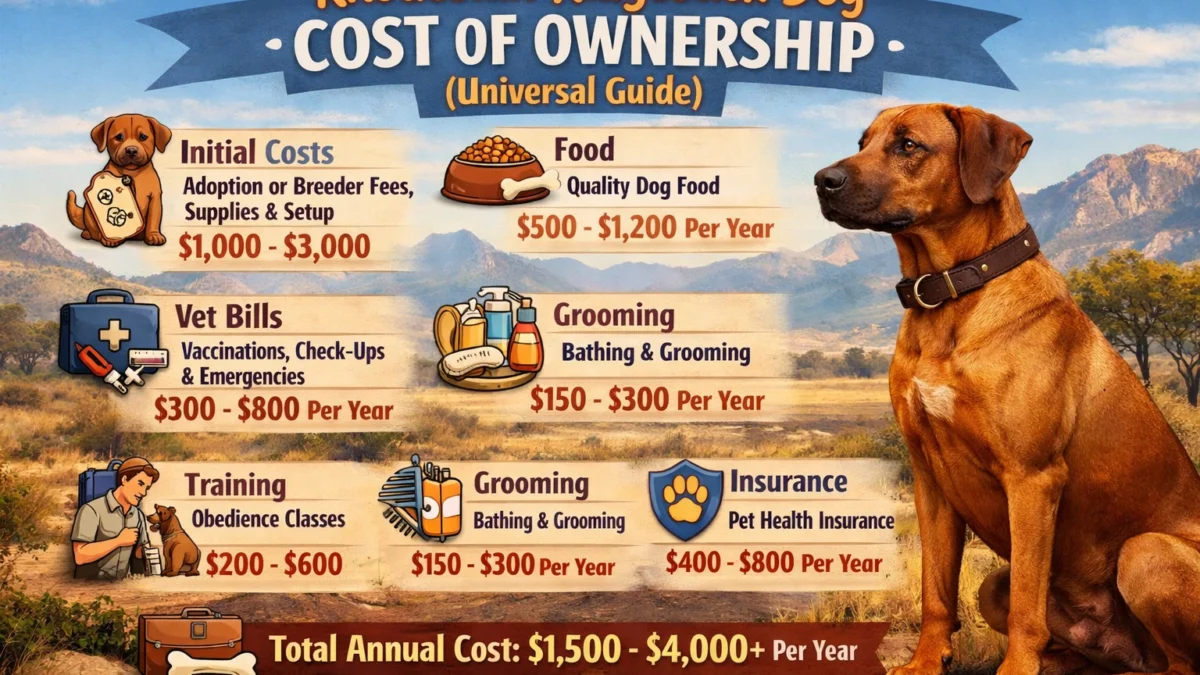
Owning a Rhodesian Ridgeback can be an incredibly rewarding experience, but it comes with financial responsibilities that many first-time dog owners underestimate. These dogs are medium-large, athletic, and highly social, which impacts not only their day-to-day care but also the associated costs. Understanding the true Rhodesian Ridgeback cost of ownership before bringing one home is essential for ensuring you can provide a happy, healthy life without financial stress.
Costs for a Rhodesian Ridgeback vary widely depending on whether you adopt or buy from a breeder, the dog’s age, your living situation, and your approach to veterinary care, food, training, and lifestyle expenses. While small breeds might be less expensive upfront, Ridgebacks often require higher-quality food, more extensive training, and preventive healthcare to thrive.
This guide covers everything you need to know about the full spectrum of costs associated with owning a Rhodesian Ridgeback—from one-time first-year expenses to ongoing monthly and annual costs, hidden financial surprises, and lifetime budgeting tips. By the end of this guide, you’ll have a clear understanding of what to expect and how to prepare financially for a Rhodesian Ridgeback, ensuring a smooth and enjoyable ownership experience.
One-Time and First-Year Costs
When you bring a Rhodesian Ridgeback home, there are some one-time costs and expenses that mostly happen in the first year. These are things you pay for upfront to set up your home and take care of your new dog. Knowing these costs helps you plan your budget and avoid surprises.
Here is a simple table to show the typical first-year costs:
| Expense Type | Typical Cost (USD) | Notes |
|---|---|---|
| Adoption / Purchase Fee | $1,000–$3,000 | Cost varies if you adopt from a rescue or buy from a breeder |
| Initial Vet Care | $300–$600 | Includes vaccines, microchipping, spay/neuter |
| Setup Supplies | $200–$500 | Crate, bed, bowls, leash, toys |
| Training (first-year) | $200–$600 | Puppy classes or private sessions |
Tips for first-year budgeting:
- Buying from a reputable breeder is more expensive but often includes early vaccinations and health checks.
- Adoption is usually cheaper, but some rescue groups ask for donations or adoption fees.
- Supplies can be bought in stages if needed, but don’t skip essential items like a crate or safe toys.
- Training costs vary depending on whether you join classes or hire a private trainer.
By planning for these expenses, you can make sure your Ridgeback’s first year is healthy and happy without unexpected financial stress.
Ongoing Monthly and Annual Expenses
After the first year, owning a Rhodesian Ridgeback comes with monthly and yearly costs that keep your dog healthy, happy, and safe. These are regular expenses you should plan for in your budget.
Here is a simple table to show typical ongoing costs:
| Expense Type | Monthly Cost (USD) | Annual Cost (USD) | Notes |
|---|---|---|---|
| Food & Nutrition | $80–$150 | $960–$1,800 | Depends on size, activity level, and diet quality |
| Preventatives & Medications | $20–$50 | $240–$600 | Flea/tick, heartworm, supplements |
| Routine Vet Care | $30–$80 | $360–$960 | Regular check-ups and vaccinations |
| Grooming | $10–$50 | $120–$600 | Bathing, nail trims, low-maintenance coat care |
| Training & Socialization | $0–$50 | $0–$600 | Obedience refresher classes or playgroup |
| Insurance (optional) | $40–$100 | $480–$1,200 | Depends on plan type and coverage |
Tips for managing ongoing costs:
- High-quality food keeps your Ridgeback healthy and may reduce vet bills over time.
- Preventative medications are cheaper than treating serious illnesses later.
- Routine vet visits are important even if your dog seems healthy.
- Grooming is easy for Ridgebacks, but don’t forget nail trims and occasional baths.
- Training helps prevent behavior problems that could cost more in the future.
- Pet insurance can protect against emergencies, but weigh monthly premiums against potential savings.
Major Cost Drivers and Variations
The cost of owning a Rhodesian Ridgeback can change depending on several important factors. Understanding these major cost drivers helps you plan a realistic budget for your dog.
| Factor | Typical Cost Impact | Notes |
|---|---|---|
| Dog Size | Higher food and medication costs | Adult Ridgebacks usually weigh 70–85 lbs |
| Living Situation | Boarding, training, and supplies vary | Apartment vs house, urban vs rural |
| Health Risks | Can increase vet bills | Hip dysplasia, skin conditions, or other breed-specific issues |
| Multi-Dog Households | +20–50% of recurring costs | More food, supplies, vet visits, and training |
Tips for managing variations:
- Larger dogs eat more and may need stronger medications.
- If you live in a city apartment, consider extra training or doggy daycare costs.
- Preventive care can reduce long-term health expenses.
- Multi-dog households need careful budgeting for food and vet visits.
Knowing these factors helps you adjust your budget based on your situation rather than relying on averages alone.
Hidden Costs, Budgeting Tips, and Lifetime Cost Overview
Owning a Rhodesian Ridgeback comes with hidden costs that many new owners forget to plan for. These can include travel, boarding, damaged items, dental care, and medications. Planning for these expenses helps prevent surprises and keeps your dog healthy.
| Cost Type | First-Year Cost (USD) | Subsequent Year (USD) | Notes |
|---|---|---|---|
| Food | $1,500 | $1,000–$1,500 | Depends on size and activity level |
| Vet Care | $600 | $400–$800 | Routine check-ups and vaccines |
| Grooming | $300 | $150–$500 | Occasional baths and nail trims |
| Training | $400 | $100–$300 | Obedience refresher classes |
| Supplies & Toys | $400 | $100–$300 | Beds, leashes, toys replacement |
| Insurance | $600 | $480–$1,200 | Optional, depending on plan |
| Misc / Boarding / Travel | $200 | $100–$500 | Travel, emergencies, dental care |
Tips for budgeting:
- Keep a separate fund for emergencies, travel, or medical surprises.
- Buying durable toys and quality supplies can reduce replacement costs.
- Compare insurance plans to see if it makes sense for your dog’s health risks.
- Tracking monthly expenses helps you stay within budget.
For more detailed information about Rhodesian Ridgeback care, health, and breed-specific tips, you can visit the American Kennel Club’s official Rhodesian Ridgeback page here.