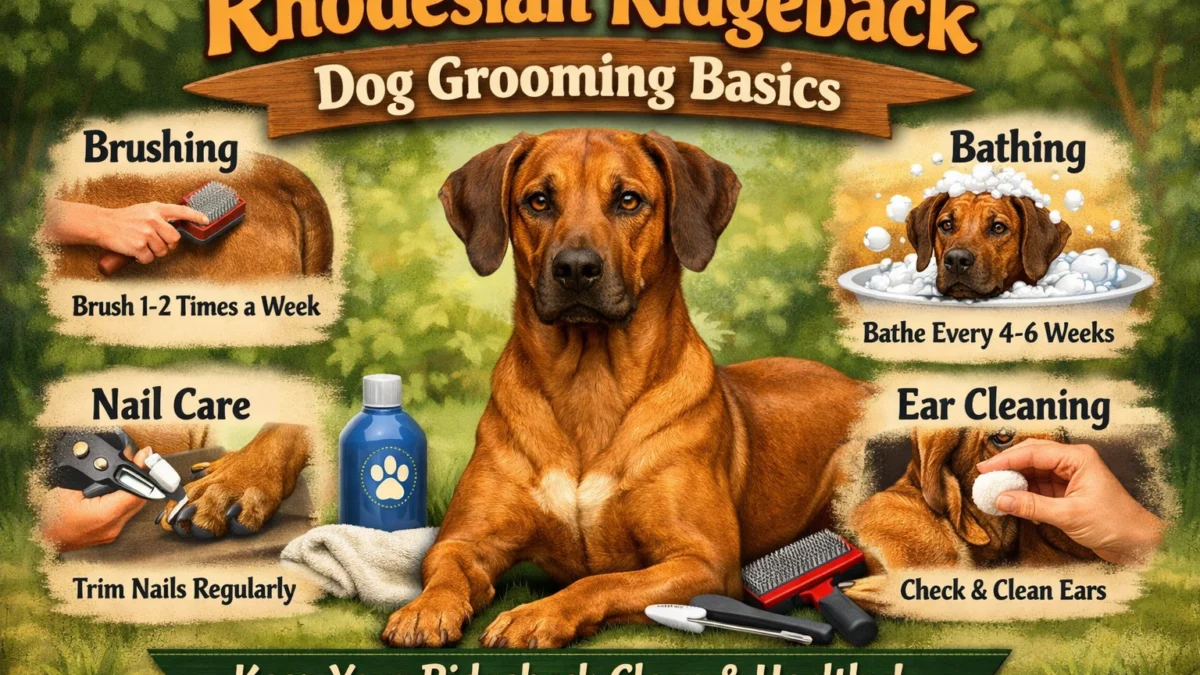
Rhodesian Ridgeback Grooming Basics: Expert Tips for a Healthy Coat
Rhodesian Ridgebacks are known for their sleek, short coats and athletic build, which makes them relatively low-maintenance compared to long-haired or double-coated breeds. However, “low-maintenance” does not mean no grooming is required. Regular grooming helps keep your dog comfortable, reduces shedding around the home, prevents skin problems, and allows you to monitor your dog’s overall health. Grooming also provides an opportunity to bond with your dog and introduce them to handling, which is essential for vet visits, nail trims, and general care.
The Ridgeback’s coat is dense, short, and lies flat against the body, providing a natural barrier to dirt and debris. While it doesn’t mat easily, regular brushing is important to remove loose hairs, distribute natural oils, and maintain a healthy sheen. Most Ridgebacks experience moderate shedding year-round, with a slight increase during seasonal changes in spring and fall. Understanding this shedding pattern helps you plan your grooming routine and manage loose hair effectively.
Even though the Ridgeback’s coat is hardy, the skin underneath is sensitive. Proper grooming supports skin health by stimulating blood flow, preventing buildup of dead skin cells, and allowing early detection of irritations, rashes, or parasites. Neglecting routine grooming can lead to dry patches, hotspots, or unnoticed injuries, which may require veterinary attention.
By understanding these grooming needs, you’ll be better equipped to maintain your Ridgeback’s coat, keep them comfortable, and catch potential issues early, making grooming a positive experience for both you and your dog.
Coat Care Essentials: Brushing, Shedding & Bathing
Rhodesian Ridgebacks have short, smooth coats that are easy to maintain, but they still need regular care. Brushing your dog helps remove loose hair, spreads natural oils, and keeps the coat shiny. Even though Ridgebacks don’t mat easily, brushing once a week is enough for most dogs. During shedding seasons, brushing a few times per week can help keep your house cleaner and make your dog more comfortable.
When brushing, use a soft bristle brush or a grooming mitt. Brush in the direction of hair growth, covering all areas including the back, sides, chest, and legs. Gentle brushing helps your dog enjoy the process and reduces stress.
Bathing a Ridgeback should be done every 6–8 weeks, or when they get especially dirty. Use a mild, dog-safe shampoo to protect their skin and coat. Avoid over-bathing, as it can dry out the natural oils and make the coat dull. After bathing, dry your dog with a towel or a low-heat blow dryer while keeping them calm and comfortable.
Here is a quick reference table for brushing and bathing:
| Grooming Task | How Often | Tips |
|---|---|---|
| Brushing | Once a week (more during shedding) | Use a soft bristle brush or grooming mitt, brush gently in the direction of hair growth |
| Bathing | Every 6–8 weeks or when dirty | Use pH-balanced dog shampoo, rinse thoroughly, dry with towel or low-heat dryer |
| De-shedding | As needed | Use rubber grooming mitt during heavy shedding seasons to remove loose hair |
Brushing and bathing not only keep your Ridgeback looking good but also help you check for ticks, fleas, or skin problems. Regular grooming keeps your dog comfortable and strengthens the bond between you.
Essential Grooming Tasks: Nails, Ears, Eyes & Teeth
Taking care of your Ridgeback’s nails, ears, eyes, and teeth is very important for their health and comfort. These small tasks help prevent pain, infections, and other problems.
Nail trimming should be done every 3–4 weeks. Long nails can cause discomfort or affect the way your dog walks. Use a dog nail clipper or grinder, and be careful not to cut too close to the quick, which can hurt your dog and make it bleed.
Ears need regular cleaning, especially since dirt and wax can build up. Check the ears once a week. Use a vet-approved ear cleaner and a soft cloth or cotton ball. Avoid pushing anything deep into the ear canal, as this can hurt your dog.
Eyes should be checked weekly for dirt, discharge, or redness. Wipe gently with a damp cloth to remove any debris. Regular eye care prevents irritation and infections.
Dental care is essential for a healthy mouth. Brush your dog’s teeth 2–3 times per week with dog-safe toothpaste and toothbrush. Dental chews or toys can also help reduce plaque and keep teeth strong.
Here is a quick table to help you keep track of these tasks:
| Task | How Often | Tips |
|---|---|---|
| Nail trimming | Every 3–4 weeks | Use dog nail clippers or grinder, avoid the quick |
| Ear cleaning | Weekly | Use vet-approved ear cleaner, wipe gently with cloth or cotton ball |
| Eye cleaning | Weekly | Wipe gently with damp cloth, check for redness or discharge |
| Teeth brushing | 2–3 times per week | Use dog-safe toothpaste and toothbrush, dental chews help too |
These small grooming tasks are quick to do but make a big difference in your Ridgeback’s comfort and health. Regular checks also help you spot problems early before they become serious.
Skin Health, Seasonal Care & Problem Signals
Even though Rhodesian Ridgebacks have short coats, their skin still needs care to stay healthy. Grooming helps keep the skin clean, hydrated, and free from irritation. Regular brushing spreads natural oils that make the coat shiny and protects the skin from dryness.
Ridgebacks shed more during spring and fall. During these times, brush your dog a few times a week to remove loose hair and prevent discomfort. In winter, the skin can become dry, so avoid over-bathing and make sure your dog’s coat stays naturally protected. Summer heat can also dry out the skin, so keep your dog in the shade and check for hot spots.
Watching for early signs of skin problems is important. Look for redness, itching, bumps, flakes, or unusual odor. These can indicate allergies, infections, or parasites. If you notice any of these signs, adjust grooming habits and contact your veterinarian if necessary.
Here is a simple table to guide seasonal grooming:
| Season | Shedding Level | Grooming Focus |
|---|---|---|
| Spring | Moderate | Brush more often to remove loose hair and reduce shedding |
| Summer | Low | Check skin for dryness, prevent hot spots, avoid over-bathing |
| Fall | Moderate | Frequent brushing, check for mats under collar and neck |
| Winter | Low | Maintain coat oils, avoid over-bathing, keep skin hydrated |
Regular seasonal grooming helps your Ridgeback stay comfortable and healthy all year. It also gives you the chance to notice any changes in skin or coat before they become problems.
Grooming Tips for Happy Dogs & Owner Confidence
Grooming should be a positive experience for both you and your Rhodesian Ridgeback. Starting early, especially with puppies, helps them get used to being handled. Use gentle strokes, calm voices, and treats to make grooming enjoyable. Adult dogs may be more stubborn, but patience, consistency, and rewards make a big difference.
Some dogs do not like baths or nail trims. Take it slow and break the tasks into small steps. For example, let your dog explore the grooming tools first, then gently touch paws before trimming nails. Always give praise and treats for calm behavior.
Deciding between home grooming and professional grooming depends on your comfort level and your dog’s behavior. Most Ridgebacks can be maintained at home with regular brushing, baths, and basic care. Professional groomers can help with nail trims, medicated baths, or if your dog is anxious or uncooperative.
Here is a quick weekly grooming checklist for easy reference:
| Task | Done (✓) | Notes |
|---|---|---|
| Brushing | Use soft bristle brush or grooming mitt | |
| Bath check / spot cleaning | Bathe only when needed, use dog-safe shampoo | |
| Nail check / trim | Trim carefully, watch the quick | |
| Ear cleaning | Wipe gently, check for odor or redness | |
| Eye cleaning | Wipe away dirt or discharge | |
| Dental care | Brush teeth 2–3 times a week, provide dental chews |
Using this checklist every week helps you stay consistent and ensures your Ridgeback stays healthy, comfortable, and happy. Regular grooming also strengthens your bond and makes visits to the vet easier.
For more detailed information about Rhodesian Ridgeback care, visit the American Kennel Club’s guide: https://www.akc.org/dog-breeds/rhodesian-ridgeback