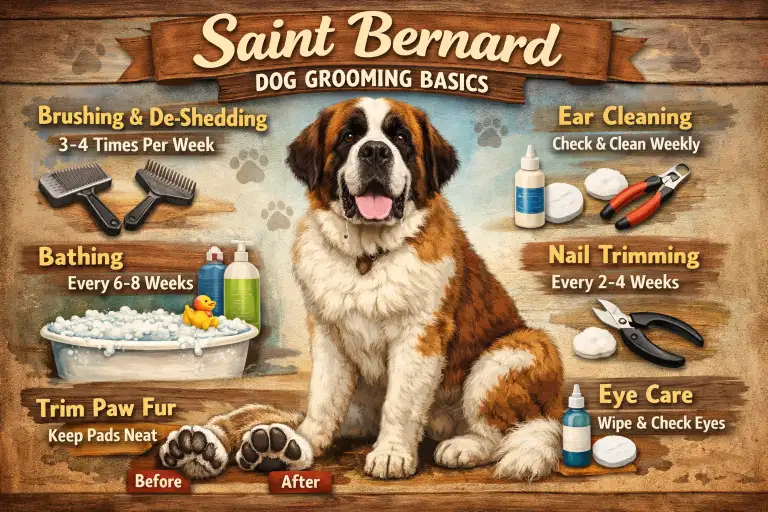
Saint Bernard Grooming Basics: Complete At-Home Guide for Healthy Coats
Grooming a Saint Bernard is more than just keeping your dog looking clean and fluffy. This guide will help you understand the best ways to care for your Saint Bernard’s dense double coat, manage shedding, prevent mats, and maintain overall health. By following these tips, you can make grooming a stress-free routine for both you and your dog, whether you’re a first-time owner or have experience with large breeds.
This article will cover everything from the tools you need, to brushing, bathing, nail and ear care, and tips for handling common issues like heavy shedding, mats, and seasonal coat changes.
How grooming affects comfort, health, and behavior
Regular grooming does more than keep your Saint Bernard looking good. It helps prevent painful mats and tangles, reduces skin irritation, and keeps ears, nails, and teeth in healthy condition. A well-groomed dog is less likely to develop infections, hot spots, or odor issues.
Grooming also improves your dog’s comfort and behavior. Dogs who feel good in their coat are calmer, less irritable, and more cooperative during walks or playtime. Spending time grooming also strengthens the bond between you and your Saint Bernard, making grooming sessions a positive experience.
Coat Types and How They Change the Grooming Routine
Saint Bernards have a thick double coat that protects them in cold weather. Some lines have a smooth, shorter coat, while others have a rougher, longer coat. Their coat helps keep them warm but also means they shed a lot, especially during seasonal changes.
How coat type affects shedding, matting, and odor
Double coats shed loose hair regularly. Mats often form behind the ears, under the collar, and in the armpits. If mats are not removed, they can pull on the skin and cause discomfort or infections. Regular grooming also reduces odor, which can build up in dense fur if it stays wet or dirty.
Grooming frequency by coat type
Different coat types need different grooming schedules. This table shows how often to brush, bathe, trim nails, and clean ears for smooth vs rough-coated Saint Bernards:
| Coat Type | Brushing | Bathing | Nail Trimming | Ear Cleaning | Notes |
|---|---|---|---|---|---|
| Smooth | 2–3 times per week | Every 6–8 weeks | Every 4–6 weeks | Every 2–3 weeks | Mats are rare, but watch drool buildup |
| Rough/Double | Daily or 3 times per week | Every 6 weeks | Every 4 weeks | Every 2 weeks | Heavy seasonal shedding, mats common, especially in winter/summer |
This table makes it easy for readers to see at a glance what their Saint Bernard needs based on coat type.
Core Grooming Routine at Home
To groom a Saint Bernard at home, you don’t need everything in a professional salon. Here are the most important tools and what they do:
| Tool | Purpose | Tips |
|---|---|---|
| Slicker brush | Remove loose hair and light mats | Use gently on sensitive areas |
| Undercoat rake | Remove dead undercoat | Best during shedding season |
| Pin brush | Smooth topcoat | Avoid pulling mats |
| Comb | Detect tangles and small mats | Use after brushing |
| Clippers | Trim sanitary areas | Use correct blade and speed |
| Nail clippers | Trim nails safely | Avoid cutting the quick |
| Ear cleaner | Prevent infections | Use vet-approved solution |
Bathing
Bathing helps keep your Saint Bernard clean but should not be done too often, or it can dry out the skin. Here’s an easy step-by-step:
| Step | Action | Tip |
|---|---|---|
| 1 | Brush coat thoroughly | Remove mats before wetting |
| 2 | Wet coat with lukewarm water | Make sure water reaches the skin |
| 3 | Apply dog shampoo | Massage gently, avoid eyes and ears |
| 4 | Rinse completely | Shampoo residue can irritate skin |
| 5 | Apply conditioner (optional) | Focus on dry ends |
| 6 | Dry coat | Use towel and low-heat dryer if needed |
Brushing and deshedding
Brushing keeps the coat smooth and removes loose hair. Rough or double coats may need daily brushing, especially in shedding seasons. Start from the head and work toward the tail, checking under the collar, behind ears, and under legs for mats. If you find mats, gently work them out with a comb or detangling spray.
Extra Care: Nails, Ears, Teeth, and Skin Health
Nail care basics and safety tips
Trim your Saint Bernard’s nails every 4–6 weeks. Long nails can make walking uncomfortable and cause joint strain. Use a sharp dog nail clipper and be careful not to cut the quick (the pink part inside the nail). If your dog is anxious, trim just a few nails at a time or use a nail file to smooth edges.
Ear cleaning
Check ears every 2–3 weeks. Floppy ears can trap moisture and dirt, leading to infections. Use a vet-approved ear cleaner, apply a small amount, gently massage the base, and wipe away debris with a soft cotton ball. Never use cotton swabs inside the ear canal.
Dental hygiene basics
Brush your Saint Bernard’s teeth 2–3 times per week with dog-safe toothpaste. Dental chews and toys also help reduce plaque. Healthy teeth prevent bad breath, tooth decay, and gum disease.
Skin and coat health
Saint Bernards can develop mats, hot spots, or allergic reactions if their coat isn’t cared for properly. Regular grooming helps prevent these issues. Watch for red, itchy, or bald patches, excessive scratching, or odor. Consult a vet if any of these signs appear.
| Common Skin & Coat Issues | Signs | Prevention / Treatment |
|---|---|---|
| Mats | Tangled hair behind ears, collar, under arms | Brush regularly, use detangler spray |
| Hot spots | Red, wet, irritated skin | Keep area clean and dry, see vet if severe |
| Allergies | Itching, redness, flaky skin | Hypoallergenic shampoo, vet advice |
| Shedding | Excess hair around house | Regular brushing, proper diet |
Grooming puppies vs adults vs seniors
Puppies need gentle grooming to get used to the process. Start with short brushing sessions and positive reinforcement. Adult Saint Bernards can handle longer grooming routines, but you may need to focus on mats, shedding, and regular bathing. Senior dogs may have sensitive skin or joint issues, so be gentle, use soft brushes, and avoid long grooming sessions.
Seasonal grooming and shedding seasons
Saint Bernards shed heavily during spring and fall. Brushing daily during these seasons helps remove loose hair and prevents mats. Regular baths and coat checks will keep your dog comfortable and reduce odor.
Home grooming vs professional groomer
Some tasks can be done at home, but professional groomers are helpful for heavy mats, full coat trims, or medicated baths. Knowing when to hire a groomer keeps your dog safe and comfortable.
Common grooming mistakes to avoid and key safety rules
Avoid shaving double coats, over-bathing, using harsh shampoos, or trimming nails too short. Always check for mats before bathing, and never force a fearful dog to stay still. Use grooming tools safely and follow breed-specific tips.
| Task | DIY at Home | Professional Groomer |
|---|---|---|
| Bathing | Yes | Optional |
| Brushing | Yes | Optional for heavy mats |
| Nail trimming | Yes | Optional for anxious dogs |
| Mat removal | Light mats | Severe mats only |
| Hair trimming | Sanitary areas only | Full body or stylistic trims |
| Specialized care | Limited | Medicated baths, skin treatments |
For more expert advice on grooming large breeds like the Saint Bernard, you can visit the American Kennel Club’s grooming guide: AKC Dog Grooming Tips.