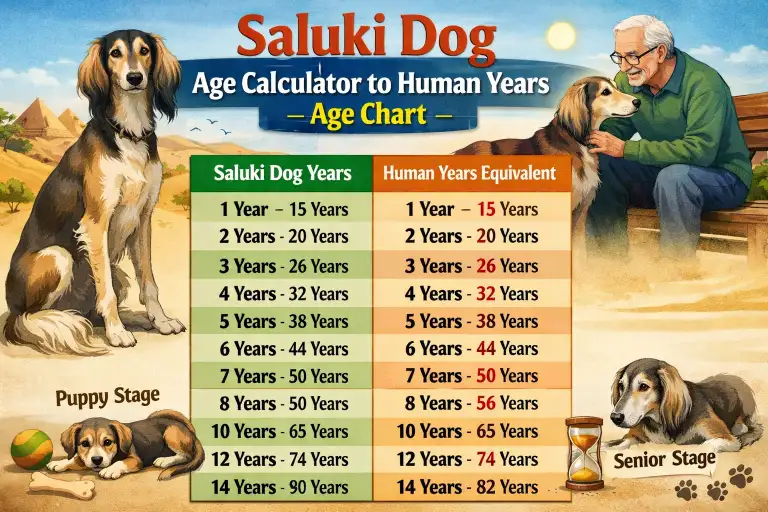
Saluki Dog Age Calculator to Human Years (Age Chart & Life Stages)
If you’ve ever wondered “How old is my Saluki in human years?” you’re not alone. Most dog owners want a quick, accurate way to understand their dog’s age in human terms — especially with a unique breed like the Saluki, which doesn’t age the same way as many other dogs.
This Saluki dog age calculator is designed to convert Saluki years into human years using modern canine aging science rather than outdated rules like “1 dog year equals 7 human years.” Salukis are lean, athletic sighthounds with a different growth pattern, metabolism, and lifespan profile compared to stockier or giant breeds, which means generic dog age charts often miss the mark.
Using this calculator is simple:
- Enter your Saluki’s age in years (or months for puppies)
- The calculation adjusts for breed size and life stage
- You’ll see an estimated human-age equivalent that reflects how Salukis actually mature and age
For example, a 5-year-old Saluki is not comparable to a 35-year-old human using the old 7-year rule. In reality, most Salukis reach adulthood quickly, then age more gradually through their prime years before entering senior status later than many large breeds.
This page combines a Saluki-specific age calculator, a detailed age-to-human-years chart, and clear explanations of life stages, so you’re not just getting a number — you’re understanding what that age means for your dog’s health, behavior, and care needs.
Saluki Dog Age Chart: Puppy, Adult, and Senior Years
Many owners prefer a quick chart instead of doing calculations. That’s where a Saluki dog age chart helps. You can look up your Saluki’s age and instantly see the human age equivalent and life stage.
Salukis mature quickly in their early years, then age more slowly through adulthood. This is why their aging pattern looks different from the old “7 dog years = 1 human year” idea.
Below is a Saluki-specific age chart designed to be simple, clear, and easy to scan.
Saluki Dog Age to Human Years Chart
| Saluki Age (Years) | Human Age Equivalent | Life Stage | What This Age Usually Means |
|---|---|---|---|
| 0.5 (6 months) | 9 years | Puppy | Rapid growth, learning basics |
| 1 | 15 years | Puppy | Physically grown, still immature |
| 2 | 24 years | Young Adult | Full size, more settled behavior |
| 3 | 28 years | Adult | Strong, energetic, trainable |
| 4 | 32 years | Adult | Mental maturity improving |
| 5 | 36 years | Adult | Prime years |
| 6 | 40 years | Adult | Slight slowdown may begin |
| 7 | 44 years | Mature Adult | Energy slowly decreasing |
| 8 | 48 years | Senior | Early senior stage |
| 9 | 52 years | Senior | More rest, joint care important |
| 10 | 56 years | Senior | Clear aging signs possible |
| 11 | 60 years | Senior | Slower movement, vet checks vital |
| 12 | 64 years | Senior | Advanced senior years |
This chart shows two important things clearly:
- Saluki puppies age fast in the first two years
- Adult Salukis age slowly, staying active longer than many large breeds
If your Saluki is between two ages, use the closest match or the calculator above for a more exact estimate.
Why Saluki Years Aren’t the Same as “7 Human Years”
For many years, people believed that 1 dog year equals 7 human years. This rule is easy to remember, but it is not accurate, especially for a breed like the Saluki.
Salukis grow very fast as puppies. Then, once they reach adulthood, they age much more slowly. Because of this uneven aging pattern, a simple straight-line rule does not work.
To make this easier to understand, the table below compares different ways people calculate dog age.
Dog Aging Models Compared
| Aging Method | How It Works | Why It Does or Doesn’t Work for Salukis |
|---|---|---|
| 7-Year Rule | Every dog year equals 7 human years | Too simple, ignores fast puppy growth |
| Linear Model | Same number of human years added each year | Still inaccurate for early life |
| Modern Age Model | Fast aging early, slower aging later | Best fit for Saluki growth and lifespan |
Here is what matters most for Salukis:
- They reach adult size early, often by 12 to 15 months
- Their lean body and athletic build help them stay active longer
- Aging slows during adult years, then speeds up again in senior years
This is why a 5-year-old Saluki is not “middle-aged” in the same way as other large dogs. Many Salukis are still in their prime adult years at this age.
Understanding this helps you read the age chart correctly and avoid common mistakes when judging your dog’s health or energy level.
Saluki Life Stages Explained: Puppy to Senior Dog
Knowing your Saluki’s life stage helps you understand what changes are normal and what your dog may need at each age. Salukis move through life stages a little differently than many other dogs because they mature fast but stay active for a long time.
The table below shows the main Saluki life stages, the age range for each stage, and what owners usually notice.
Saluki Life Stages by Age
| Life Stage | Approximate Age Range | Physical Changes | Behavior Changes | Owner Focus |
|---|---|---|---|---|
| Puppy | 0–1 year | Rapid growth, long legs develop quickly | Curious, playful, learning rules | Training, social skills, safe exercise |
| Young Adult | 1–3 years | Full size reached, strong muscles | High energy, testing limits | Consistent training, daily exercise |
| Adult | 3–7 years | Peak fitness, steady weight | Calm but active, focused | Maintain routine, prevent injuries |
| Mature Adult | 7–8 years | Slight slowdown may begin | More relaxed, enjoys rest | Monitor joints and weight |
| Senior | 8+ years | Stiff joints, slower movement | More sleeping, less endurance | Comfort, health checks, gentle care |
Here are a few helpful things to remember:
- A Saluki is usually considered a senior around 8 years old
- Many Salukis stay playful and alert well into their senior years
- Changes happen slowly, not all at once
Some signs your Saluki may be entering a new life stage include:
- Sleeping more than usual
- Slower recovery after exercise
- Graying around the face
- Less interest in long runs
These changes are normal, but they help guide how you care for your dog.
Helping Your Saluki Age Healthily (Care Tips by Age)
Good care can help your Saluki live a longer, happier, and more comfortable life. While aging is natural, the right food, exercise, and vet care can slow down many age-related problems.
The table below shows simple care tips by age, written to be easy to follow and apply at home.
Age-Based Care Tips for Salukis
| Age Range | Nutrition Focus | Exercise Needs | Vet Care | At-Home Support |
|---|---|---|---|---|
| Puppy (0–1 yr) | High-quality puppy food | Short play sessions, no forced running | Vaccines, growth checks | Safe space, gentle training |
| Young Adult (1–3 yrs) | Balanced adult diet | Daily walks and controlled runs | Annual checkups | Mental games, routine |
| Adult (3–7 yrs) | Maintain healthy weight | Regular exercise, avoid overuse | Yearly exams | Joint awareness |
| Mature Adult (7–8 yrs) | Slight calorie control | Moderate, low-impact activity | Blood work, joint checks | Comfortable bedding |
| Senior (8+ yrs) | Senior-friendly diet | Gentle walks, less strain | Twice-yearly vet visits | Ramps, warm resting areas |
Important things to keep in mind:
- Weight control matters a lot for Salukis because extra weight stresses joints
- Regular vet visits help catch age-related problems early
- Mental activity is just as important as physical exercise
If your Saluki shows sudden changes such as pain, confusion, or big energy loss, always talk to your vet.
To learn more about official breed information, health background, and general care guidelines, you can also visit the American Kennel Club Saluki breed profile, which provides trusted, breed-specific insights from a recognized canine authority.