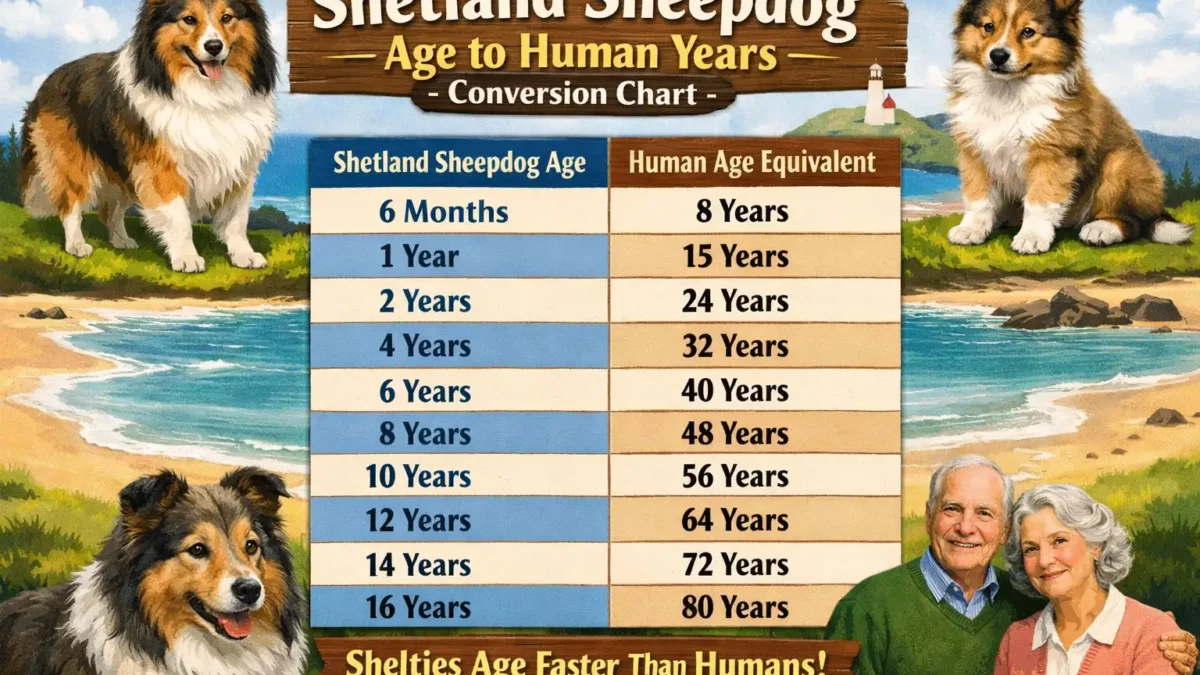
Shetland Sheepdog Age Calculator: Convert Your Sheltie’s Age to Human Years with an Accurate Chart
Many dog owners are familiar with the idea that “one dog year equals seven human years,” but this rule is overly simplistic, especially for Shetland Sheepdogs. Shelties, like other small breeds, age differently than larger dogs, and their development, physical changes, and life expectancy don’t follow a straight 1:7 ratio.
Shetland Sheepdogs are considered a small to medium breed, which means they typically live longer than large breeds like Great Danes or Saint Bernards. Their small size affects not only their lifespan but also the speed at which they reach various life stages. For example, Sheltie puppies mature quickly in the first year, reaching adolescent behavior and physical growth milestones sooner than larger breeds.
Understanding how Shelties age helps owners provide the right care at each stage of life, recognize the signs of aging early, and better estimate their dog’s “human-equivalent” age. In this guide, we will explore Sheltie aging in detail, provide a science-backed conversion chart, and share practical tips to help your dog live a healthy, happy life.
Sheltie Lifespan vs Other Breeds
| Breed | Average Lifespan (Years) | Size Category |
|---|---|---|
| Shetland Sheepdog | 12–14 | Small |
| Border Collie | 12–15 | Medium |
| Cocker Spaniel | 12–14 | Small |
| Labrador Retriever | 10–12 | Large |
| Great Dane | 7–10 | Giant |
This table shows that Shelties enjoy a longer lifespan compared to larger breeds, which is important to consider when converting dog years to human years and planning care for each life stage.
The Science Behind Shetland Sheepdog Aging
Shetland Sheepdogs age differently than humans, and even different dog breeds age at different speeds. Scientists now know that dogs don’t age in a straight line. Small dogs like Shelties tend to live longer and stay youthful longer than bigger dogs.
One important study in 2019 looked at epigenetics—this means scientists studied how dogs’ genes change over time. They found that dogs grow fast at first and then slow down as they get older. This shows why the old “one dog year equals seven human years” rule isn’t accurate.
Shetlies grow quickly during their first year, then their growth slows, and they reach adulthood around 1–2 years. Seniors are usually around 9–10 years and older. Understanding these stages helps owners give the right care for each age.
Sheltie Growth Milestones (Puppy to Senior)
| Age (Years) | Stage | Key Changes and Development |
|---|---|---|
| 0–0.5 | Puppy | Rapid growth, learning basic commands, high energy |
| 0.5–1 | Juvenile | Physical growth slows slightly, teething finishes, social skills develop |
| 1–2 | Young Adult | Full size reached, muscle and coordination develop, sexual maturity |
| 3–7 | Adult | Stable behavior, active lifestyle, maintenance of health |
| 8–10 | Senior | Early signs of aging: slower movement, possible weight gain, minor health issues |
| 11+ | Geriatric | Noticeable decline: less activity, cognitive changes, joint stiffness |
This table makes it easy to see what happens at each life stage for Shelties. Owners can use it to know when to adjust exercise, diet, and vet visits.
How Shetland Sheepdog Age Conversion to Human Years Works
Many people wonder how old their Sheltie would be in human years. The old rule of “1 dog year = 7 human years” is not accurate. Scientists have found that dogs age faster when they are puppies and slow down as they grow older. Small dogs like Shetland Sheepdogs live longer than large dogs, so their human age conversion is different.
We use a more accurate model that considers the Sheltie’s size and life stage. This helps you understand how your dog’s age relates to human years for better care and health planning.
Sheltie Age to Human Age Chart
| Sheltie Age (Years) | Human Age Equivalent | Life Stage |
|---|---|---|
| 0.5 | 6 | Puppy |
| 1 | 15 | Puppy |
| 2 | 24 | Young Adult |
| 3 | 28 | Adult |
| 4 | 32 | Adult |
| 5 | 36 | Adult |
| 6 | 40 | Adult |
| 7 | 44 | Adult |
| 8 | 48 | Senior |
| 9 | 52 | Senior |
| 10 | 56 | Senior |
| 11 | 60 | Senior |
| 12 | 64 | Senior |
| 13 | 68 | Senior |
| 14 | 72 | Senior |
This table helps you quickly see how your Sheltie’s age compares to human years. For example, a 5-year-old Sheltie is like a 36-year-old human, and a 10-year-old Sheltie is like a 56-year-old human.
Life Stages of a Shetland Sheepdog: From Puppy to Senior
Shetland Sheepdogs go through different life stages, and each stage has its own behavior, health needs, and care tips. Knowing these stages helps you give the right care at the right time.
Sheltie Life Stages and Key Changes
| Life Stage | Age Range (Years) | Key Changes and Behavior | Care Tips |
|---|---|---|---|
| Puppy | 0–1 | Rapid growth, high energy, learning basic commands | Provide gentle training, socialization, healthy diet |
| Young Adult | 1–2 | Full size, playful, learning social behavior | Maintain exercise, continue training, regular vet checks |
| Adult | 3–7 | Stable behavior, active, healthy | Balanced diet, regular walks, mental stimulation |
| Senior | 8–10 | Slower movement, early signs of aging, possible weight gain | Adjust diet and exercise, monitor joints and health |
| Geriatric | 11+ | Reduced activity, cognitive changes, joint stiffness | Provide comfortable resting areas, gentle exercise, frequent vet visits |
During the puppy stage, Shelties need lots of training, socialization, and care for their teeth and growth.
In the adult stage, they are active and healthy, so exercise and mental enrichment are important.
In the senior stage, watch for slower movements, joint stiffness, and changes in behavior. Adjust their diet and exercise and schedule more vet visits to keep them healthy.
Helping Your Shetland Sheepdog Age Healthily
As your Sheltie gets older, it’s important to adjust their care to help them stay healthy and happy for as long as possible. This means paying attention to their diet, exercise, and regular check-ups with the vet. Here are some tips for helping your Sheltie age healthily:
Nutrition and Weight Management for Senior Shelties
Senior Shelties may not need as much food as when they were younger, and they may be prone to weight gain. Adjusting their diet helps keep them at a healthy weight, which is important for their joints and overall health.
Longevity Tips for Shelties (Nutrition, Exercise, Health Care)
| Tip | What It Helps With |
|---|---|
| Feed smaller portions | Prevents weight gain, keeps joints healthy |
| Choose senior dog food | Easier to digest, supports aging organs |
| Provide joint supplements | Reduces stiffness, promotes mobility |
| Avoid overfeeding treats | Keeps weight in check, maintains energy levels |
Exercise and Mental Enrichment
Even older Shelties need regular exercise to stay fit, but it should be gentler. Regular walks, light play, and mental games like puzzle toys can help keep your Sheltie active without putting too much strain on their joints.
Vet Visits and Preventive Care
As your Sheltie ages, it’s important to visit the vet more often. Regular health check-ups will help spot any issues early, such as heart disease, dental problems, or arthritis. Ask your vet about age-appropriate screenings and tests.
Neutering/Spaying, Lifestyle, and Longevity
If your Sheltie has been spayed or neutered, it can affect their lifespan. Research shows that spayed or neutered dogs tend to live longer, but they also need a balanced diet to maintain a healthy weight and energy level.
At-Home Care Tips for Senior Shelties
Provide comfortable bedding, easy access to water, and a quiet, cozy space for your senior Sheltie to rest. Avoid hard stairs and slippery floors to protect their joints and prevent falls.
FAQs About Shetland Sheepdog Aging & Dog Years
Here are some common questions that Sheltie owners might have about their dog’s aging process and how to convert their age into human years.
How old is my 5-year-old Sheltie in human years?
A 5-year-old Sheltie would be about 36 human years old. At this age, your Sheltie is in the prime of their life, with lots of energy but also starting to show signs of aging, like slower movement or a slight decrease in activity.
When is a Sheltie considered a senior dog?
Shelties usually enter their senior years around 8–10 years old. At this stage, they may start to show some signs of aging, like slower walks, joint stiffness, or changes in behavior.
Why doesn’t the “1 dog year = 7 human years” rule work?
The “7-year rule” is too simple because dogs age differently at different stages of their lives. Dogs age faster as puppies and young adults, and then their aging slows down as they get older. The exact age conversion depends on the breed and size of the dog.
What can I do to help my Sheltie live longer?
To help your Sheltie live a longer, healthier life, make sure they have a balanced diet, regular exercise, and regular vet check-ups. Keeping them at a healthy weight, preventing obesity, and caring for their joints will also improve their quality of life as they get older.
This wraps up the article! It’s now complete, offering all the necessary information about Shetland Sheepdog aging, how to calculate their age in human years, and tips for supporting them throughout their life stages.
Quick Reference: Shetland Sheepdog Age and Life Stages
This table summarizes Sheltie ages, human age equivalents, and care tips in one easy-to-read view.
| Sheltie Age (Years) | Human Age Equivalent | Life Stage | Key Care Tips |
|---|---|---|---|
| 0–0.5 | 6 | Puppy | Training, socialization, healthy diet |
| 0.5–1 | 15 | Puppy | Continue training, teething care, exercise |
| 1–2 | 24 | Young Adult | Social skills, exercise, vet checks |
| 3–7 | 28–44 | Adult | Balanced diet, regular walks, mental stimulation |
| 8–10 | 48–56 | Senior | Gentle exercise, monitor joints, healthy diet |
| 11+ | 60–72+ | Geriatric | Comfortable rest, gentle activity, frequent vet visits |
This final table gives readers a single glance overview of Sheltie aging, human age conversion, life stage, and practical care tips.
For more information on how to care for your senior Shetland Sheepdog, check out this guide on senior dog care by the American Kennel Club.