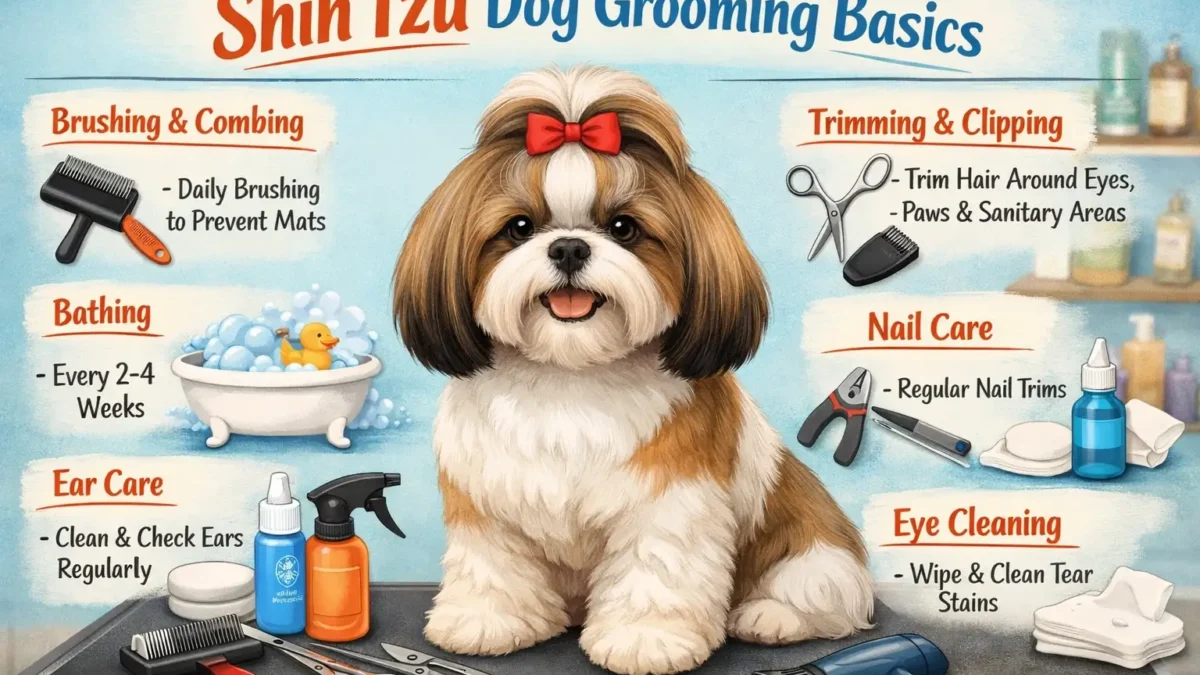
Shih Tzu Grooming: A Complete Beginner’s Guide to Coat, Bathing, and Care
Shih Tzu grooming is not just about looks — it is a core part of keeping this breed comfortable, healthy, and problem-free. Unlike many dogs that can get by with occasional brushing, Shih Tzus require consistent, hands-on grooming because of their unique coat and facial structure.
Shih Tzus have hair, not fur, and it grows continuously. This means their coat does not naturally shed out and reset the way double-coated or short-haired breeds do. Without regular grooming, loose hair tangles with new growth, leading to mats that pull on the skin, trap moisture, and create ideal conditions for irritation and infection.
Proper grooming helps:
- Prevent painful matting and skin inflammation
- Reduce tear staining and facial discomfort
- Keep ears clean and lower the risk of infections
- Maintain healthy skin by distributing natural oils
- Make your Shih Tzu more comfortable, mobile, and relaxed
From a behavior standpoint, well-groomed Shih Tzus are often calmer and easier to handle. Dogs that are matted, itchy, or uncomfortable frequently become anxious, resist handling, or act out during routine care. Grooming done correctly and consistently helps your dog feel secure and cooperative over time.
This guide is designed to help you understand what Shih Tzu grooming actually involves, how often it needs to be done, and how to create a routine that works at home — even if you are a beginner. Whether your Shih Tzu has a long flowing coat or a short puppy cut, the fundamentals of grooming remain the same: regular maintenance, the right tools, and gentle, safe handling.
Understanding the Shih Tzu Coat and How Often to Groom
To groom a Shih Tzu correctly, you must first understand their coat. This breed has hair, not fur, and it grows all the time, similar to human hair. Because of this, Shih Tzus need more frequent grooming than many other dogs.
Their coat does not shed out on its own. Loose hair stays trapped in the coat and easily forms knots and mats if brushing is skipped. This is why Shih Tzus can look fine on the outside but still have painful matting close to the skin.
Shih Tzu coat features and what they mean for grooming
| Coat feature | What it means | Grooming impact |
|---|---|---|
| Hair, not fur | Hair keeps growing and does not self-shed | Needs regular brushing and trimming |
| Single coat | No undercoat to protect the skin | Skin is more sensitive |
| Soft and fine texture | Hair tangles easily | Mats form quickly without daily care |
| Low shedding | Hair stays in the coat | Brushing is more important than shedding control |
Because the coat is fine and soft, mats often form in hidden areas like behind the ears, under the legs, around the collar, and near the tail. These mats can pull on the skin and cause pain, redness, and even sores if ignored.
How often to groom a Shih Tzu
One of the most common questions owners ask is how often grooming is needed. The answer depends on coat length, but some grooming is needed every single day.
| Grooming task | How often | Why it matters |
|---|---|---|
| Brushing | Daily or every other day | Prevents mats and tangles |
| Face and eye cleaning | Daily | Reduces tear stains and eye irritation |
| Bathing | Every 3–4 weeks | Keeps skin clean without drying it |
| Hair trimming | Every 4–8 weeks | Keeps coat manageable and healthy |
| Nail trimming | Every 3–4 weeks | Prevents pain and walking problems |
| Ear cleaning | Every 1–2 weeks | Helps prevent ear infections |
Puppy coat vs adult coat
Shih Tzu puppies usually have a softer, fluffier coat that mats less at first. As they grow, the adult coat comes in and matting becomes much more common. This change often surprises new owners. Starting brushing early helps puppies get used to grooming before the coat becomes harder to manage.
Long coat vs short coat grooming
A long coat looks beautiful but needs daily brushing and frequent professional grooming. A short coat, often called a puppy cut, is easier to maintain but still requires regular brushing, bathing, and trimming. Short coats reduce matting but do not remove the need for grooming.
Shih Tzu Grooming Routine at Home: Brushing, Bathing, and Coat Care
You can groom a Shih Tzu at home if you stay gentle and follow a simple routine. The goal is not perfection. The goal is to keep the coat clean, tangle-free, and comfortable for your dog.
Before you start, it helps to know which tools you actually need. You do not need many tools, but the right ones make grooming much easier.
Basic grooming tools for a Shih Tzu
| Tool | What it is used for | How often to use |
|---|---|---|
| Slicker brush | Removes tangles and loose hair | Daily or every other day |
| Metal comb | Checks for hidden knots near the skin | After brushing |
| Detangling spray | Makes brushing easier and reduces pulling | During brushing |
| Dog shampoo | Cleans coat and skin safely | Every 3–4 weeks |
| Towel or pet dryer | Dries the coat after bathing | After each bath |
Brushing your Shih Tzu the right way
Brushing is the most important part of Shih Tzu grooming. Short sessions every day work better than long sessions once a week.
Start by brushing small sections of hair, beginning at the ends and slowly moving toward the skin. Always be gentle. If you pull too hard, your dog may become scared of grooming.
Pay close attention to areas where mats form easily:
- Behind the ears
- Under the legs
- Around the collar
- Near the tail
After brushing, use a metal comb to check if any small knots are still hiding close to the skin.
Bathing a Shih Tzu safely
Shih Tzus do not need frequent baths. Bathing too often can dry out the skin and cause itching.
Use a dog shampoo made for sensitive skin. Wet the coat fully, massage the shampoo gently, and rinse very well. Leftover shampoo can cause skin problems.
After the bath, dry the coat completely. A damp coat can lead to tangles, odor, and skin irritation. Towel-dry first, then finish drying slowly and gently.
Keeping the coat healthy between grooming sessions
Regular brushing keeps natural oils spread through the coat. This helps the hair stay soft and shiny. Skipping brushing allows hair to twist together, which leads to painful mats that are hard to remove at home.
Face, Nails, Ears, Teeth, and Skin Care for Shih Tzus
Shih Tzus need extra care in small areas of the body. Their flat face, long hair, and sensitive skin make daily checks very important. These steps do not take long, but they help prevent pain and health problems.
Face and eye care
Shih Tzus often get tear stains because their eyes water easily. Hair around the eyes can also poke into the eyes and cause irritation.
Clean the face every day using a soft cloth or pet-safe wipe. Gently wipe under the eyes and around the nose. Keep the hair trimmed so it does not block vision or rub the eyes. Never use human products near the eyes.
Nail care
Long nails can make walking painful. They can also cause the toes to spread in an unhealthy way.
Trim nails every few weeks. If you hear clicking on the floor, the nails are too long. Always trim a small amount at a time to avoid cutting the quick, which can bleed and hurt.
Ear cleaning
Shih Tzus have floppy ears that trap moisture. This makes ear infections more common.
Check the ears once a week. If you see redness, bad smell, or thick wax, clean gently using a dog ear cleaner. Never push anything deep into the ear.
Dental care
Small dogs like Shih Tzus often have dental problems. Bad breath is usually a sign of plaque buildup.
Brush the teeth several times a week using dog toothpaste. Dental chews can help, but they do not replace brushing.
Skin health and common grooming problems
Because Shih Tzus have sensitive skin, grooming problems can turn into health issues if ignored.
| Problem | Common cause | What to do | When to see a vet |
|---|---|---|---|
| Tear stains | Eye shape and hair irritation | Clean daily, keep hair trimmed | If eyes are red or swollen |
| Ear odor | Moisture or wax buildup | Clean ears gently | If smell is strong or ears are red |
| Itchy skin | Dry skin or product reaction | Use gentle shampoo, brush regularly | If scratching does not stop |
| Red paws | Licking or allergies | Clean paws and keep dry | If redness or swelling continues |
| Bad breath | Plaque and tartar | Brush teeth regularly | If gums look red or bleed |
Daily checks help you notice small changes early. Many serious problems can be avoided with simple grooming habits.
Haircuts, Safety, and Professional Grooming for Shih Tzus
Haircuts are an important part of Shih Tzu grooming. Because their hair keeps growing, it must be trimmed regularly to stay clean and comfortable. The haircut you choose will change how much grooming is needed at home.
Common Shih Tzu haircut options
| Haircut style | Coat length | Grooming effort | Best for |
|---|---|---|---|
| Puppy cut | Short all over | Low to medium | Busy owners, beginners |
| Teddy bear cut | Medium, rounded face | Medium | Owners who want a cute look |
| Long coat | Long and flowing | High | Owners who brush daily |
| Topknot style | Long with tied hair | High | Keeps hair out of eyes |
Shorter haircuts are easier to maintain and help reduce matting. Longer coats look beautiful but require daily brushing and frequent grooming visits.
Home grooming vs professional grooming
Some grooming tasks are safe to do at home, while others are best left to professionals.
| Grooming task | Safe at home | Better for professionals | Why |
|---|---|---|---|
| Brushing | Yes | No | Daily care prevents mats |
| Bathing | Yes | No | Use gentle shampoo and dry fully |
| Nail trimming | Sometimes | Yes if unsure | Risk of cutting the quick |
| Hair trimming | Small touch-ups | Full haircuts | Clippers can cause injury |
| Mat removal | Light mats only | Yes | Tight mats can hurt the skin |
Professional groomers have tools and training to handle mats, trims, and nervous dogs safely. Most Shih Tzus need professional grooming every 4–8 weeks.
Grooming safety tips every owner should follow
- Never shave a Shih Tzu’s coat down to the skin
- Do not bathe too often, as it can dry the skin
- Never use human shampoo or scissors
- Stop grooming if your dog becomes scared or stressed
- Seek help if mats are tight or close to the skin
Safe grooming protects both you and your dog. When in doubt, a professional groomer or veterinarian is the best choice.
Final grooming routine summary
- Brush the coat daily or every other day
- Clean the face and eyes every day
- Bathe every 3–4 weeks
- Trim nails every few weeks
- Visit a groomer regularly
For additional breed-specific care tips and official guidance, you can also visit the American Kennel Club’s Shih Tzu grooming and care page: https://www.akc.org/dog-breeds/shih-tzu/