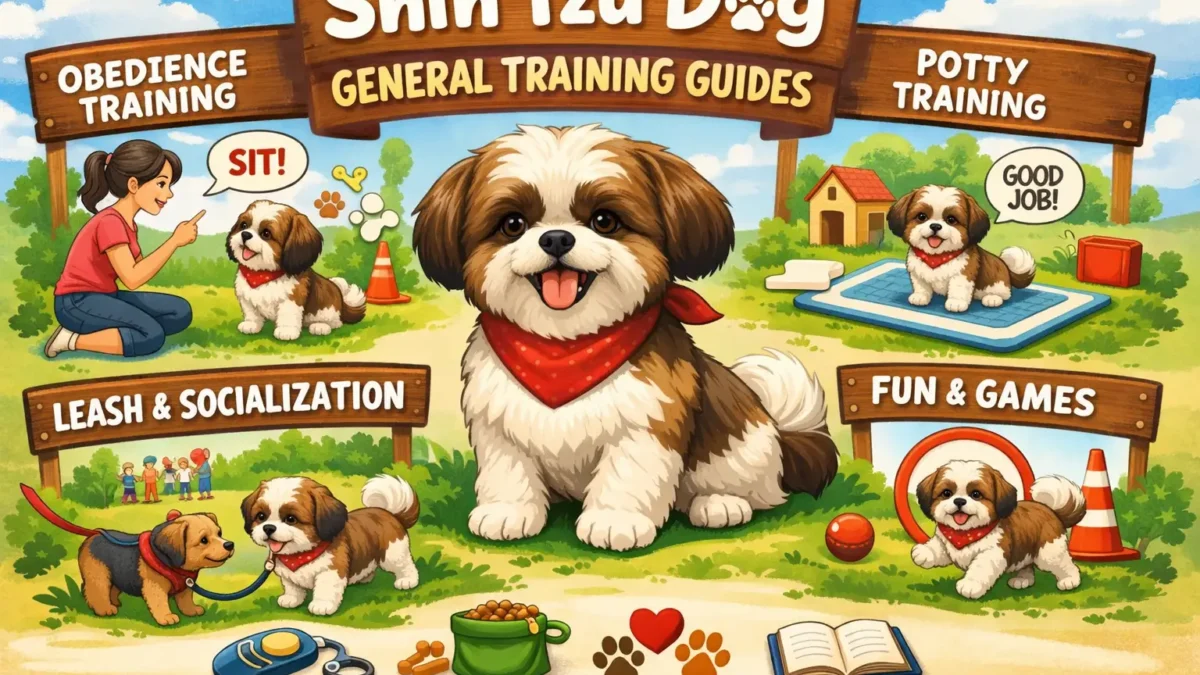
Shih Tzu Training Guide: Simple, Effective Training for Puppies and Adults
Training a Shih Tzu is less about force and repetition and more about understanding how this breed thinks. Shih Tzus are intelligent, affectionate, and people-oriented, but they’re also independent and sensitive—traits that can confuse owners who expect fast obedience like they see with working breeds.
This guide is designed for both first-time Shih Tzu owners and experienced dog parents who want clear, realistic training advice that actually works in everyday life. Whether you’re raising a puppy or retraining an adult Shih Tzu, the goal is the same: build good behavior through consistency, motivation, and trust—not pressure or punishment.
You’ll learn:
- how Shih Tzus learn differently from high-drive breeds
- what training methods work best for their temperament
- how to avoid common mistakes that cause “stubborn” behavior
- what progress should realistically look like over time
This is not a quick-fix or dominance-based approach. Instead, it focuses on simple, humane, reward-based training that fits busy households, apartments, families, and small-dog lifestyles. When done correctly, Shih Tzu training should feel manageable, not frustrating—and it should strengthen your bond, not strain it.
Understanding Shih Tzu Behavior and Trainability
Before training works, it’s important to understand how Shih Tzus think and learn. Many owners say their Shih Tzu is “stubborn,” but in real training, this behavior usually comes from independence, sensitivity, or low motivation, not disobedience.
Shih Tzus were bred as companion dogs, not working dogs. This means they enjoy people, comfort, and routine—but they don’t feel a strong need to obey just to please you. Training works best when it feels rewarding and fun, not strict or repetitive.
Here’s what matters most for Shih Tzu training:
- They learn quickly when motivated
- They shut down if training feels harsh or loud
- They get bored with long sessions
- They respond better to rewards than commands
To make this easy to understand, here’s a quick breakdown.
Shih Tzu Training Traits Explained
| Trait | What Owners Often See | What It Means for Training |
|---|---|---|
| Independent nature | Ignores commands sometimes | Needs better rewards, not more pressure |
| Sensitive personality | Gets scared or shuts down | Gentle voice and calm handling work best |
| Food motivation | Learns fast with treats | Reward timing is very important |
| Short attention span | Loses focus quickly | Short training sessions work better |
| People-oriented | Follows owner around | Bond-based training is very effective |
Another important thing to understand is attention span. Most Shih Tzus can focus for only 5 to 10 minutes at a time, especially puppies. Training longer than that often leads to frustration for both dog and owner.
Shih Tzus also do best in quiet, low-distraction spaces when learning something new. Trying to train in a noisy room, around kids running, or during busy hours often slows progress.
Once you understand these behavior traits, training becomes much easier—and more predictable.
Step-by-Step Shih Tzu Training Basics
This section explains how to train a Shih Tzu step by step, in a simple and clear way. You do not need special tools or long hours. What matters most is short sessions, daily practice, and good timing.
Shih Tzus learn best when training feels calm and rewarding. Yelling, pulling, or repeating commands too much usually makes them ignore you.
Start with these basic rules before training:
- Train when your dog is calm and not too tired
- Use small, soft treats your Shih Tzu loves
- Keep sessions short (5–10 minutes)
- Always reward good behavior right away
Daily Shih Tzu Training Routine
| Training Area | How Long | How Often |
|---|---|---|
| Basic commands (sit, come) | 5–10 minutes | 1–2 times a day |
| Potty training | Very short | Every outing |
| Leash practice | 5 minutes | Daily |
| Mental games | 5 minutes | 3–4 times a week |
Short sessions work better than one long session. Ending early while your dog is still doing well helps learning.
Training Focus by Age
| Age | What to Focus On |
|---|---|
| 8–16 weeks | Name response, potty habits, gentle handling |
| 4–8 months | Sit, come, leash walking, calm behavior |
| Adult Shih Tzu | Consistency, manners, fixing bad habits |
Basic Training Steps That Work
- Say the command once in a calm voice
- Show the action or guide gently
- The moment your Shih Tzu does it right, give a treat
- Praise softly and clearly
- Stop before your dog loses focus
Do not repeat commands again and again. If your Shih Tzu does not respond, pause and try again later.
Training should feel easy and positive, not stressful. If your dog walks away, it usually means the session is too long or the reward is not good enough.
Common Shih Tzu Training Problems and How to Fix Them
Many Shih Tzu owners face the same problems during training. This does not mean you are doing a bad job. Most issues happen because of mixed signals, low motivation, or training that moves too fast.
The good news is that most Shih Tzu training problems can be fixed with small changes.
Here are the most common problems and what actually helps.
Shih Tzu Training Problems and Fixes
| Problem | Why It Happens | What Works Best |
|---|---|---|
| Acts stubborn or ignores commands | Low reward or long sessions | Use better treats and keep sessions short |
| Barks too much | Wants attention or is bored | Ignore barking and reward quiet behavior |
| Potty accidents indoors | No clear routine | Take out on a strict schedule |
| Pulls on the leash | Too excited or distracted | Stop walking and wait for calm |
| Only listens sometimes | Inconsistent rules | Same rules every day, no exceptions |
Important Fixes Owners Often Miss
- Do not punish mistakes
Punishment makes Shih Tzus nervous and slow to learn. - Reward good behavior right away
Waiting even a few seconds can confuse your dog. - Be consistent
If jumping on the couch is allowed today but not tomorrow, your Shih Tzu will not understand. - Control the environment
Fewer distractions help your dog succeed faster.
If your Shih Tzu keeps repeating the same problem, it usually means one of three things:
- training sessions are too long
- rewards are not exciting enough
- rules are not clear in the home
Fixing these often solves the issue without needing advanced training.
When to Seek Professional Help for Shih Tzu Training
Most Shih Tzu training problems can be handled at home with time and patience. But some situations need extra help from a professional. Getting help early can prevent small problems from becoming serious.
You should not feel embarrassed about asking for help. Good trainers see this as a smart and caring choice.
Here are signs that home training may not be enough.
When to Get Professional Help
| Behavior | How Long to Wait | What to Do |
|---|---|---|
| No improvement at all | 4–6 weeks | Contact a certified dog trainer |
| Fear or anxiety | Right away | Speak to a vet or behavior expert |
| Growling or snapping | Right away | Stop training alone and get help |
| Sudden behavior change | Immediate | Vet check first |
| Training keeps going backward | Ongoing | Professional guidance needed |
A professional trainer can:
- watch how your Shih Tzu reacts in real life
- adjust training for your home and routine
- help you fix mistakes you may not notice
If fear, stress, or aggression is involved, a veterinary behaviorist may be needed. Some behavior problems are linked to pain, fear, or past experiences, not training mistakes.
How to Choose the Right Help
- Look for trainers who use positive reinforcement
- Avoid anyone who promises instant results
- Ask about experience with small or sensitive breeds
- Make sure the trainer explains things clearly to you
Training should always make your Shih Tzu feel safe and confident, not scared.
For more trusted, breed-specific guidance, you can also review the American Kennel Club’s official Shih Tzu training and care resources, which explain basic obedience, behavior, and breed needs in clear detail:
https://www.akc.org/dog-breeds/shih-tzu/