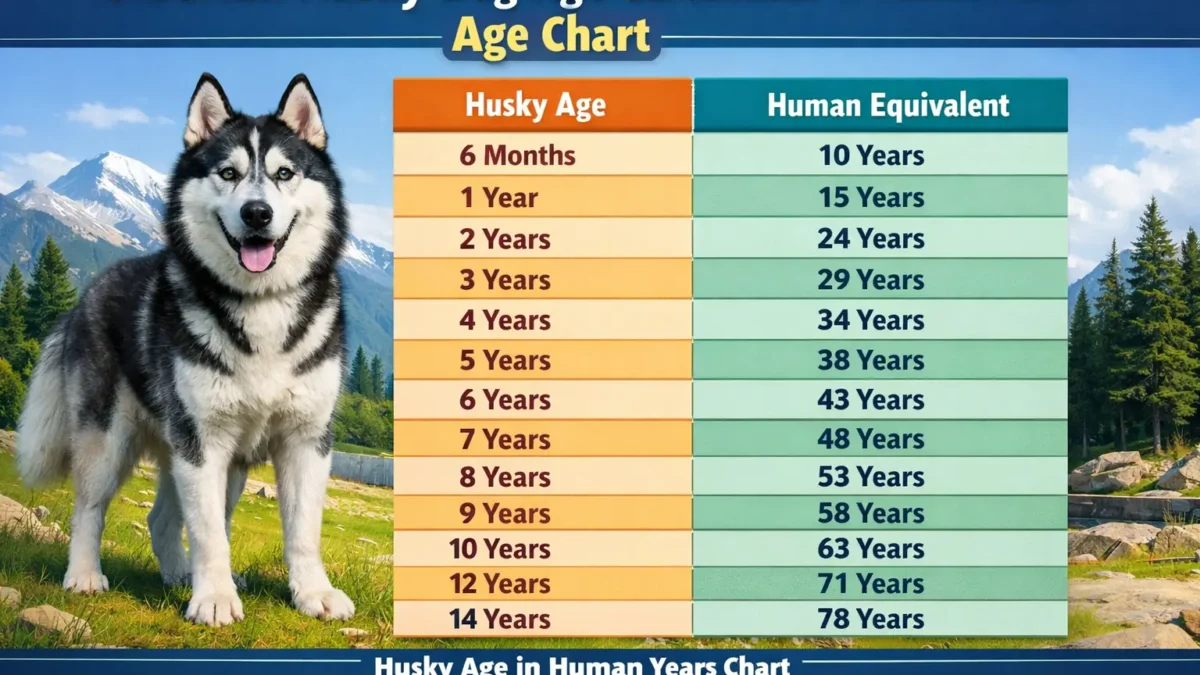
Siberian Husky Age Calculator to Human Years – Age Chart
If you’re wondering how old your Siberian Husky is in human years, a simple “multiply by 7” rule won’t give you an accurate answer. Siberian Huskies age differently than humans—and differently than many other dog breeds—especially during their first few years of life.
A Siberian Husky age calculator estimates your dog’s human-year equivalent by accounting for how dogs mature rapidly as puppies, then age more gradually as adults. This breed-specific approach gives you a much clearer picture of where your Husky truly is in their life stage.
When you use a Husky age calculator, the result is influenced by several factors:
- Rapid early development during puppyhood
- Medium-large working-breed genetics
- Slower aging during adult years compared to giant breeds
- A longer, more gradual senior phase than many large dogs
The goal of this calculator isn’t just to produce a number. It helps you understand whether your Husky is closer to a human child, adult, or senior—so you can make better decisions about nutrition, exercise, training, and veterinary care.
Once you enter your dog’s age, the calculator converts Siberian Husky years into human-year equivalents using modern aging models rather than outdated myths. Below, you’ll also find a clear age chart so you can double-check results and quickly look up your Husky’s human age without calculating anything yourself.
Siberian Husky Age Chart to Human Years (Quick Reference Table)
If you want a fast answer without using a calculator, this Siberian Husky age chart lets you quickly see how your dog’s age compares to human years. This table is made for easy scanning, so you can find your Husky’s age in seconds.
Siberian Husky Age to Human Years Chart
| Siberian Husky Age (Years) | Human Age Equivalent | Life Stage |
|---|---|---|
| 0.5 (6 months) | ~10 years | Puppy |
| 1 | ~15 years | Puppy |
| 2 | ~24 years | Young Adult |
| 3 | ~28 years | Adult |
| 4 | ~32 years | Adult |
| 5 | ~36 years | Adult |
| 6 | ~40 years | Adult |
| 7 | ~44 years | Mature Adult |
| 8 | ~48 years | Mature Adult |
| 9 | ~52 years | Senior |
| 10 | ~56 years | Senior |
| 11 | ~60 years | Senior |
| 12 | ~64 years | Senior |
| 13 | ~68 years | Senior |
| 14 | ~72 years | Senior |
This chart shows why the old idea that one dog year equals seven human years is not correct. Siberian Huskies grow very fast during their first two years, then aging slows down as they become adults.
Here are a few simple examples:
- A 2-year-old Siberian Husky is similar to a young adult human in their mid-20s
- A 6-year-old Husky is closer to a 40-year-old human
- A 10-year-old Husky is roughly like a mid-50s human
Use this table as a guide, not an exact rule. Every Husky ages a little differently based on health, diet, activity level, and veterinary care.
How Siberian Huskies Age Compared to Humans
Siberian Huskies do not age at the same speed as humans. They grow up very fast when they are young, then slow down as adults. This is why dog aging can feel confusing.
In the first two years, a Husky changes quickly. A 1-year-old Husky is already similar to a human teenager. By age 2, many Huskies are closer to a young adult human. After that, aging becomes slower and more steady.
Here are the main reasons Husky aging is different:
- Puppies grow fast in body and brain
- Adult years last longer than puppy years
- Huskies are a medium-large working breed, not a giant breed
- Their bodies stay active and strong for many years
Husky Aging Compared to Human Life Stages
| Husky Age | What’s Happening in a Husky | Similar Human Stage |
|---|---|---|
| 0–1 year | Fast growth, learning, high energy | Child to teen |
| 1–2 years | Body matures, behavior settles | Teen to young adult |
| 3–6 years | Strong, active, stable | Adult |
| 7–9 years | Slower energy, small changes | Middle-aged adult |
| 10+ years | Gray fur, joint stiffness, rest more | Senior |
This table helps show why the 7-year rule does not work. Huskies age quickly early on, but later each year adds fewer “human years” than before.
Knowing how Huskies age helps you understand what your dog needs right now. A 3-year-old Husky does not need the same care as a 10-year-old Husky, even though both may still look playful.
Siberian Husky Life Stages: Puppy, Adult, and Senior Years
Knowing your Siberian Husky’s life stage helps you understand their needs better. Age is not just a number. A puppy, an adult, and a senior Husky all act and feel very different.
Below is a simple table that shows how a Husky’s life is usually divided.
Siberian Husky Life Stages Overview
| Life Stage | Husky Age Range | What You May Notice | Owner Focus |
|---|---|---|---|
| Puppy | 0–1 year | Fast growth, chewing, lots of energy, learning rules | Training, social skills, safe play |
| Young Adult | 1–3 years | Strong body, high activity, testing limits | Exercise, training, routine |
| Adult | 3–7 years | Steady energy, calm behavior, good focus | Fitness, weight control, mental games |
| Mature Adult | 7–9 years | Slower movement, longer rest times | Joint care, vet checks |
| Senior | 10+ years | Gray fur, stiff joints, more sleep | Comfort, health checks, gentle exercise |
Many owners ask, “When is my Husky considered a senior?”
Most Siberian Huskies enter their senior years around 9 to 10 years old, but this can change based on health, diet, and activity.
Signs your Husky may be entering older age include:
- Less interest in long runs
- Taking longer to stand up
- Sleeping more than before
- Mild weight gain or muscle loss
Not all senior Huskies act “old.” Some stay playful well into their later years, especially with good care.
Helping Your Siberian Husky Age Healthily and Live Longer
As Siberian Huskies grow older, their needs slowly change. Good care can help your Husky stay active, comfortable, and happy for many years.
Small daily choices make a big difference as your dog ages.
Siberian Husky Care by Age
| Husky Age Range | Food Focus | Exercise Needs | Vet Care Focus |
|---|---|---|---|
| Puppy (0–1 year) | High-quality puppy food | Short play times, training games | Vaccines, growth checks |
| Young Adult (1–3 years) | Balanced adult food | Long walks, running, mental play | Yearly checkups |
| Adult (3–7 years) | Weight control, quality protein | Regular exercise, steady routine | Yearly exams, dental care |
| Mature Adult (7–9 years) | Joint support, fewer calories | Moderate activity, more rest | Blood work, joint checks |
| Senior (10+ years) | Easy-to-digest food | Gentle walks, low-impact play | Senior screenings, pain checks |
Common Aging Signs and When to See the Vet
| Aging Sign | Normal With Age? | When to Call the Vet |
|---|---|---|
| Slower movement | Yes | If pain or limping appears |
| Sleeping more | Yes | If very hard to wake |
| Gray fur | Yes | No vet needed |
| Weight gain | Sometimes | If sudden or severe |
| Confusion or pacing | No | Call your vet |
Simple ways to support an aging Husky:
- Keep them at a healthy weight
- Adjust exercise, but don’t stop it
- Use soft beds for joints
- Visit the vet regularly
- Give mental games to keep the brain active
Every Husky ages at their own pace. Some stay playful for a long time, while others slow down earlier. Paying attention to small changes helps you act early.
For more trusted, breed-specific information on Siberian Huskies, including health, lifespan, and care guidelines, you can also refer to the American Kennel Club, which provides detailed, veterinarian-reviewed resources for Husky owners.