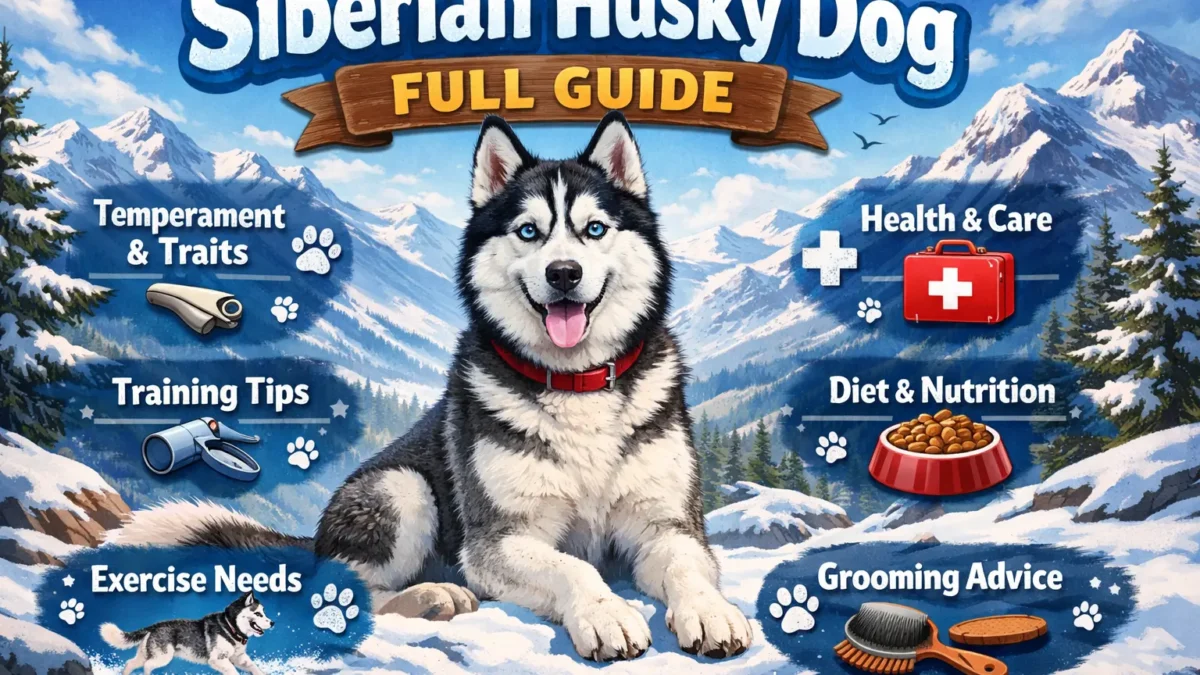
Siberian Husky Dog Full Guide
The Siberian Husky is not a modern designer breed or a casual companion dog by origin. It is a purpose-built working dog developed by the Chukchi people of northeastern Siberia, where survival depended on efficiency, endurance, and cooperation. These dogs were bred to pull light loads over vast frozen distances, live closely with families, and function reliably in extreme Arctic conditions. This history explains much of what owners experience today: independence, stamina, social confidence, and a body designed for movement rather than bulk.
Unlike heavy hauling breeds, the Siberian Husky was selected for endurance rather than brute strength. Over generations, this created a dog with a lean frame, efficient gait, and remarkable metabolic control. Even modern Huskies retain this “economy of motion,” which is why a healthy Husky often appears slim compared to many pet dogs and can exercise for long periods without tiring.
Siberian Husky Quick Facts
| Trait | Details |
|---|---|
| Breed Group | Working |
| Origin | Siberia (Chukchi people) |
| Height | 20–23.5 inches |
| Weight | 35–60 pounds |
| Body Type | Lean, athletic, endurance-built |
| Coat Type | Dense double coat |
| Common Colors | Black & white, gray & white, red & white, white |
| Eye Colors | Brown, blue, bi-colored |
| Average Lifespan | 12–14 years |
Physically, the Siberian Husky is built for balance and efficiency. The chest is moderately deep but not broad, allowing lung capacity without excess weight. Legs are straight and well-muscled, giving the breed a smooth, ground-covering stride rather than a bouncing gait. The tail, often carried in a loose sickle shape, helps conserve heat when curled over the face in cold weather but is typically relaxed during movement.
One of the breed’s most recognizable features is its coat. The Siberian Husky has a true double coat, consisting of a soft insulating undercoat and a straight, weather-resistant outer coat. This structure protects against extreme cold while also allowing heat regulation, which is why Huskies can tolerate warmer climates better than many people expect, provided they are properly managed. Coat colors range widely, but color has no impact on temperament, health, or working ability.
Eye color is another distinctive trait. Blue eyes, brown eyes, and heterochromia are all normal in the breed and are simply genetic variations rather than indicators of vision problems. Combined with erect ears and a fox-like facial mask, these features contribute to the breed’s striking appearance, but they also serve functional purposes rooted in the Husky’s working past.
Siberian Husky Temperament, Personality, and Behavior
Siberian Huskies are friendly, social dogs, but their personality is often misunderstood. Many people expect them to act like obedient guard dogs. In real life, Huskies are more independent, playful, and curious. They were bred to think on their own while working long distances, and that mindset is still very strong today.
A Husky usually enjoys being around people, but this breed is not overly clingy. They like company, not constant control. This is why many owners say their Husky listens well one moment and ignores them the next. It is not a lack of intelligence. It is a breed trait.
Siberian Husky Temperament Overview
| Trait | What This Means in Daily Life |
|---|---|
| Friendliness | Very friendly with people |
| Independence | Likes to make its own decisions |
| Intelligence | Smart, but not eager to obey |
| Guarding Ability | Very low, welcomes strangers |
| Prey Drive | Moderate to high |
| Vocal Behavior | Howling more than barking |
| Energy Level | High and constant |
With family members, Huskies are usually gentle and playful. They enjoy being part of daily life and often follow people from room to room without demanding attention. They are not protective in the traditional sense, which makes them poor guard dogs but excellent social companions.
With strangers, most Huskies are confident and welcoming. Many will greet new people with excitement rather than caution. This is normal behavior for the breed and should not be mistaken for bad training.
When it comes to children, Siberian Huskies are usually tolerant and fun-loving. However, their energy and strength mean supervision is important, especially with younger kids. Rough play can happen if boundaries are not taught early.
Around other dogs, Huskies are often social, especially if they are well-socialized from a young age. Small animals can be more challenging. Because of their natural prey drive, some Huskies may chase cats, rabbits, or other small pets. Training and management help, but this instinct never fully disappears.
Another well-known trait is vocalization. Huskies are famous for howling, talking, and making expressive sounds. This behavior is normal and part of how they communicate. They are not a quiet breed.
Understanding Husky temperament helps owners avoid frustration. These dogs are not stubborn to be difficult. They are independent because they were bred that way.
Exercise, Training, and Mental Stimulation Needs
Siberian Huskies are very active dogs. They were bred to travel long distances every day, so short walks are not enough for them. When a Husky does not get enough exercise, problems often start. These problems can include chewing, digging, escaping, and loud howling.
A tired Husky is usually a calm Husky. Exercise helps both the body and the mind. This breed needs movement, thinking games, and clear rules.
Daily Exercise Needs
| Type of Activity | Minimum Needed | Best Amount |
|---|---|---|
| Physical exercise | 60 minutes | 90–120 minutes |
| Mental stimulation | 20 minutes | 30–45 minutes |
| Training time | 10 minutes | 15–20 minutes |
Physical exercise should include more than slow walks. Huskies enjoy running, hiking, and fast-paced play. Many owners also enjoy activities like jogging, biking, or pulling sports with their Husky. These activities match the breed’s natural instincts.
Mental stimulation is just as important. Huskies are smart and get bored easily. Simple puzzle toys, scent games, or learning new tricks help keep their minds busy. Without mental work, a Husky may find its own fun, which usually means trouble.
Training a Siberian Husky can feel challenging. They learn commands quickly, but they do not always follow them. This does not mean they are dumb or stubborn on purpose. Huskies were bred to make choices on their own, not wait for instructions.
Common training challenges include pulling on the leash and poor recall. Many Huskies will run if given the chance, even if they know their name well. This is why secure fencing and leash use are very important.
Training works best when it is calm, positive, and consistent. Short sessions with rewards work better than long, strict lessons. Harsh punishment usually makes training worse, not better.
Common Problems When Exercise Is Too Low
| Behavior | Why It Happens |
|---|---|
| Escaping | Looking for stimulation |
| Chewing | Boredom and stress |
| Howling | Excess energy |
| Ignoring commands | Lack of focus |
Meeting exercise and training needs is the biggest key to success with this breed. Many Husky behavior problems come from too little activity, not bad dogs.
Grooming, Health, and Lifespan of a Siberian Husky
Siberian Huskies look fluffy, but their grooming needs are simpler than many people expect. The main challenge is shedding. Huskies shed a little all year, but twice a year they lose a large amount of fur. This is called a coat blow. During this time, fur comes out in clumps.
Regular brushing keeps shedding under control and helps the dog stay comfortable. Bathing is not needed often because the coat stays clean and does not hold strong smells. Shaving a Husky is not safe. The double coat protects the dog from both cold and heat.
Grooming and Shedding Expectations
| Care Area | What to Expect |
|---|---|
| Shedding | Heavy during seasonal coat blow |
| Brushing | 2–3 times a week, daily when shedding |
| Bathing | Only when dirty |
| Shaving | Not recommended |
| Coat Smell | Low |
Nail care, ear care, and teeth cleaning are also important. Active Huskies may wear down their nails naturally, but many still need trimming. Ears should be checked regularly, especially in warm or humid weather. Teeth should be brushed or supported with dental chews to prevent problems.
Health-wise, Siberian Huskies are usually strong dogs. Their working background helped create a breed with good overall health. Still, like all breeds, they can have certain health issues.
Common Health Considerations
| Condition | What Owners Should Know |
|---|---|
| Eye problems | Can include cataracts or vision issues |
| Hip dysplasia | Less common, but still possible |
| Zinc deficiency | Can cause skin and coat problems |
Most Siberian Huskies live between 12 and 14 years. A healthy diet, proper exercise, and regular vet visits help them live longer and feel better as they age. Responsible breeders often check hips and eyes before breeding, which lowers health risks.
Grooming and health care are manageable when owners understand what the breed needs. Problems usually happen when Husky care is ignored or misunderstood.
Is the Siberian Husky Right for You? Cost, Suitability, Pros & Cons
Before choosing a Siberian Husky, it is very important to understand if this breed fits your life. Huskies are beautiful and friendly, but they are not easy dogs for everyone. Many problems happen when people choose this breed without knowing the work involved.
Siberian Huskies do best with active owners. They need time, exercise, and patience every day. If these needs are not met, owners often feel overwhelmed.
Siberian Husky Suitability Snapshot
| Lifestyle Type | Is This a Good Match? |
|---|---|
| Active owners | Yes, very good fit |
| Families with children | Yes, with supervision |
| First-time dog owners | Can be challenging |
| Apartment living | Only with lots of exercise |
| Seniors | Usually not ideal |
| Multi-pet homes | Possible with training |
Cost is another important factor. Siberian Husky puppies are not cheap, and daily care adds up over time. While grooming costs are lower than some fluffy breeds, shedding tools, vet care, food, and training still require a steady budget.
Typical Cost Factors to Expect
| Expense Type | What to Know |
|---|---|
| Puppy price | Medium to high |
| Grooming tools | Needed for heavy shedding |
| Vet care | Regular checkups and eye exams |
| Training | Often needed due to independence |
Below is a simple look at the good and bad sides of this breed.
Siberian Husky Pros and Cons
| Pros | Cons |
|---|---|
| Friendly and social | Escapes easily |
| Very athletic | Needs lots of exercise |
| Smart and curious | Can ignore commands |
| Low aggression | Not a guard dog |
| Beautiful appearance | Heavy shedding |
Siberian Huskies are great dogs for people who enjoy outdoor activities and have time every day for exercise and care. They are not a good choice for people who want a calm, easy dog or a strong protector.
For official breed standards, history, and health guidance, you can also visit the https://www.akc.org/dog-breeds/siberian-husky/ which provides reliable, breeder-verified information to support responsible ownership.