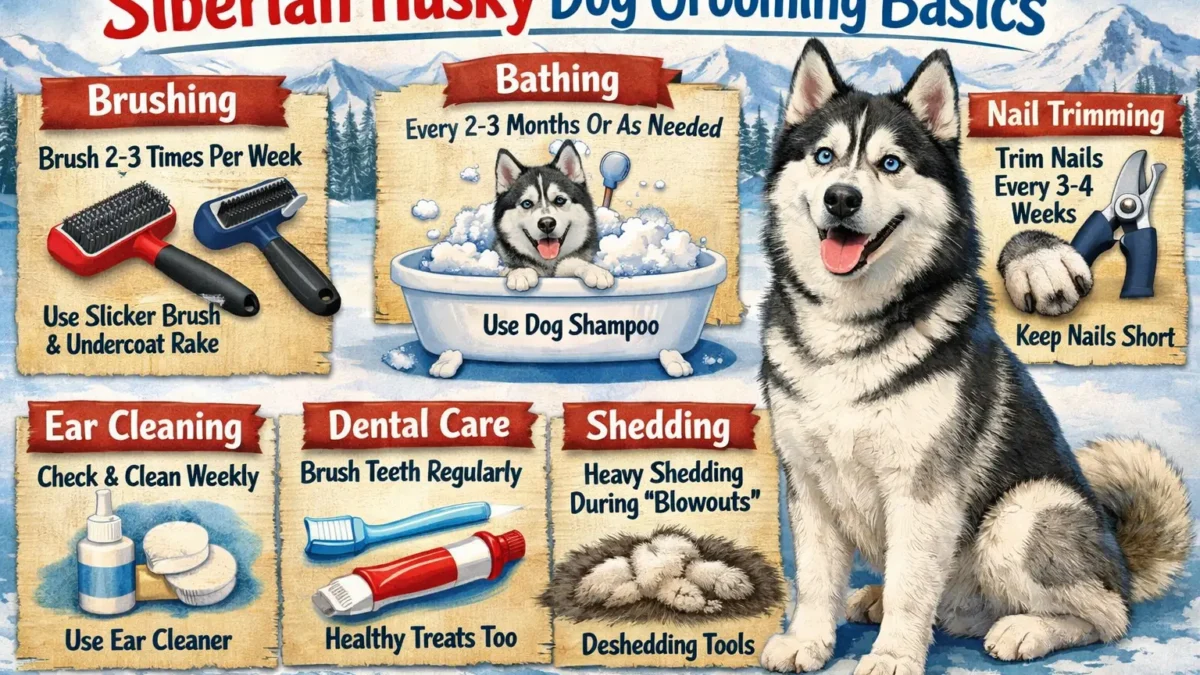
Siberian Husky Grooming Basics: Shedding, Coat Care, and Home Grooming Guide
Siberian Husky grooming is often misunderstood. Many first-time owners assume that because Huskies look clean and don’t need haircuts, grooming must be simple. In reality, Huskies are low-odor but high-maintenance when it comes to coat care, especially because of their dense double coat and extreme seasonal shedding.
This guide is designed to give you realistic expectations before you pick up a brush. Proper grooming is not about making a Husky look “pretty” — it’s about maintaining coat function, preventing skin problems, and keeping your dog comfortable year-round. When grooming is done correctly, Huskies stay cleaner, shed more predictably, and are less likely to develop hot spots, irritation, or compacted undercoat.
Unlike many breeds, Huskies should not be shaved, clipped, or frequently bathed. Their coat is a working system built for insulation and temperature regulation. Grooming focuses on removing dead undercoat, supporting healthy skin, and protecting the guard coat, not altering the dog’s appearance.
Many grooming issues seen by professionals — excessive shedding indoors, flaky skin, overheating, or dull coat — are caused by incorrect home routines rather than a lack of grooming. Understanding what Huskies actually need (and what they don’t) is the most important first step.
Is a Siberian Husky High-Maintenance for Grooming?
| Grooming Aspect | Maintenance Level | What This Means for Owners |
|---|---|---|
| Brushing | High | Regular brushing is essential, especially during shedding seasons |
| Bathing | Low | Over-bathing can damage the coat; infrequent baths are best |
| Haircuts | Not needed | Shaving or trimming the coat is harmful |
| Seasonal care | Very high | Intense coat blow occurs 1–2 times per year |
| Odor control | Low | Healthy Husky coats are naturally low-odor |
If you’re expecting a low-effort grooming routine, a Siberian Husky may be frustrating. But for owners who understand the coat and work with it — not against it — grooming becomes predictable, manageable, and far less messy than most people expect.
Understanding the Siberian Husky Double Coat and Heavy Shedding
To groom a Siberian Husky correctly, you first need to understand how their coat works. Huskies have a double coat, and this is the main reason they shed so much and need special grooming care.
The coat is not just fur — it is a natural system that protects the dog from both cold and heat. When this system is damaged, problems like skin irritation, uneven shedding, and trouble staying cool can happen.
How the Siberian Husky Double Coat Works
A Husky’s coat has two layers, and each one has a clear job.
| Coat Layer | What It Does | Why Grooming Matters |
|---|---|---|
| Guard coat (top layer) | Protects from sun, dirt, and moisture | Should never be shaved or cut |
| Undercoat (soft inner layer) | Keeps the dog warm in winter and cool in summer | This is what sheds heavily |
Most of the hair you see around your home comes from the undercoat, not the top coat. Grooming focuses on removing loose undercoat while keeping the guard coat healthy.
Why Siberian Huskies Shed So Much
Huskies are famous for shedding, and for good reason. Their coat changes with the seasons to help them adjust to temperature changes. This heavy shedding period is often called “blowing coat.”
During this time, large clumps of undercoat come out all at once. This is normal and healthy, but it can be overwhelming without the right grooming routine.
| Season | Shedding Level | What Owners Should Expect |
|---|---|---|
| Spring | Very heavy | Old winter coat falls out fast |
| Summer | Moderate | Loose undercoat still sheds |
| Fall | Very heavy | New winter coat starts growing |
| Winter | Low | Coat stays more stable |
During spring and fall, brushing may be needed daily to keep loose hair from packing against the skin.
Why Shaving a Husky Is a Serious Mistake
One of the most common grooming myths is that shaving a Husky helps them stay cool. This is not true.
Shaving:
- Removes protection from the sun
- Traps heat instead of releasing it
- Can cause uneven or damaged regrowth
- Increases risk of skin problems
A healthy double coat actually helps regulate body temperature. The correct way to help a Husky stay comfortable is deshedding, not shaving.
When you understand how the coat works and why shedding happens, grooming becomes much easier and far less frustrating.
Essential Siberian Husky Grooming Tools and Home Routine
Grooming a Siberian Husky at home is much easier when you use the right tools and follow a simple routine. You do not need many products, but the tools you choose must work with a Husky’s thick double coat.
The main goal is to remove loose undercoat, keep air moving through the fur, and avoid hurting the skin.
Grooming Tools You Actually Need for a Husky
| Tool | What It Is Used For | How Often to Use |
|---|---|---|
| Slicker brush | Removes loose hair on the top coat | 1–2 times per week |
| Undercoat rake | Pulls out deep loose undercoat | During heavy shedding |
| Metal comb | Checks for missed tangles | After brushing |
| High-velocity dryer (optional) | Blows out loose undercoat | During coat blow or after baths |
These tools help you remove dead hair without cutting or damaging the coat.
Tools You Should NOT Use on a Husky
| Tool | Why It’s a Problem |
|---|---|
| Clippers or trimmers | Can permanently damage the coat |
| Shaving blades | Remove coat protection |
| Fur-cutting deshedding tools | Can cut healthy guard hairs |
| Human brushes | Do not reach the undercoat |
Using the wrong tools is one of the most common reasons Huskies end up with coat problems.
Simple Home Grooming Routine for Siberian Huskies
Follow this easy routine to keep grooming stress-free:
- Start with a slicker brush to remove loose surface hair
- Use an undercoat rake gently to remove deeper loose fur
- Comb through the coat to check for missed areas
- During heavy shedding, groom more often and for shorter sessions
Always brush slowly and gently. Pulling too hard can hurt the skin and make your dog hate grooming time.
Regular brushing keeps hair from building up under the coat, which helps prevent itching, hot spots, and bad shedding inside your home.
Bathing, Nails, Ears, and Skin Care for Siberian Huskies
This part of grooming is about basic hygiene and health. Siberian Huskies do not need frequent baths, but they do need regular care for nails, ears, and skin. Doing these tasks the right way helps prevent pain, infections, and bad smells.
How Often to Bathe and Groom a Siberian Husky
Huskies have a clean coat that holds very little odor. Bathing too often can actually cause skin problems.
| Grooming Task | How Often |
|---|---|
| Brushing | 1–2 times a week (daily during shedding) |
| Bathing | Every 8–12 weeks |
| Nail trimming | Every 3–4 weeks |
| Ear cleaning | Only when dirty |
| Teeth cleaning | At least once a week |
If your Husky smells bad often, it is usually a skin issue, not a bathing issue.
Bathing a Siberian Husky the Right Way
When you do bathe your Husky:
- Use a dog shampoo, never human shampoo
- Rinse very well so no soap stays in the coat
- Dry the coat fully, especially the undercoat
Leaving the coat damp can trap moisture and lead to skin irritation or infection.
Nail Care Basics for Siberian Huskies
Long nails can cause pain and change how your dog walks.
- Nails should not touch the floor when standing
- Trim small amounts at a time
- If unsure, ask a groomer or vet to show you
Active Huskies may wear nails down naturally, but most still need trimming.
Ear Cleaning and Ear Safety
Huskies usually have healthy ears, but they should still be checked.
- Clean ears only if you see dirt or wax
- Use a dog-safe ear cleaner
- Never push anything deep into the ear
Redness, strong smell, or head shaking can be signs of infection.
Skin and Coat Warning Signs to Watch For
Grooming is also a good time to check your dog’s skin.
| Sign | What It Could Mean |
|---|---|
| Dry flakes | Dry skin or diet issue |
| Red or itchy skin | Allergies |
| Strong smell | Possible infection |
| Hair loss | Skin or health problem |
If these signs do not improve, a vet visit is needed.
Grooming Frequency, Seasonal Care, and Common Husky Mistakes
Siberian Husky grooming changes during the year. Most of the time, grooming is simple. But during heavy shedding seasons, it needs more effort. Knowing when to groom more and what mistakes to avoid will save you time and keep your Husky healthy.
How Often You Should Groom a Siberian Husky
Husky grooming is not the same every week. It depends on the season.
| Time of Year | Grooming Needs |
|---|---|
| Normal weeks | Brush 1–2 times per week |
| Spring shedding | Brush daily |
| Fall shedding | Brush daily |
| After baths | Dry fully and brush |
| Winter | Light brushing only |
During spring and fall, your Husky will lose large amounts of fur. This is normal and should not be stopped — it should be managed with brushing.
Grooming Puppies, Adults, and Senior Huskies
- Puppies: Start gentle brushing early so they get used to grooming
- Adults: Follow a steady routine based on shedding
- Seniors: Groom more gently and watch for skin sensitivity
Older Huskies may need shorter grooming sessions to stay comfortable.
Home Grooming vs Professional Grooming
Most Husky grooming can be done at home, but some situations are better handled by professionals.
| Grooming Task | At Home | Professional Groomer |
|---|---|---|
| Regular brushing | Yes | Not needed |
| Nail trimming | Yes (with care) | Yes |
| Heavy coat blow | Hard | Best option |
| Skin issues | No | Vet needed |
Professional groomers are helpful during heavy shedding or if you feel unsure.
Common Siberian Husky Grooming Mistakes
| Mistake | Why It’s a Problem |
|---|---|
| Shaving the coat | Damages temperature control |
| Bathing too often | Causes dry, itchy skin |
| Skipping brushing | Leads to trapped undercoat |
| Using sharp tools | Can hurt skin and coat |
Most grooming problems happen because of too much grooming or the wrong tools, not because of too little care.
When grooming is done correctly, Siberian Huskies stay clean, comfortable, and healthy with less effort than many people expect.
For official breed information and coat standards, you can also review the American Kennel Club Siberian Husky breed profile, which explains the Husky’s double coat and why proper grooming is essential for this breed’s health and comfort.