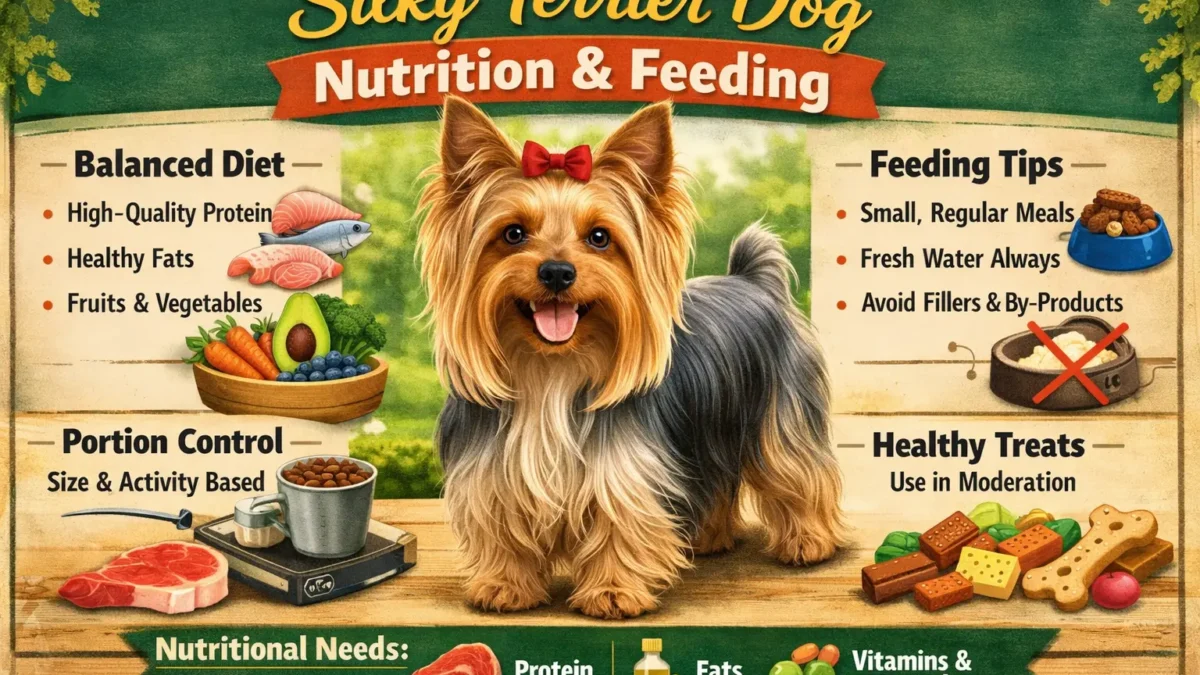
Silky Terrier Dog Nutrition: Complete Feeding Guide for Puppies, Adults & Seniors
Silky Terriers are small, energetic dogs with a unique coat that requires proper care and nutrition. Feeding your Silky Terrier the right diet is not just about filling the bowl — it directly affects their energy levels, coat health, weight management, dental condition, and overall longevity.
Because they are a toy breed with a fast metabolism, Silky Terriers burn calories quickly, making balanced, nutrient-rich meals essential to maintain health. At the same time, their small size means even slight overfeeding can lead to weight gain, while underfeeding can cause low energy or nutrient deficiencies.
This guide will help you understand:
- How Silky Terriers’ nutritional needs differ from larger breeds
- What nutrients are most important for their health and shiny coat
- How to feed them safely at every life stage, from puppy to senior
- Practical tips for portion sizes, food types, treats, and real-life feeding scenarios
By the end of this guide, you’ll have a clear, science-backed roadmap to keep your Silky Terrier healthy, happy, and energetic.
Why Silky Terrier Nutrition Matters:
- Supports energy and metabolism for a small, active breed
- Maintains shiny, healthy coat and skin
- Prevents weight issues common in toy breeds
- Protects dental health with appropriate kibble or treats
- Supports long-term overall health and vitality
Core Nutritional Needs of Silky Terriers
Silky Terriers may be small, but they have big nutritional needs. Their tiny bodies burn energy fast, so they need high-quality food with the right balance of protein, fat, fiber, vitamins, and minerals.
Here’s a simple table to show the most important nutrients for a Silky Terrier and why they matter:
| Nutrient | Recommended Range | Why It Matters |
|---|---|---|
| Protein | 22–30% of daily calories | Builds and maintains muscles, keeps energy high |
| Fat | 8–15% of daily calories | Helps with coat shine and energy |
| Omega-3 & Omega-6 | Added as supplements or in food | Supports skin, coat, and overall health |
| Fiber | 2–5% | Helps with digestion and healthy stools |
| Vitamins & Minerals | A, D, E, calcium, phosphorus | Supports bones, teeth, and overall growth |
It is important to check dog food labels. Look for real meat as the first ingredient, healthy fats, and avoid foods with too many fillers like corn or soy. Small breeds like Silky Terriers also benefit from kibble that helps clean their teeth as they chew.
Always remember: every Silky Terrier is unique. Puppies, adults, and seniors have slightly different needs. Active dogs burn more calories, while less active ones need fewer. Adjust portions carefully and watch your dog’s body condition to make sure they are neither too thin nor overweight.
How Much to Feed and Life Stage Guidelines
Silky Terriers are small but energetic dogs, so feeding the right amount is very important. Giving too much food can make them gain weight, while too little can make them weak or low in energy.
Here is a simple feeding guide by life stage and weight to help you feed your Silky Terrier the right amount:
| Life Stage | Weight (lbs) | Daily Calories | Meals per Day | Notes |
|---|---|---|---|---|
| Puppy | 4–10 | 300–450 kcal | 3–4 | Growing fast, need frequent meals |
| Adult | 6–10 | 250–400 kcal | 2 | Maintain ideal weight and energy |
| Senior | 6–10 | 200–350 kcal | 2 | Less active, monitor weight |
Small dogs like Silky Terriers often do better with multiple small meals rather than one big meal. Puppies usually eat 3–4 times a day, adults 2 times a day, and seniors 2 times a day, but you can adjust depending on your dog’s activity level.
Another helpful tip is to watch your dog’s body condition. You should be able to feel their ribs without pressing too hard, and they should have a slight waist when seen from above. If your dog is gaining or losing weight, adjust the portions accordingly.
For convenience, here’s a quick portion guide for kibble:
| Weight (lbs) | Cups of Kibble per Day | Notes |
|---|---|---|
| 4–6 | ½ – ¾ cup | Split into 2–4 meals |
| 6–8 | ¾ – 1 cup | Adjust for activity |
| 8–10 | 1 – 1¼ cups | Monitor body condition |
Always remember, every Silky Terrier is different, and portion sizes may need small adjustments based on activity, metabolism, and life stage.
Types of Food and Safe Treats
Silky Terriers can eat different types of dog food, but each type has advantages and disadvantages. Choosing the right food helps them stay healthy, energetic, and maintain a shiny coat.
Here is a simple comparison of common food types:
| Food Type | Pros | Cons | Best For |
|---|---|---|---|
| Kibble (dry) | Easy to store, helps clean teeth | Less tasty for picky dogs | Busy owners, dental health |
| Wet / Canned | Tasty and easy to eat, higher moisture | More expensive, shorter shelf life | Picky eaters, small meals |
| Raw | High protein, supports coat health | Risk of bacteria, prep needed | Healthy adults, controlled diets |
| Homemade | Full control over ingredients | Hard to balance nutrients | Special diets, allergies |
Small dogs like Silky Terriers are also sensitive to treats. Treats should not exceed 10% of daily calories. Some human foods are safe, but others can be toxic. Here’s a quick guide:
| Safe Foods | Unsafe / Toxic Foods | Notes |
|---|---|---|
| Cooked chicken, plain rice | Chocolate, grapes, onions | Small portions only |
| Carrots, blueberries | Macadamia nuts, xylitol | Treats, not main meals |
| Apple slices (no seeds) | Avocado, alcohol | Occasional snack |
Always introduce new foods gradually to avoid digestive upset. Mix a small amount with their current food and watch for any changes in stool, energy, or appetite.
Special Considerations, Common Problems, and Practical Tips
Silky Terriers are small but active dogs, and sometimes they need special care with their diet. This includes managing allergies, sensitive stomachs, weight, or picky eating habits. Here are some tips and quick guides to make feeding easier:
Special Diets and Feeding Scenarios
| Scenario | Feeding Tips | Key Considerations |
|---|---|---|
| Sensitive stomach | Feed small, simple meals | Avoid sudden changes, use limited ingredient food |
| Overweight | Reduce treats and portions | Monitor weight weekly, use low-calorie food |
| Picky eater | Mix textures, try wet or kibble mix | Avoid feeding human food as main meals |
| Dental health | Use dry kibble or dental chews | Supervise chewing, maintain routine brushing |
| Active / working | Increase protein and fat slightly | Adjust portions based on energy needs |
Common Feeding Mistakes
| Mistake | Why it’s a problem | How to fix |
|---|---|---|
| Overfeeding | Can cause obesity | Use measuring cups and daily calorie chart |
| Switching foods too fast | Can cause diarrhea | Mix old and new food over 7–10 days |
| Giving too many treats | Upsets calorie balance | Keep treats under 10% of daily calories |
| Ignoring body condition | Hard to notice weight gain | Check ribs, waist, and energy regularly |
Practical Tips for Owners
- Feeding multiple dogs: Feed separately to ensure each dog gets the right portions.
- Travel or schedule changes: Keep feeding times consistent and bring familiar food.
- Observing health changes: If your Silky Terrier suddenly stops eating, gains weight quickly, or has loose stools, consult your vet immediately.
- Regular checkups: Small dogs can have hidden dental or digestive problems, so annual vet visits are important.
For more breed‑specific nutrition and feeding tips from a trusted veterinary source, you can also visit the Silky Terrier health and care page on PetMD, which includes feeding advice tailored for this small breed. petmd.co