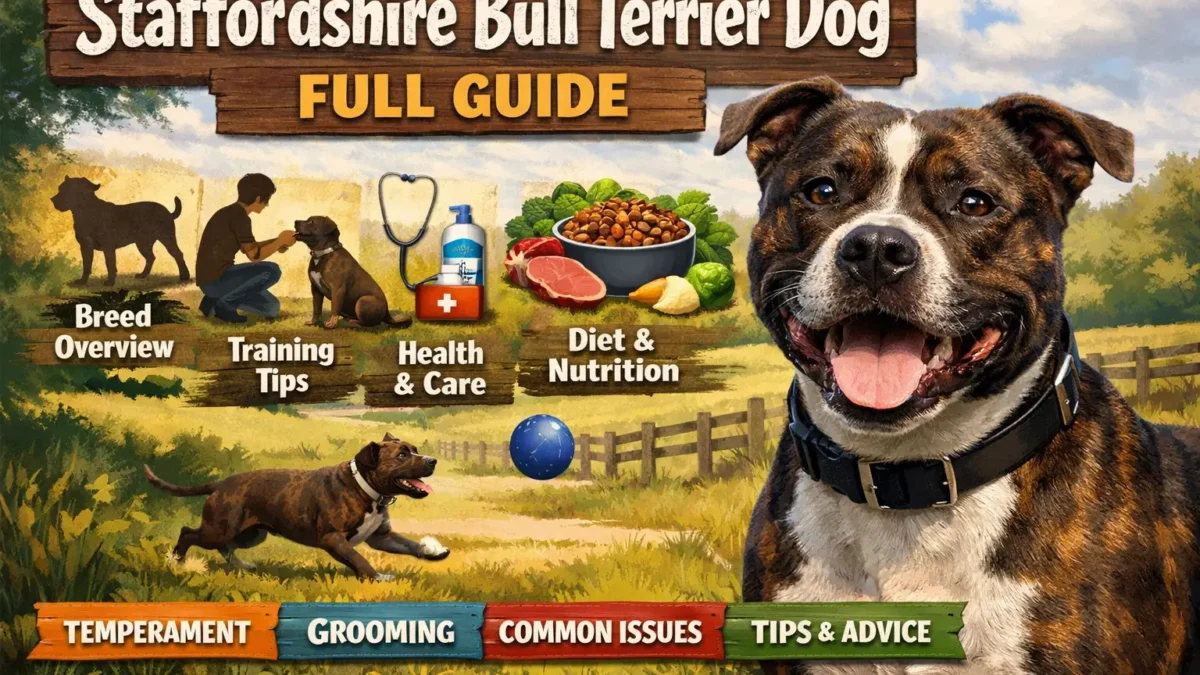
Staffordshire Bull Terrier Dog Full Guide: Temperament, Size, Care & Ownership
The Staffordshire Bull Terrier is a compact, muscular, and deeply people-oriented dog that often surprises those who only know the breed by reputation. Beneath the powerful build and confident stance is a dog bred not for isolation or guarding property, but for close human companionship. When properly bred, trained, and socialized, the Staffordshire Bull Terrier is affectionate, resilient, playful, and intensely loyal to its family.
This breed has a long and complex history that still shapes how it is perceived today. While modern Staffordshire Bull Terriers are widely cherished as family dogs, especially in the UK, misunderstandings persist due to confusion with other bull-type breeds and outdated stereotypes. A well-raised Staffy is not defined by aggression, but by confidence, enthusiasm for life, and a strong desire to be involved in everything their people do.
This guide is designed to give you a clear, experience-based understanding of the Staffordshire Bull Terrier as they truly are in everyday life. It covers temperament, appearance, exercise needs, health considerations, costs, and real-world suitability — without glossing over challenges or relying on myths. Universal topics such as step-by-step training methods, detailed grooming routines, nutrition, and insurance are intentionally handled in separate dedicated guides to keep this article focused and practical.
Whether you are considering your first Staffordshire Bull Terrier, already live with one, or simply want an honest, complete picture of the breed, this guide will help you decide if the Staffy’s unique mix of strength, affection, and energy truly fits your lifestyle.
History & Origin
The Staffordshire Bull Terrier began in England during the early 1800s. At that time, people wanted a dog that was strong, brave, and fast, but also easier to handle than larger fighting dogs. Breeders crossed early bulldog types with local terriers to create a smaller, more agile dog with power and determination.
These early dogs were first used in blood sports that were common in that era. When those activities were later banned, the breed’s role slowly changed. Owners began to value these dogs not for fighting, but for their loyalty, toughness, and strong bond with people. Over time, careful breeding shifted the focus toward a stable temperament and family-friendly behavior.
By the late 19th and early 20th centuries, the Staffordshire Bull Terrier had become a trusted companion dog, especially in working-class homes. They were known for being affectionate with people, patient with children, and very devoted to their families. This is where the breed’s reputation as a loving household dog truly developed.
The modern Staffordshire Bull Terrier is now recognized as a companion-first breed, not a working or guard dog. However, its past still explains many of its traits today, such as confidence, physical strength, and emotional toughness. Understanding this history helps owners better manage the breed’s energy, training needs, and strong attachment to people.
Appearance
The Staffordshire Bull Terrier is a small to medium-sized dog with a strong and athletic body. Even though this breed is not tall, it looks powerful and solid. Everything about its body is built for strength, balance, and movement.
Size and build at a glance
| Feature | Typical Range |
|---|---|
| Height | About 14–16 inches |
| Weight | Around 24–38 pounds |
| Body type | Compact, muscular, and well-balanced |
| Chest | Wide and deep |
| Legs | Short but very strong |
Staffordshire Bull Terriers are known for having a low center of gravity, which gives them stability and strength. They are heavier than they look, and many new owners are surprised by how solid they feel when picked up.
The head is one of the most noticeable features. It is broad with strong cheeks and a short muzzle. The eyes are round and set low, giving the dog an alert but friendly expression. Ears are usually small and fold forward or to the side, never standing straight up.
The coat is short, smooth, and close to the skin. It feels firm to the touch and lies flat. This makes grooming simple, but it also means the breed does not have much protection from cold weather. Common coat colors include red, fawn, white, black, blue, or any of these mixed with white.
Overall, the Staffordshire Bull Terrier looks confident, sturdy, and athletic. Its appearance often makes people think the breed is tough or aggressive, but the body shape simply reflects strength, not personality.
Temperament & Personality
The Staffordshire Bull Terrier is best known for being a people-loving and loyal dog. Despite its strong body, this breed is usually gentle, playful, and very attached to its family. Many owners describe Staffies as dogs that always want to be close to their people, whether that means sitting beside them or following them from room to room.
This breed is confident and brave, but not shy or nervous when raised properly. A well-socialized Staffordshire Bull Terrier is friendly, outgoing, and happy to meet new people. They often enjoy attention and do not like being left alone for long hours.
Staffies are also known for their strong emotional bond with humans. They often form deep connections with their owners and can be sensitive to changes in mood or routine. Because of this, they do best in homes where they are treated as part of the family, not left outside or ignored.
Many people worry about aggression because of the breed’s reputation, but true human aggression is not typical of a well-bred Staffordshire Bull Terrier. However, some dogs may show stubborn behavior or react strongly if they are poorly socialized or not trained with clear rules.
Temperament snapshot
| Trait | What It Means in Daily Life |
|---|---|
| Affection level | Very high, loves human attention |
| Loyalty | Strong bond with family members |
| Confidence | Bold but not usually fearful |
| Energy level | Playful and active |
| Sensitivity | Responds best to calm, kind handling |
| Independence | Low, prefers being with people |
With children, Staffordshire Bull Terriers are often patient and tolerant, especially when raised in a respectful home. Like all breeds, supervision is important, but this breed is known for enjoying family life and playtime.
With other dogs, behavior can vary. Some Staffies get along well with other dogs, while others may prefer to be the only dog in the home. Early socialization plays a big role in shaping these behaviors.
Suitability Overview
The Staffordshire Bull Terrier can be a great fit for the right home, but it is not the best choice for everyone. This breed loves people, needs attention, and does best when treated like a true family member. Before choosing this dog, it is important to understand how it fits into different lifestyles.
Is the Staffordshire Bull Terrier right for you?
| Lifestyle or Home Type | Suitability | Simple Explanation |
|---|---|---|
| Families with children | Very good | Often gentle, playful, and people-focused when raised well |
| First-time owners | Moderate | Loving and loyal, but needs clear rules and time |
| Apartment living | Possible | Works if daily exercise and mental play are provided |
| Seniors | Moderate | Affectionate, but strength and energy may be a challenge |
| Active owners | Excellent | Enjoys walks, play, and shared activities |
| Multi-pet homes | Depends | Some do well, others prefer being the only dog |
Staffordshire Bull Terriers do best in homes where someone is around often. They are not happy being left alone all day. Long periods of isolation can lead to stress or unwanted behavior.
This breed is also very strong for its size. Even though it is not large, it needs an owner who can handle its strength on a leash and guide it with calm, consistent leadership.
If you want a dog that enjoys close contact, family time, and daily interaction, the Staffordshire Bull Terrier can be a wonderful companion. If you prefer a more independent or low-contact dog, this breed may feel too demanding.
Exercise Needs
The Staffordshire Bull Terrier is an active and energetic dog, but it does not need endless exercise. What this breed needs most is daily movement and play, along with time spent with its people. When exercise needs are met, Staffies are calm and relaxed at home.
Short walks are not enough on their own. This breed enjoys activities that let it move, think, and interact. Without enough exercise, a Staffordshire Bull Terrier may become bored, restless, or destructive.
Daily exercise needs at a glance
| Type of Activity | Daily Amount | Why It Matters |
|---|---|---|
| Walking | 45–60 minutes | Keeps muscles strong and burns energy |
| Playtime | 20–30 minutes | Helps release excitement and stress |
| Mental games | 10–15 minutes | Prevents boredom and frustration |
| Training-based activity | Short daily sessions | Builds focus and good behavior |
Staffordshire Bull Terriers enjoy games like tug, fetch, and basic training games. They also like structured activities where they can work closely with their owner. This breed is strong and enthusiastic, so controlled play is important to avoid rough habits.
Even though they are energetic, Staffies are not long-distance runners. They do better with short, active sessions rather than very long or intense workouts. In hot weather, exercise should be limited because their short coat offers little protection from heat.
A well-exercised Staffordshire Bull Terrier is usually relaxed indoors and happy to rest near its family. Exercise is one of the most important parts of keeping this breed healthy and well-behaved.
For official breed standards, history, and temperament information, you can also review the American Kennel Club’s Staffordshire Bull Terrier breed profile, which provides a trusted reference used by breeders, veterinarians, and dog professionals worldwide.