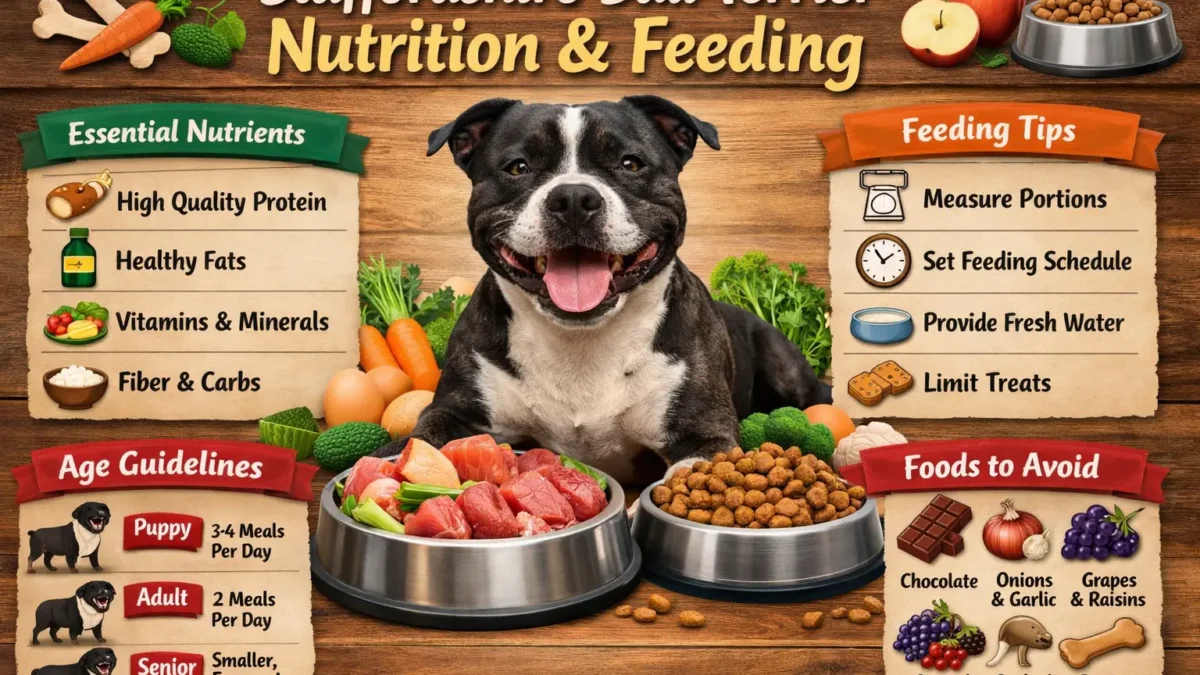
Staffordshire Bull Terrier Nutrition & Feeding Guide
This guide is designed to help you feed a Staffordshire Bull Terrier correctly at every life stage, using practical, science-aligned advice that works in real homes—not just on paper. By the end, you’ll understand how to choose appropriate food, estimate portions, adjust feeding based on body condition and lifestyle, and avoid common nutrition mistakes that lead to skin issues, weight problems, or digestive upset in this breed.
Whether you’re raising a Staffy puppy, managing an athletic adult, or supporting a slowing senior, this guide focuses on what to put in the bowl, how much to feed, and why those choices matter.
How nutrition affects muscle mass, skin health, energy, and lifespan
Staffordshire Bull Terriers are compact, muscular dogs with high lean body mass relative to their size. Nutrition directly influences:
- Muscle development and maintenance: Adequate, high-quality protein supports muscle tone without promoting excess fat.
- Skin and coat health: Staffies are prone to skin sensitivities; fatty acid balance, zinc, and overall diet quality play a major role.
- Energy and behavior: Underfeeding can lead to lethargy and muscle loss, while overfeeding often results in hyperactivity followed by weight gain.
- Long-term health and longevity: Consistent, balanced nutrition helps reduce the risk of obesity, joint strain, and metabolic issues over time.
In practice, many feeding problems in this breed don’t come from “bad food,” but from mismatched portions, inappropriate treats, or ignoring body condition changes.
Breed-specific nutritional risks owners should understand early
Staffordshire Bull Terriers tend to be enthusiastic eaters and highly food-motivated, which creates a few predictable risks if feeding isn’t managed carefully:
- Easy weight gain due to strong appetite combined with a stocky build
- Skin and coat reactions linked to dietary sensitivities or poor fat balance
- Over-supplementation from adding extras on top of already complete commercial diets
- Muscle loss in seniors when protein is unnecessarily restricted
Understanding these tendencies early allows owners to feed proactively instead of reactively—adjusting portions, monitoring body condition, and choosing diets that support muscle, skin, and digestive health throughout the dog’s life.
Core Nutrition Principles for Staffordshire Bull Terriers
Staffordshire Bull Terriers are strong, muscular dogs. Their food must support muscle, skin, energy, and digestion at the same time. Feeding too little, too much, or the wrong balance can cause problems even if the food brand is “popular.”
What a balanced diet means for this breed
A balanced diet means your dog gets:
- Enough protein to build and protect muscles
- Enough fat for energy and healthy skin
- Controlled carbohydrates for digestion and steady energy
- Essential vitamins and minerals to keep the body working properly
Most problems start when one part is too high or too low for too long.
Macronutrients your Staffordshire Bull Terrier needs
Macronutrients are the main parts of food your dog eats in large amounts.
| Nutrient | Why it matters for Staffies | Simple explanation |
|---|---|---|
| Protein | Builds and protects muscle | Helps your dog stay strong and fit |
| Fat | Energy + skin health | Keeps skin healthy and provides fuel |
| Carbohydrates | Digestion support | Gives steady energy and fiber |
Staffordshire Bull Terriers usually do best on moderate to high protein diets, with controlled fat and easy-to-digest carbs.
Recommended macronutrient ranges
These are general target ranges, not exact rules. Activity level and age still matter.
| Life stage / lifestyle | Protein | Fat |
|---|---|---|
| Puppy | 24–30% | 12–18% |
| Adult (moderate activity) | 22–26% | 10–16% |
| Very active / athletic | 24–28% | 14–18% |
| Senior | 22–26% | 8–14% |
Lower fat does not mean lower quality. It often helps prevent weight gain in adult and senior Staffies.
Important vitamins and minerals for Staffies
Vitamins and minerals support things you cannot see, like skin repair and immune strength.
| Nutrient | Why it is important |
|---|---|
| Omega-3 fatty acids | Helps itchy skin and coat health |
| Zinc | Supports skin healing and immunity |
| Calcium & phosphorus | Keeps bones and teeth strong |
| Vitamin E | Protects skin and cells |
| B vitamins | Helps energy and digestion |
If you feed a complete commercial dog food, you usually do not need extra supplements. Adding more can sometimes cause harm.
How to read dog food labels the easy way
Dog food bags can be confusing. Here is what actually matters.
| Label part | What to look for | What to ignore |
|---|---|---|
| Ingredients list | Named meats (chicken, beef, fish) | Fancy words and pictures |
| Guaranteed analysis | Protein and fat percentages | Very long ingredient stories |
| “Complete & balanced” statement | Shows the food meets standards | “Premium”, “natural”, “holistic” claims |
A food that meets recognized nutrition standards is more important than trendy marketing.
Common mistakes owners make at this stage
- Choosing food based only on brand popularity
- Feeding too much fat because the dog is active
- Adding supplements without knowing if they are needed
- Changing foods often without a reason
Good nutrition is about balance and consistency, not constant changes.
How Much to Feed a Staffordshire Bull Terrier
This is the most owners care about the most. Feeding the right amount matters just as much as choosing the right food. Too little food can cause muscle loss. Too much food can quickly lead to weight gain, even if the food is good quality.
Staffordshire Bull Terriers have a strong appetite and solid body shape, so portion control is very important.
Daily calorie needs by weight and activity
Calories are the energy in food. Dogs that move more need more calories. Dogs that relax more need fewer calories.
Use this table as a starting point, not a strict rule.
| Adult weight | Low activity | Moderate activity | High activity |
|---|---|---|---|
| 11 kg (24 lb) | 700–800 kcal | 850–950 kcal | 1,000+ kcal |
| 14 kg (31 lb) | 850–950 kcal | 1,000–1,100 kcal | 1,200+ kcal |
| 16 kg (35 lb) | 950–1,050 kcal | 1,100–1,250 kcal | 1,350+ kcal |
Always adjust food based on body shape, not just numbers.
Portion size matters more than the cup size
Different dog foods have different calorie levels. One cup of food may contain 300 calories, while another may contain 450 calories.
This is why:
- Measuring cups alone can be misleading
- Reading the feeding guide on the bag is important
- Watching your dog’s body shape is the best guide
If your dog gains weight, reduce food slightly. If ribs become too visible, increase food slowly.
Using body condition to adjust feeding
A healthy Staffordshire Bull Terrier should look muscular, not round.
| Body condition | What you may see | What to do |
|---|---|---|
| Underweight | Ribs and hip bones very visible | Increase food slowly |
| Ideal | Ribs felt but not seen, waist visible | Keep current amount |
| Overweight | No waist, ribs hard to feel | Reduce food by 10–15% |
Check body condition every 2–3 weeks, not every day.
Feeding schedule by life stage
How often you feed also matters.
| Life stage | Meals per day | Notes |
|---|---|---|
| Puppy | 3–4 meals | Supports growth and digestion |
| Adult | 2 meals | Helps control hunger and energy |
| Senior | 2 smaller meals | Easier on digestion |
Skipping meals or feeding once daily can lead to over-hunger and begging in this breed.
Treats count as food too
Treats should not be more than 10% of daily calories.
| Treat type | How often |
|---|---|
| Training treats | Small amounts daily |
| Chews | A few times per week |
| Human food | Only safe foods, very small portions |
Too many treats are one of the top reasons Staffies gain weight.
Common feeding problems owners face
- Dog always seems hungry
- Weight gain despite “normal” feeding
- Feeding changes not being adjusted after neutering
- Too many treats during training
These problems are usually solved by small portion changes, not food switching.
Core Nutrition Principles for Staffordshire Bull Terriers
Staffordshire Bull Terriers are strong, muscular dogs. Their food must support muscle, skin, energy, and digestion at the same time. Feeding too little, too much, or the wrong balance can cause problems even if the food brand is “popular.”
What a balanced diet means for this breed
A balanced diet means your dog gets:
- Enough protein to build and protect muscles
- Enough fat for energy and healthy skin
- Controlled carbohydrates for digestion and steady energy
- Essential vitamins and minerals to keep the body working properly
Most problems start when one part is too high or too low for too long.
Macronutrients your Staffordshire Bull Terrier needs
Macronutrients are the main parts of food your dog eats in large amounts.
| Nutrient | Why it matters for Staffies | Simple explanation |
|---|---|---|
| Protein | Builds and protects muscle | Helps your dog stay strong and fit |
| Fat | Energy + skin health | Keeps skin healthy and provides fuel |
| Carbohydrates | Digestion support | Gives steady energy and fiber |
Staffordshire Bull Terriers usually do best on moderate to high protein diets, with controlled fat and easy-to-digest carbs.
Recommended macronutrient ranges
These are general target ranges, not exact rules. Activity level and age still matter.
| Life stage / lifestyle | Protein | Fat |
|---|---|---|
| Puppy | 24–30% | 12–18% |
| Adult (moderate activity) | 22–26% | 10–16% |
| Very active / athletic | 24–28% | 14–18% |
| Senior | 22–26% | 8–14% |
Lower fat does not mean lower quality. It often helps prevent weight gain in adult and senior Staffies.
Important vitamins and minerals for Staffies
Vitamins and minerals support things you cannot see, like skin repair and immune strength.
| Nutrient | Why it is important |
|---|---|
| Omega-3 fatty acids | Helps itchy skin and coat health |
| Zinc | Supports skin healing and immunity |
| Calcium & phosphorus | Keeps bones and teeth strong |
| Vitamin E | Protects skin and cells |
| B vitamins | Helps energy and digestion |
If you feed a complete commercial dog food, you usually do not need extra supplements. Adding more can sometimes cause harm.
How to read dog food labels the easy way
Dog food bags can be confusing. Here is what actually matters.
| Label part | What to look for | What to ignore |
|---|---|---|
| Ingredients list | Named meats (chicken, beef, fish) | Fancy words and pictures |
| Guaranteed analysis | Protein and fat percentages | Very long ingredient stories |
| “Complete & balanced” statement | Shows the food meets standards | “Premium”, “natural”, “holistic” claims |
A food that meets recognized nutrition standards is more important than trendy marketing.
Common mistakes owners make at this stage
- Choosing food based only on brand popularity
- Feeding too much fat because the dog is active
- Adding supplements without knowing if they are needed
- Changing foods often without a reason
Good nutrition is about balance and consistency, not constant changes.
Daily calorie needs by weight and activity
Calories are the energy in food. Dogs that move more need more calories. Dogs that relax more need fewer calories.
Use this table as a starting point, not a strict rule.
| Adult weight | Low activity | Moderate activity | High activity |
|---|---|---|---|
| 11 kg (24 lb) | 700–800 kcal | 850–950 kcal | 1,000+ kcal |
| 14 kg (31 lb) | 850–950 kcal | 1,000–1,100 kcal | 1,200+ kcal |
| 16 kg (35 lb) | 950–1,050 kcal | 1,100–1,250 kcal | 1,350+ kcal |
Always adjust food based on body shape, not just numbers.
Portion size matters more than the cup size
Different dog foods have different calorie levels. One cup of food may contain 300 calories, while another may contain 450 calories.
This is why:
- Measuring cups alone can be misleading
- Reading the feeding guide on the bag is important
- Watching your dog’s body shape is the best guide
If your dog gains weight, reduce food slightly. If ribs become too visible, increase food slowly.
Using body condition to adjust feeding
A healthy Staffordshire Bull Terrier should look muscular, not round.
| Body condition | What you may see | What to do |
|---|---|---|
| Underweight | Ribs and hip bones very visible | Increase food slowly |
| Ideal | Ribs felt but not seen, waist visible | Keep current amount |
| Overweight | No waist, ribs hard to feel | Reduce food by 10–15% |
Check body condition every 2–3 weeks, not every day.
Feeding schedule by life stage
How often you feed also matters.
| Life stage | Meals per day | Notes |
|---|---|---|
| Puppy | 3–4 meals | Supports growth and digestion |
| Adult | 2 meals | Helps control hunger and energy |
| Senior | 2 smaller meals | Easier on digestion |
Skipping meals or feeding once daily can lead to over-hunger and begging in this breed.
Treats count as food too
Treats should not be more than 10% of daily calories.
| Treat type | How often |
|---|---|
| Training treats | Small amounts daily |
| Chews | A few times per week |
| Human food | Only safe foods, very small portions |
Too many treats are one of the top reasons Staffies gain weight.
Common feeding problems owners face
- Dog always seems hungry
- Weight gain despite “normal” feeding
- Feeding changes not being adjusted after neutering
- Too many treats during training
These problems are usually solved by small portion changes, not food switching.
Best Types of Food for Staffordshire Bull Terriers
There is no single “perfect” food for every Staffordshire Bull Terrier. The best choice depends on your dog’s age, activity level, health, and your daily routine. What matters most is that the food is balanced, safe, and right for your dog, not just popular online.
Common types of dog food
Most Staffordshire Bull Terrier owners choose one of these options.
| Food type | What it is |
|---|---|
| Dry food (kibble) | Crunchy food with low moisture |
| Wet food (canned) | Soft food with high moisture |
| Fresh food | Cooked meals made for dogs |
| Raw food | Uncooked meat, bones, and organs |
| Freeze-dried | Raw food with water removed |
| Homemade | Food cooked at home |
Each type can work if done correctly.
Pros and cons of each food type
| Food type | Benefits | Possible downsides | Best for |
|---|---|---|---|
| Kibble | Easy, affordable, balanced | Can be high in calories | Most households |
| Canned | Good for hydration, tasty | More expensive | Picky eaters |
| Fresh | Simple ingredients, fresh | Needs proper balance | Owners who plan meals |
| Raw | High protein, appealing | Safety and balance risks | Very experienced owners |
| Freeze-dried | Easy raw-style feeding | High cost | Travel or training |
| Homemade | Full control of ingredients | Easy to do wrong | Vet-guided plans only |
Mixing food types is okay if done slowly and carefully.
Final feeding tips for Staffordshire Bull Terrier owners
- Measure food, do not guess
- Watch body shape, not just weight
- Keep treats under control
- Change food slowly
- Keep feeding simple and steady
Good feeding habits keep your dog strong, healthy, and comfortable for years.
To learn more about how complete and balanced dog foods are defined and regulated, you can review the official nutritional standards published by Association of American Feed Control Officials (AAFCO), which help guide safe and nutritionally adequate feeding for dogs of all breeds and life stages.