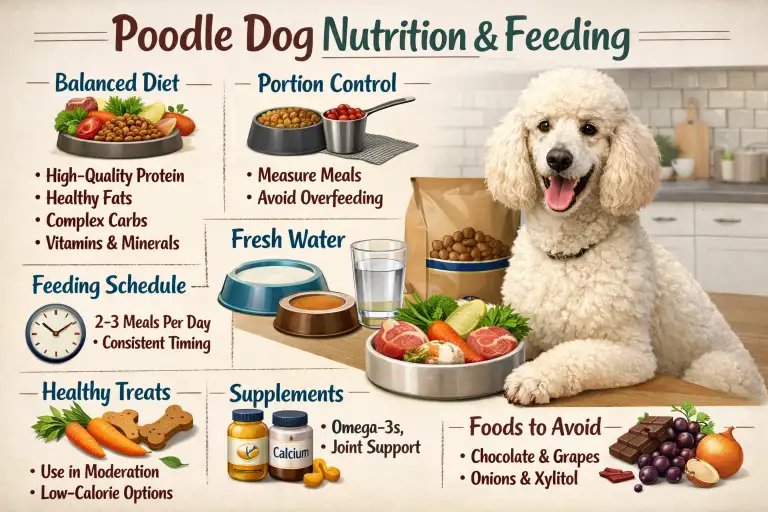
Standard Poodles are not just “large dogs with curly coats.” They are athletic, intelligent, deep-chested, and long-lived compared to many large breeds. Their nutrition needs reflect that mix of size, activity, metabolism, coat growth, and genetic risks. Feeding them correctly is less about trends and more about consistently meeting their biological needs.
Recommended Dog Care Products
Based on your dog’s age, these products may help with comfort, health, grooming, and daily care.

Purina Pro Plan Veterinary Supplements
Daily probiotics for dogs to support digestive and gut health.
View on Amazon ↗
Earth Rated Poop Bags for Dogs
Leak-proof, extra thick waste bag refill rolls with lavender scent.
View on Amazon ↗
Greenies Pill Pockets for Dogs
Large dog treats for capsule medication, peanut butter flavor.
View on Amazon ↗
HONEY CARE All-Absorb Dog Wrap
Small male dog wraps, 50 count, useful for daily care support.
View on Amazon ↗
Seresto Flea & Tick Collar
Flea and tick treatment and prevention for dogs over 18 lbs.
View on Amazon ↗
Milk-Bone MaroSnacks
Small dog treats with real bone marrow in a 40 oz canister.
View on Amazon ↗
Vital Essentials Dog Treats
Freeze dried beef liver dog treats, grain free and single ingredient.
View on Amazon ↗
Stain & Odor Eliminator
Enzyme cleaner for pet stains, carpet messes, and strong odors.
View on Amazon ↗
Pur Luv Chicken Jerky Treats
Dog treats made with real chicken breast, high protein and chew-friendly.
View on Amazon ↗
Milk-Bone Flavor Snacks
Mini crunchy dog biscuits in a 36 oz canister for small rewards.
View on Amazon ↗As an Amazon Associate, we may earn from qualifying purchases.
Why Standard Poodle nutrition is different
A healthy adult Standard Poodle typically weighs 45–70 pounds, but weight alone doesn’t tell the whole story. Compared with many other large breeds, Standard Poodles often have:
- Higher day-to-day activity levels
- Leaner muscle mass
- Fast-growing, continuously regenerating coats
- Sensitive digestion in some bloodlines
- Joint stress over a long lifespan
This combination means their diet must support muscle maintenance, digestive stability, skin and coat health, and joint protection without overfeeding calories.
Poor nutrition in Standard Poodles commonly shows up as:
- Dull or thinning coat
- Chronic soft stool or gas
- Muscle loss despite “enough food”
- Unexplained weight gain
- Low energy or poor recovery after exercise
The core nutritional goals for a Standard Poodle
A well-formulated Standard Poodle diet should aim to:
- Maintain lean muscle, not just body weight
- Provide enough energy without excess calories
- Support skin, coat, and ear health
- Protect joints and connective tissue over time
- Be digestible and consistent, especially for sensitive dogs
These goals align with established canine nutrition standards such as AAFCO, NRC, and FEDIAF, but practical feeding always requires adjustment for the individual dog.
Core nutrient needs for Standard Poodles
| Nutrient | Why it matters for Standard Poodles | Practical notes |
|---|---|---|
| Protein | Maintains muscle, supports immune system | Adult diets typically do best with moderate-to-high quality animal protein |
| Fat | Energy, skin health, coat quality | Too little leads to dry coat; too much causes weight gain |
| Carbohydrates | Readily available energy and fiber | Quality and digestibility matter more than carb percentage |
| Omega-3 fatty acids | Skin, coat, joints, inflammation control | Fish-based sources are preferred |
| Calcium & phosphorus | Bone and joint health | Especially critical during puppy growth |
| Fiber | Gut health and stool quality | Balance is key for sensitive digestion |
This table represents functional needs, not marketing buzzwords. More of a nutrient is not always better—balance matters more than extremes.
What “balanced nutrition” actually means (and what it doesn’t)
Balanced nutrition does not mean:
Recommended Dog Care Products
Based on your dog’s age, these products may help with comfort, health, grooming, and daily care.
Purina Pro Plan Veterinary Supplements
Daily probiotics for dogs to support digestive and gut health.
View on Amazon ↗
Earth Rated Poop Bags for Dogs
Leak-proof, extra thick waste bag refill rolls with lavender scent.
View on Amazon ↗
Greenies Pill Pockets for Dogs
Large dog treats for capsule medication, peanut butter flavor.
View on Amazon ↗
HONEY CARE All-Absorb Dog Wrap
Small male dog wraps, 50 count, useful for daily care support.
View on Amazon ↗
Seresto Flea & Tick Collar
Flea and tick treatment and prevention for dogs over 18 lbs.
View on Amazon ↗
Milk-Bone MaroSnacks
Small dog treats with real bone marrow in a 40 oz canister.
View on Amazon ↗
Vital Essentials Dog Treats
Freeze dried beef liver dog treats, grain free and single ingredient.
View on Amazon ↗
Stain & Odor Eliminator
Enzyme cleaner for pet stains, carpet messes, and strong odors.
View on Amazon ↗
Pur Luv Chicken Jerky Treats
Dog treats made with real chicken breast, high protein and chew-friendly.
View on Amazon ↗
Milk-Bone Flavor Snacks
Mini crunchy dog biscuits in a 36 oz canister for small rewards.
View on Amazon ↗As an Amazon Associate, we may earn from qualifying purchases.
- Constantly rotating foods without reason
- Adding supplements “just in case”
- Feeding the highest protein or lowest carb diet available
Balanced nutrition does mean:
- A complete and balanced diet formulated for your dog’s life stage
- Consistent calorie control
- Adjustments based on body condition, not guesswork
- Letting the dog’s coat, stool, weight, and energy guide decisions
One of the most common mistakes Standard Poodle owners make is over-supplementing, especially with oils, calcium, or joint products, without correcting the base diet first.
Clearing common nutrition myths for Standard Poodles
- “More protein is always better.”
Excess protein doesn’t automatically build muscle and can worsen digestive issues in sensitive dogs. - “Grain-free is healthier.”
There is no evidence that grains are harmful to Standard Poodles unless a true intolerance exists. - “Homemade food is always superior.”
Homemade diets can work, but only when properly formulated. Guesswork leads to deficiencies. - “Shiny coat = perfect diet.”
Coat appearance matters, but stool quality, body condition, and energy are equally important.
How Much to Feed a Standard Poodle (Calories, Portions, Schedule)
One of the biggest feeding mistakes is guessing. Standard Poodles do best when food amounts are based on calories, body weight, and activity level, not just “one scoop twice a day.”
Calories matter more than cups
Dog food bags usually list cups, but cups can be misleading. Different foods have very different calorie counts. Two dogs eating the same number of cups may be getting very different calories.
A Standard Poodle needs enough calories to:
- Keep a lean body
- Support daily activity
- Maintain muscle and coat health
Too many calories lead to weight gain. Too few lead to low energy, muscle loss, and dull coat.
Standard Poodle daily calorie needs by weight and activity
| Adult Weight | Low Activity (calm, short walks) | Moderate Activity (daily walks, play) | High Activity (sports, running, work) |
|---|---|---|---|
| 45 lbs | 1,000–1,150 kcal | 1,200–1,350 kcal | 1,400–1,550 kcal |
| 55 lbs | 1,100–1,300 kcal | 1,350–1,550 kcal | 1,600–1,800 kcal |
| 65 lbs | 1,250–1,450 kcal | 1,550–1,800 kcal | 1,850–2,100 kcal |
| 70 lbs | 1,300–1,500 kcal | 1,700–1,950 kcal | 2,000–2,300 kcal |
These numbers are starting points, not strict rules. Your dog’s body shape matters more than the exact number.
How often to feed a Standard Poodle
| Life Stage | Meals Per Day | Why it helps |
|---|---|---|
| Puppy (under 6 months) | 3–4 meals | Supports growth and steady energy |
| Puppy (6–12 months) | 2–3 meals | Helps prevent overeating |
| Adult | 2 meals | Best for digestion and routine |
| Senior | 2 smaller meals | Easier on digestion and joints |
Avoid feeding one large meal a day. Splitting food into meals helps digestion and keeps energy stable.
Recommended Dog Care Products
Based on your dog’s age, these products may help with comfort, health, grooming, and daily care.
Purina Pro Plan Veterinary Supplements
Daily probiotics for dogs to support digestive and gut health.
View on Amazon ↗
Earth Rated Poop Bags for Dogs
Leak-proof, extra thick waste bag refill rolls with lavender scent.
View on Amazon ↗
Greenies Pill Pockets for Dogs
Large dog treats for capsule medication, peanut butter flavor.
View on Amazon ↗
HONEY CARE All-Absorb Dog Wrap
Small male dog wraps, 50 count, useful for daily care support.
View on Amazon ↗
Seresto Flea & Tick Collar
Flea and tick treatment and prevention for dogs over 18 lbs.
View on Amazon ↗
Milk-Bone MaroSnacks
Small dog treats with real bone marrow in a 40 oz canister.
View on Amazon ↗
Vital Essentials Dog Treats
Freeze dried beef liver dog treats, grain free and single ingredient.
View on Amazon ↗
Stain & Odor Eliminator
Enzyme cleaner for pet stains, carpet messes, and strong odors.
View on Amazon ↗
Pur Luv Chicken Jerky Treats
Dog treats made with real chicken breast, high protein and chew-friendly.
View on Amazon ↗
Milk-Bone Flavor Snacks
Mini crunchy dog biscuits in a 36 oz canister for small rewards.
View on Amazon ↗As an Amazon Associate, we may earn from qualifying purchases.
Portion control using body shape (not the scale)
You don’t need special tools to check if you’re feeding the right amount.
A healthy Standard Poodle should:
- Have a visible waist when viewed from above
- Have ribs that can be felt but not seen
- Not have a hanging belly or fat pads over the ribs
If your dog looks soft or round, reduce food slightly.
If ribs are too visible or energy is low, increase food slowly.
Small changes work better than big ones.
Water intake matters too
Standard Poodles need fresh water at all times.
A general rule:
- About 1 ounce of water per pound of body weight per day
This increases with:
- Exercise
- Hot weather
- Dry food diets
Low water intake can cause dry stool, low energy, and urinary issues.
Common feeding mistakes to avoid
- Measuring food by “eyeballing”
- Feeding the same amount year-round despite activity changes
- Forgetting to count treats as calories
- Feeding based on another dog’s needs
Feeding should change as your dog’s age, activity, and health change.
Best Food for Standard Poodles: Kibble, Fresh, Raw, or Homemade?
There is no single “perfect” food for every Standard Poodle. The best food is one that keeps your dog lean, active, happy, and healthy, with good stool and a shiny coat.
Recommended Dog Care Products
Based on your dog’s age, these products may help with comfort, health, grooming, and daily care.
Purina Pro Plan Veterinary Supplements
Daily probiotics for dogs to support digestive and gut health.
View on Amazon ↗
Earth Rated Poop Bags for Dogs
Leak-proof, extra thick waste bag refill rolls with lavender scent.
View on Amazon ↗
Greenies Pill Pockets for Dogs
Large dog treats for capsule medication, peanut butter flavor.
View on Amazon ↗
HONEY CARE All-Absorb Dog Wrap
Small male dog wraps, 50 count, useful for daily care support.
View on Amazon ↗
Seresto Flea & Tick Collar
Flea and tick treatment and prevention for dogs over 18 lbs.
View on Amazon ↗
Milk-Bone MaroSnacks
Small dog treats with real bone marrow in a 40 oz canister.
View on Amazon ↗
Vital Essentials Dog Treats
Freeze dried beef liver dog treats, grain free and single ingredient.
View on Amazon ↗
Stain & Odor Eliminator
Enzyme cleaner for pet stains, carpet messes, and strong odors.
View on Amazon ↗
Pur Luv Chicken Jerky Treats
Dog treats made with real chicken breast, high protein and chew-friendly.
View on Amazon ↗
Milk-Bone Flavor Snacks
Mini crunchy dog biscuits in a 36 oz canister for small rewards.
View on Amazon ↗As an Amazon Associate, we may earn from qualifying purchases.
Main types of dog food for Standard Poodles
| Food Type | Pros | Cons | Best For |
|---|---|---|---|
| Dry food (kibble) | Easy to store, affordable, balanced | Some dogs get bored, quality varies | Most households, busy owners |
| Wet food (canned) | Tasty, higher moisture | More expensive, spoils fast | Picky eaters, seniors |
| Fresh food | Very tasty, easy to digest | Higher cost, needs fridge | Sensitive stomachs |
| Raw food | High protein, shiny coat for some dogs | Safety risks, hard to balance | Experienced owners only |
| Freeze-dried | Long shelf life, easy to serve | Costly, needs water added | Travel or mixed feeding |
| Homemade | Full control of ingredients | Easy to cause shortages | Only with expert guidance |
For most Standard Poodles, a high-quality kibble or fresh food works very well. Raw and homemade diets need extra care to avoid health problems.
What to look for on a dog food label
When reading labels, keep it simple:
- Meat should be listed first
- Food should say “complete and balanced”
- Protein should be from named animal sources
- Avoid foods with unclear fillers or too many added colors
Do not choose food just because it says:
- “Grain-free”
- “Human-grade”
- “All-natural”
These words do not always mean better nutrition.
Treats are great for training, but they should not make up more than 10% of daily calories.
| Safe Human Foods | Unsafe or Toxic Foods |
|---|---|
| Cooked chicken | Chocolate |
| Plain rice | Grapes & raisins |
| Carrots | Onions & garlic |
| Apples (no seeds) | Xylitol (fake sugar) |
| Plain yogurt | Alcohol |
| Eggs (cooked) | Macadamia nuts |
Always introduce new foods slowly and in small amounts.
Common Food Mistakes to Avoid
| Mistake | Explanation / Advice |
|---|---|
| Changing foods too fast | Sudden changes can upset digestion; introduce new foods gradually. |
| Feeding table scraps every day | Can cause imbalanced nutrition and weight gain. |
| Giving too many treats | Leads to extra calories and potential obesity. |
| Mixing many foods without balance | Too many ingredients can upset the digestive system. |
| General advice | A simple and steady diet works best for Standard Poodles. |
Special Diets and Common Feeding Problems in Standard Poodles
| Issue | Signs / Causes | Solutions / Tips |
|---|---|---|
| Food allergies and sensitive stomachs | Itchy skin or ears, red paws, loose stool, gas, vomiting | Use limited-ingredient foods, choose one main protein source, avoid frequent food changes, allow gut to heal over several weeks. Grain allergies are rare; protein is the usual culprit. |
| Weight gain issues | Too many treats, low activity, large portions | Reduce food slowly, measure meals, increase light activity. |
| Weight loss / underweight issues | Insufficient calories | Feed slightly more calories, split food into smaller meals, check for underlying health problems if weight does not improve. |
| Picky eating behavior | Skipping meals, waiting to eat | Avoid too many treats, don’t change food often, avoid toppers, put food down for 15–20 min only, remove uneaten food until next meal, maintain feeding routine, avoid hand-feeding. Healthy dogs will not starve themselves. |
| Digestive problems from food changes | Loose stool, upset stomach | Mix new food gradually with old food over 7–10 days, monitor stool, energy, appetite; fiber and simple diets help calm the stomach. |
Common feeding problems and what to do
| Problem | Common Cause | Simple Fix |
|---|---|---|
| Loose stool | Fast food change | Slow transition |
| Gas | Poor digestion | Fewer ingredients |
| Weight gain | Too many calories | Measure food |
| Won’t eat | Too many treats | Set meal times |
| Itchy skin | Food reaction | Try limited diet |
Most feeding problems improve with simple changes and patience.
For more science-based guidance on balanced dog diets and feeding standards, you can also review the official nutrition guidelines provided by the Association of American Feed Control Officials (AAFCO) on their website, which are widely used by veterinarians and pet food manufacturers.

Ata Ur Rehman is the founder of Pet Age in Human Years Calculator, an educational platform that provides age conversion charts and lifespan guides for dogs, cats, birds, and other companion animals. His work focuses on helping pet owners understand how animal ages translate into human years using commonly accepted age conversion formulas and published lifespan averages.
The website compiles breed and species lifespan data from kennel clubs, breed organizations, and general animal lifespan studies to present simple and easy-to-understand guides for pet owners worldwide.
This website was created to centralize animal age conversion charts into one easy reference platform for pet owners.