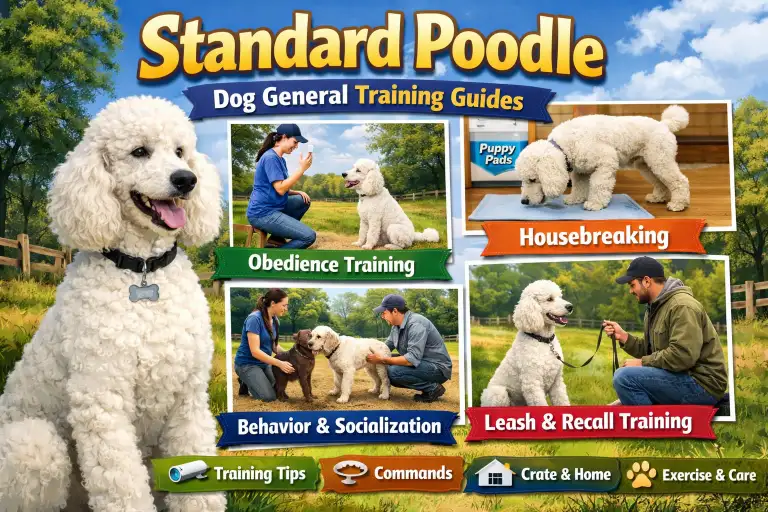
Standard Poodles are often described as one of the smartest dog breeds in the world—but intelligence alone does not guarantee good behavior. In fact, without the right training approach, that intelligence can quickly turn into frustration, anxiety, or hard-to-manage habits for owners. This guide is designed to help you train a Standard Poodle in a way that works with the breed’s natural traits, not against them.
Whether you’re raising a Standard Poodle puppy or working with an adolescent or adult dog, successful training depends on understanding how these dogs think, learn, and respond to their environment. Standard Poodles are highly observant, emotionally sensitive, and extremely quick to form habits—both good and bad. Generic dog training advice often fails them because it doesn’t account for their need for mental stimulation, clear communication, and consistent structure.
This training guide is built for real life. It focuses on practical, science-backed methods that owners can use at home, even with busy schedules or multi-pet households. You’ll learn not just what to teach, but how to teach it in a way that keeps your Standard Poodle engaged, confident, and responsive.
Why Proper Training Matters for Standard Poodles
Training is not just about teaching commands. For Standard Poodles, training shapes their behavior, emotions, and daily habits. This breed is very smart and very sensitive. When training is clear and kind, they become calm, focused, and easy to live with. When training is missing or confusing, problems show up fast.
A well-trained Standard Poodle is safer around people, other dogs, and children. They understand rules, listen better, and recover faster from new or stressful situations. Training also protects their mental health. Smart dogs that do not get proper guidance often develop anxiety, boredom, or attention-seeking behavior.
Many owners think their Standard Poodle is being “stubborn” or “too energetic.” In most cases, the real issue is lack of structure or unclear training. These dogs need their brains worked just as much as their bodies. Good training gives them a job to do and a way to succeed.
Here is a simple way to see why proper training matters so much.
| With Proper Training | Without Proper Training |
|---|---|
| Listens to basic commands | Ignores cues and rules |
| Calm inside the home | Hyper, restless, or destructive |
| Confident in new places | Anxious or overwhelmed |
| Easier grooming and handling | Stress, resistance, fear |
| Strong bond with owner | Frustration on both sides |
Training also makes daily life easier. Walks are more enjoyable. Grooming and vet visits are less stressful. Your dog understands what you expect, and you understand how to guide them.
Most behavior problems do not come from bad dogs. They come from missing training or the wrong training approach. When you train a Standard Poodle the right way, you are setting them up for a stable, happy life.
Understanding Standard Poodle Behavior and Intelligence
Standard Poodles are very smart dogs, but their intelligence works best when it is guided the right way. They learn patterns quickly, notice small changes in routine, and remember both good and bad experiences. This is why training can go very well—or very badly—depending on how it is done.
These dogs are also emotionally sensitive. Loud voices, harsh corrections, or confusing rules can make them shut down or feel anxious. On the other hand, calm training, clear rewards, and patience help them feel safe and confident. When they feel understood, they try harder to please.
Standard Poodles need mental work as much as physical exercise. Long walks alone are not enough. If their brain is bored, they may bark, jump, chew, or ignore commands. Many behavior problems come from mental boredom, not bad attitude.
They are also very social. Standard Poodles pay close attention to their owners and often mirror human emotions. Stress, anger, or inconsistency from the owner can affect how well training works.
The table below explains common Standard Poodle traits and what they mean for training.
| Standard Poodle Trait | What This Means for Training |
|---|---|
| Very high intelligence | Learns fast but gets bored easily |
| Emotional sensitivity | Needs gentle, calm training methods |
| High energy | Needs mental games, not just exercise |
| Strong bond with people | Trains best with praise and engagement |
| Quick habit learning | Learns bad habits as fast as good ones |
Understanding these traits helps you train smarter, not harder. When owners adjust training to match how a Standard Poodle thinks and feels, progress becomes faster and more stable.
Many training struggles are not because the dog cannot learn, but because the training does not match the dog’s nature. Once you understand how your Standard Poodle’s mind works, training becomes much easier.
Step-by-Step Standard Poodle Training Guide
Training a Standard Poodle works best when it is simple, short, and done often. These dogs learn fast, but they can also get bored fast. Short sessions with clear rewards help them stay focused and happy.
Start training in a quiet place with few distractions. Use the same words for commands every time. Reward your dog right after they do the right thing. This helps them understand exactly what you like.
Training does not need to be long to be effective. A few minutes, done the right way, is better than one long session that makes your dog tired or confused.
Use food treats, praise, toys, or play as rewards. Many Standard Poodles enjoy praise and attention as much as treats. Change rewards sometimes so training stays interesting.
Here is a simple daily training structure that works well for most Standard Poodles.
| Training Element | Recommendation |
|---|---|
| Session length | 5 to 10 minutes |
| Sessions per day | 2 to 4 short sessions |
| Best time | Before meals or after light exercise |
| Rewards | Small treats, praise, toys |
| Training place | Quiet area first, then add distractions |
Training goals also change with age. Puppies, young dogs, and adults do not need the same focus.
| Age Stage | Training Focus |
|---|---|
| Puppy | Name response, sit, come, social skills |
| Adolescent | Leash walking, impulse control |
| Adult | Reliability, focus around distractions |
Mental work is just as important as physical activity. Puzzle toys, learning new tricks, and short training games help prevent boredom and bad habits. A tired mind often leads to a calm dog.
If your dog seems distracted, slow down. Go back to easier steps. Training should feel successful for both you and your dog.
When training is clear, kind, and consistent, Standard Poodles usually respond very well. They enjoy learning and want to work with their owners.
Common Training Problems and When to Get Professional Help
Even smart dogs like Standard Poodles can struggle with training. Most problems happen because training is unclear, rushed, or not matched to the dog’s needs. The good news is that many issues can be fixed with small changes.
Some dogs ignore commands when distracted. Others jump, bark, or pull on the leash. These behaviors are usually signs of excitement, confusion, or mental boredom—not bad behavior.
Training problems often show up when owners move too fast, repeat commands too much, or reward at the wrong time. Stress, fear, or lack of routine can also slow progress.
This table helps you understand common problems and what to do next.
| Problem | Likely Cause | What to Do |
|---|---|---|
| Not listening | Too many distractions | Train in a quiet place first |
| Jumping on people | Excitement and no rules | Teach calm greetings |
| Pulling on leash | Poor leash training | Practice slow, short walks |
| Barking too much | Boredom or stress | Add mental games and structure |
| Training not improving | Reward timing is off | Reward faster and clearly |
Sometimes, home training is not enough. If your dog shows strong fear, panic, or aggressive behavior, professional help is important. Waiting too long can make problems harder to fix.
You should consider professional help if:
- Your dog shows fear or aggression
- Anxiety gets worse instead of better
- Training does not improve after several weeks
- Your dog shuts down or avoids training
A qualified dog trainer or behavior expert can guide you safely and help create a plan that fits your dog and your home.
When training is done with patience, kindness, and consistency, most Standard Poodles become calm, confident, and well-mannered companions.
For more science-backed guidance on humane, effective dog training methods, you can also review the American Veterinary Society of Animal Behavior’s recommendations here: https://avsab.org/resources/position-statements/

Ata Ur Rehman is the founder of Pet Age in Human Years Calculator, an educational platform that provides age conversion charts and lifespan guides for dogs, cats, birds, and other companion animals. His work focuses on helping pet owners understand how animal ages translate into human years using commonly accepted age conversion formulas and published lifespan averages.
The website compiles breed and species lifespan data from kennel clubs, breed organizations, and general animal lifespan studies to present simple and easy-to-understand guides for pet owners worldwide.
This website was created to centralize animal age conversion charts into one easy reference platform for pet owners.