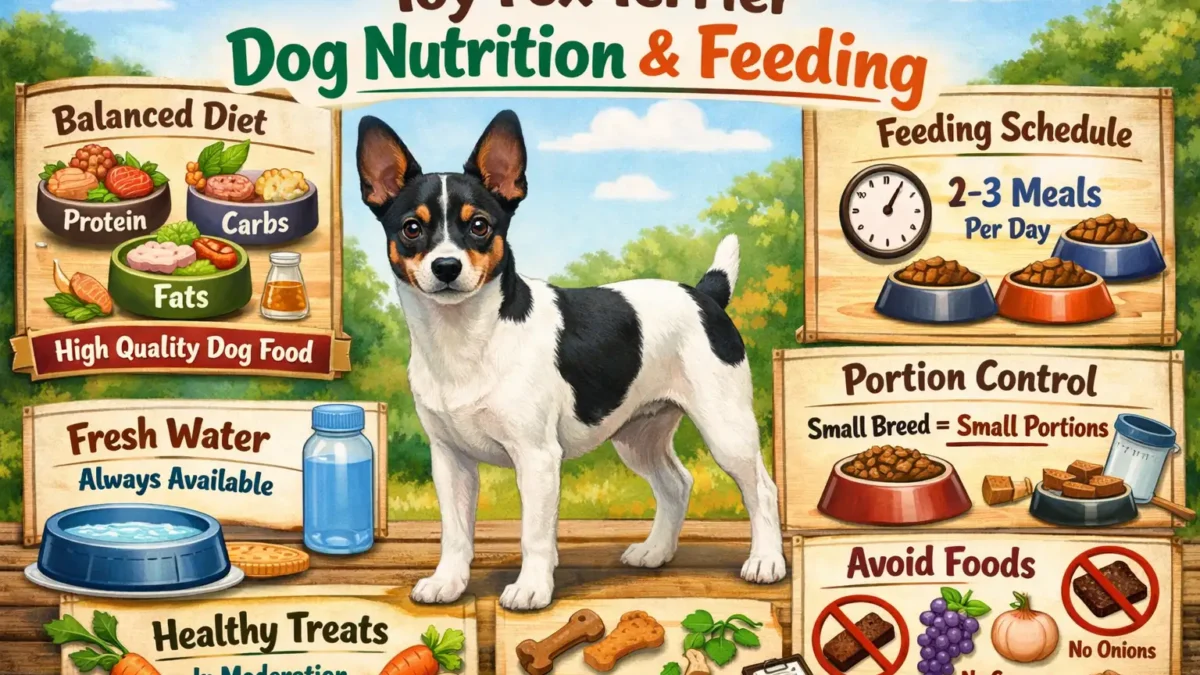
Toy Fox Terrier Nutrition & Feeding Guide: What to Feed, How Much, and What to Avoid
Toy Fox Terriers may be small, but their nutritional needs are not simple. As a toy breed with a fast metabolism, high alertness, and a naturally active temperament, they require food that delivers dense, high-quality nutrition in very small portions. Feeding mistakes that might only cause mild weight gain in larger dogs can quickly lead to health issues in Toy Fox Terriers.
This guide is designed to help you make confident, practical feeding decisions—whether you’re raising a Toy Fox Terrier puppy, caring for an adult, or supporting a senior dog.
Why nutrition is especially important for Toy Fox Terriers
Toy Fox Terriers differ from many other breeds in several key ways that directly affect how and what they should eat:
- High metabolism: They burn calories quickly and can become under-fueled if meals are too small or skipped.
- Small stomach capacity: Every bite matters. Low-quality food wastes limited stomach space.
- Risk of hypoglycemia: Especially in puppies and very active adults, long gaps between meals or underfeeding can cause dangerous blood sugar drops.
- Lean body type: They tend to stay slim naturally, which can hide early weight loss or muscle depletion if nutrition isn’t adequate.
- Long lifespan: Many Toy Fox Terriers live well into their teens, making nutrition a long-term health investment, not just daily maintenance.
Proper nutrition helps support:
- Stable energy throughout the day
- Healthy muscle tone without unwanted weight gain
- Strong immune function
- Digestive health and firm stools
- Long-term joint, heart, and brain health
What “good nutrition” actually means for this breed
For a Toy Fox Terrier, good nutrition is not about feeding more food—it’s about feeding the right food in the right amounts.
A well-balanced diet for this breed should:
- Provide highly digestible protein to maintain lean muscle
- Include healthy fats for energy and coat health without excess calories
- Avoid unnecessary fillers that displace nutrients
- Be portioned carefully to prevent both obesity and underfeeding
- Be adjusted based on age, activity level, and body condition, not just label directions
Many feeding problems in Toy Fox Terriers—picky eating, begging, inconsistent appetite, weight fluctuation—are not behavioral issues at all. They’re often signs that the dog’s nutritional needs aren’t being met appropriately for their size and lifestyle.
What this guide will help you do
By the end of this guide, you’ll know how to:
- Choose food that actually meets Toy Fox Terrier nutritional needs
- Understand which nutrients matter most for a small, high-energy dog
- Feed the correct amount without relying blindly on package charts
- Avoid common toy-breed feeding mistakes
- Adjust diet safely as your dog ages or lifestyle changes
Best Diet for a Toy Fox Terrier: Nutrients, Ingredients, and Food Labels
The goal is simple: help you pick food that keeps your dog healthy, energetic, and at a good weight.
Key nutrients Toy Fox Terriers need
Toy Fox Terriers need nutrient-dense food because they eat small meals. Every bite should count.
Here’s a simple breakdown of the most important nutrients.
| Nutrient | Recommended focus | Why it matters for Toy Fox Terriers |
|---|---|---|
| Protein | Moderate to high quality animal protein | Supports lean muscles and steady energy |
| Fat | Moderate, from good sources | Provides energy without large meal sizes |
| Carbohydrates | Easy-to-digest carbs | Fuel for daily activity and play |
| Fiber | Small but steady amount | Helps digestion and stool quality |
| Vitamins & minerals | Balanced, not excessive | Supports immune system and long life |
Important note: More protein or fat is not always better. Small dogs gain weight quickly if calories are too high.
Protein, fat, and carbs in simple terms
Protein
Protein helps your Toy Fox Terrier keep strong muscles and recover after activity. Look for named animal proteins like chicken, turkey, fish, or lamb as the first ingredient.
Fat
Fat gives energy and keeps the coat shiny. Because Toy Fox Terriers are small, fat levels should be controlled to avoid weight gain.
Carbohydrates
Carbs are not bad for dogs when they are easy to digest. Rice, oats, potatoes, and sweet potatoes are common and helpful sources.
Vitamins and minerals: do you need supplements?
Most complete dog foods already contain the vitamins and minerals Toy Fox Terriers need.
Extra supplements are usually not needed unless:
- A vet recommends them
- Your dog eats a homemade diet
- Your dog has a medical condition
Too many supplements can actually cause harm, especially in small dogs.
How to read a dog food label (without stress)
Dog food labels can look scary, but you only need to check a few things.
| Label part | What it means | What to look for |
|---|---|---|
| First ingredients | Main food sources | Named meat or fish first |
| Guaranteed analysis | Protein, fat, fiber levels | Balanced, not extreme numbers |
| Feeding statement | Nutrition standards | “Complete and balanced” wording |
| Marketing words | Sales language | Ignore buzzwords like “premium” |
Tip: Ignore fancy claims on the front of the bag. The ingredient list and nutrition statement matter more.
Grain-free and other diet trends
Many Toy Fox Terrier owners ask about grain-free food. Grain-free is not required unless your dog has a proven grain allergy, which is rare.
Grain-free foods often replace grains with heavy starches that can raise calorie levels. For a small dog, this can lead to weight gain.
A balanced food that your dog digests well is more important than following trends.
Quick signs the diet is working
Your Toy Fox Terrier’s diet is likely a good match if you see:
- Steady energy without hyper crashes
- Firm, regular stools
- A shiny coat and healthy skin
- Stable weight with a visible waist
If these signs are missing, the diet may need adjusting.
How Much to Feed a Toy Fox Terrier and How Often
Most Toy Fox Terriers weigh between 3.5 to 7 pounds. Their calorie needs depend on weight, age, and activity level.
Use the table below as a general guide, not a strict rule.
| Toy Fox Terrier weight | Low activity (calories/day) | Normal activity (calories/day) | Very active (calories/day) |
|---|---|---|---|
| 3–4 lbs | 140–170 | 170–200 | 200–230 |
| 5–6 lbs | 180–210 | 210–250 | 250–290 |
| 7 lbs | 210–240 | 240–280 | 280–320 |
Important:
- Treats count as calories
- Indoor or couch-loving dogs need less food
- Playful or very active dogs need more
If your dog gains or loses weight, adjust the food slowly.
How much food does that equal?
Dog food bags often give large-breed portions that do not work well for toy breeds.
Most Toy Fox Terriers eat:
- ¼ to ½ cup of food per day, split into meals
- Fresh or canned food amounts will be smaller because they have more moisture
Always measure food using a cup or scale instead of guessing.
Feeding frequency by life stage
Toy Fox Terriers do best when food is spread across the day.
| Life stage | Meals per day | Why it matters |
|---|---|---|
| Puppy (up to 6 months) | 3–4 meals | Prevents low blood sugar |
| Adult | 2 meals | Keeps energy steady |
| Senior | 2 small meals | Easier digestion |
Skipping meals is risky for small dogs, especially puppies.
Preventing low blood sugar (hypoglycemia)
Toy Fox Terriers, especially puppies, can get low blood sugar if they:
- Miss meals
- Eat too little
- Burn a lot of energy
Warning signs include:
- Weakness
- Shaking
- Confusion
- Lethargy
Feeding regular meals and avoiding long gaps helps prevent this problem.
How to tell if you’re feeding the right amount
A healthy Toy Fox Terrier should:
- Have a visible waist when viewed from above
- Have ribs you can feel but not see clearly
- Stay active without constant hunger
If your dog always seems hungry, gains weight, or loses weight, the portion size may need adjustment.
Best Types of Food and Treats for Toy Fox Terriers
Toy Fox Terriers can eat many types of dog food, but not every option works well for such a small dog. Because they eat small meals, the food must be safe, easy to digest, and high quality.
Common food types for Toy Fox Terriers
Each food type has good and bad points. The best choice depends on your dog, your budget, and your daily routine.
| Food type | Pros for Toy Fox Terriers | Cons to watch for | Best for |
|---|---|---|---|
| Dry kibble | Easy to measure, affordable, helps teeth | Can be calorie-dense, some brands low quality | Most healthy adults |
| Canned food | Tasty, high moisture | Easy to overfeed, more expensive | Picky eaters, seniors |
| Fresh food | High-quality ingredients, very digestible | Costly, short shelf life | Health-focused owners |
| Raw food | High protein, small portions | Safety risks, needs balance | Only with expert guidance |
| Freeze-dried | Lightweight, nutrient-dense | Very calorie-rich | Travel, meal toppers |
| Homemade | Full control of ingredients | Easy to unbalance nutrients | Only with vet support |
Important: Mixing food types is fine, but changes should be slow to avoid stomach upset.
Is kibble okay for Toy Fox Terriers?
Yes, good-quality kibble made for small breeds works well for most Toy Fox Terriers. Look for:
- Small kibble size (easy to chew)
- Named meat as the first ingredient
- Moderate fat levels
- Clear “complete and balanced” statement
Avoid feeding large-breed kibble. It is often too big and too high in calories.
Safe human foods vs unsafe foods
Some human foods are safe in small amounts, while others are dangerous even in tiny bites.
| Food | Safe or unsafe | Notes |
|---|---|---|
| Cooked chicken (plain) | Safe | No bones or seasoning |
| Cooked eggs | Safe | Fully cooked only |
| Plain rice | Safe | Good for upset stomach |
| Carrots | Safe | Crunchy, low-calorie |
| Peanut butter (xylitol-free) | Safe | Very small amounts |
| Chocolate | Unsafe | Toxic to dogs |
| Grapes / raisins | Unsafe | Can damage kidneys |
| Onions / garlic | Unsafe | Harm red blood cells |
| Xylitol | Unsafe | Causes low blood sugar |
| Alcohol | Unsafe | Very dangerous |
When in doubt, do not share food.
Treat guidelines for Toy Fox Terriers
Treats should be small and limited.
Good rules to follow:
- Treats should be no more than 10% of daily calories
- Break treats into tiny pieces
- Use treats mainly for training
- Count treats as part of daily food intake
Many Toy Fox Terriers gain weight from treats, not meals.
Signs the food choice is working
Your food choice is likely good if your dog:
- Eats willingly but not obsessively
- Has firm stools
- Maintains steady weight
- Has good energy and a shiny coat
If problems appear, the food type may need changing.
Special Diets, Common Feeding Problems, and Practical Feeding Tips
Even with good food and correct portions, Toy Fox Terriers can still have feeding problems. Because they are small and sensitive, diet issues can show up fast.
Special diet needs in Toy Fox Terriers
Some Toy Fox Terriers need extra care with food.
- Sensitive stomach: Soft stools, gas, or vomiting may mean the food is too rich or changed too fast. Simple recipes and slow food changes help.
- Food allergies: True allergies are rare but possible. Signs include itchy skin, ear infections, or chronic loose stool.
- Underweight dogs: May need slightly higher calories or more meals, not just bigger portions.
- Overweight dogs: Need fewer calories, fewer treats, and careful portion control.
- Low-activity dogs: Apartment or senior dogs often need less food than feeding charts suggest.
- Very active dogs: Dogs that play a lot or train often may need more calories split into meals.
Always change food slowly and watch how your dog reacts.
Common feeding problems and what to do
Many owner worries are normal and fixable.
| Problem | Common cause | What you can try | When to see a vet |
|---|---|---|---|
| Picky eating | Too many treats or food changes | Stick to one food, limit treats | Skips meals for 24–48 hours |
| Loose stool | Food switch too fast | Slow transition over 7–10 days | Diarrhea lasts more than 2 days |
| Always hungry | Portions too small or habit | Check calories, reduce treats | Weight loss or behavior changes |
| Weight gain | Extra treats, low activity | Measure food, cut treats | Rapid or unexplained gain |
| Won’t eat breakfast | Normal for some dogs | Offer meals on schedule | Lethargy or weakness |
How to switch foods safely
Toy Fox Terriers do best with slow food changes.
Simple switch plan:
- Days 1–3: 75% old food, 25% new food
- Days 4–6: 50% old, 50% new
- Days 7–9: 25% old, 75% new
- Day 10: 100% new food
If stools get loose, slow the process.
Feeding multiple dogs
If you have more than one dog:
- Feed separately to control portions
- Do not let larger dogs steal food
- Watch the Toy Fox Terrier closely during meals
- Pick food that fits the smallest dog’s needs
Small dogs can easily be overfed when sharing food.
When to see a vet or nutrition expert
Get professional help if your Toy Fox Terrier:
- Loses or gains weight suddenly
- Has ongoing diarrhea or vomiting
- Refuses food for more than 48 hours
- Shows signs of low blood sugar
- Has skin, ear, or digestion problems that do not improve
Early help prevents bigger health problems.
Final notes
Toy Fox Terrier nutrition does not need to be complicated. The keys are:
- High-quality food
- Small, measured portions
- Regular meal times
- Fewer treats
- Watching your dog’s body and energy
For more science-backed guidance on what makes a dog food complete and balanced, you can also review the official standards published by the Association of American Feed Control Officials (AAFCO), which are widely used by veterinarians and pet food manufacturers:
https://www.aafco.org