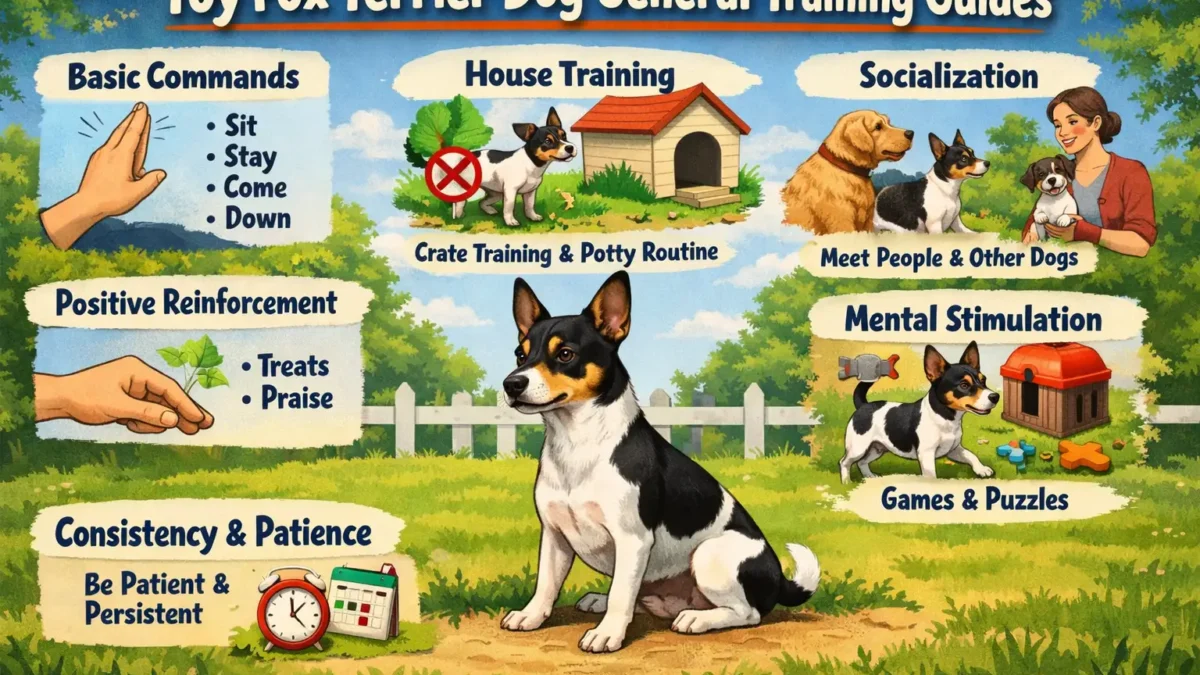
Toy Fox Terrier Training: Complete Guide for Puppies and Adult Dogs
Training a Toy Fox Terrier is not about “basic manners for a small dog” — it’s about channeling a sharp, athletic, terrier-minded brain into behaviors that fit real life. Despite their compact size, Toy Fox Terriers are fast learners, highly alert, and intensely driven by movement, rewards, and human interaction. That combination makes them very trainable, but only when training is done the right way.
This guide is designed for owners who want practical, realistic results, whether you’re raising a Toy Fox Terrier puppy or working with an adult or rescue dog. It focuses on everyday training that actually matters: listening reliably, walking politely, controlling barking and chasing, and building impulse control without crushing the dog’s confidence.
You’ll notice this isn’t a generic dog-training article. Toy Fox Terriers learn differently than many other toy breeds. They tend to think fast, get bored quickly, and test boundaries if training lacks structure or consistency. At the same time, they’re sensitive to harsh handling and confusing signals. This guide balances clear rules, positive reinforcement, and real-world expectations so training works in busy households, apartments, and multi-pet homes.
If you’ve ever thought, “My dog is smart but stubborn,” or “He listens… until something moves,” you’re in the right place. why Toy Fox Terriers behave the way they do and how to train them in a way that sticks.
Why Proper Training Is Essential for Toy Fox Terriers
Toy Fox Terriers may be small, but their behavior has a big impact on daily life. Without proper training, their speed, alertness, and strong instincts can quickly turn into problems. With the right training, those same traits become strengths.
Training is not about control or strict rules. It is about safety, communication, and confidence—for both you and your dog.
A trained Toy Fox Terrier is safer around traffic, visitors, and other animals. They are easier to walk, easier to manage indoors, and less likely to develop stress behaviors like nonstop barking or anxiety when left alone. Training also protects this breed from “small dog syndrome,” where bad habits are ignored because the dog is tiny.
Most behavior problems in Toy Fox Terriers do not come from being “bad” or “stubborn.” They come from unclear rules, lack of structure, or too much freedom too soon.
The table below shows how training changes everyday behavior.
| Without Proper Training | With Proper Training |
|---|---|
| Barks at every sound or movement | Knows when to stay quiet |
| Pulls hard on the leash | Walks calmly beside you |
| Chases birds, cats, or moving objects | Responds to recall and stops |
| Jumps on people | Greets politely |
| Gets bored and destructive | Uses energy in healthy ways |
Training also helps your dog feel more relaxed. When a Toy Fox Terrier understands what is expected, they don’t need to guess or panic. Clear training reduces stress and builds trust between you and your dog.
Skipping training often leads owners to say, “He knows better, he just won’t listen.” In reality, the dog was never taught how to listen in a clear and consistent way.
Training done early—and kept consistent—prevents most common Toy Fox Terrier behavior problems before they become habits.
Understanding Toy Fox Terrier Behavior and Learning Style
To train a Toy Fox Terrier well, you must first understand how they think and learn. This breed is small, but their brain works fast. Many training problems happen because owners expect them to behave like calm lap dogs. They are not.
Toy Fox Terriers were bred from terriers. That means they are alert, curious, and quick to react. They notice movement right away. They also like to make their own choices, which can look like stubborn behavior.
They are very smart, but they get bored easily. Long training sessions, repeated commands, or slow lessons can make them ignore you. On the other hand, short and clear training sessions work very well for them.
They are also sensitive dogs. Yelling, harsh corrections, or confusing signals can make them shut down or become nervous. They learn best when training is clear, calm, and rewarding.
The table below explains common Toy Fox Terrier traits and how they affect training.
| Behavior Trait | What It Means | How It Affects Training |
|---|---|---|
| High energy | Always ready to move and explore | Needs short, active training sessions |
| Strong prey drive | Loves to chase moving things | Recall and impulse control are very important |
| Very intelligent | Learns fast when motivated | Training must stay interesting |
| Independent nature | Likes to make choices | Consistency is more important than force |
| Alert and vocal | Notices sounds and movement | Barking control should be trained early |
| Sensitive to tone | Reacts strongly to voice and mood | Gentle, positive training works best |
Because of this learning style, Toy Fox Terriers respond best to reward-based training. Food treats, toys, praise, and play work better than punishment. When rewards are given at the right time, they learn quickly.
Many owners think their dog is “hard to train,” but the real issue is often training that does not match the dog’s mindset. When training fits their natural behavior, progress feels much easier.
Step-by-Step Toy Fox Terrier Training Approach
Training a Toy Fox Terrier works best when it is simple, short, and consistent. This breed learns fast, but only if training is clear and not overwhelming. You do not need long lessons or strict drills. You need good timing and daily practice.
Before starting, remember these basics:
- Keep sessions short (5–10 minutes)
- Train 2–3 times a day
- Use rewards your dog loves (small treats, toys, praise)
- End training on a good note
Start training in a quiet place. Once your dog understands a skill, slowly practice it in busier areas like outside or around other people.
The table below shows a simple training flow that works well for Toy Fox Terriers.
| Training Step | What to Do | Session Length | How Often |
|---|---|---|---|
| Build focus | Say your dog’s name and reward eye contact | 2–3 minutes | Daily |
| Teach basic cues | Sit, down, stay, come | 5 minutes | 2 times daily |
| Leash manners | Reward walking without pulling | 5–10 minutes | Daily walks |
| Impulse control | Wait before food, doors, or play | 3–5 minutes | Daily |
| Practice recall | Call your dog and reward fast response | 3–5 minutes | Daily |
Puppies and adult dogs both follow the same steps, but the speed is different. Puppies need more breaks and patience. Adult or rescue dogs may need slower progress at first, but they can still learn very well.
Use rewards right away. The reward should come within one second of the correct behavior. This helps your dog understand exactly what they did right.
Avoid repeating commands many times. Say the cue once, wait, and help your dog succeed. Repeating words teaches the dog to ignore you.
Training is not only about commands. Use daily life moments—mealtime, walks, playtime—to reinforce good behavior. This makes training feel natural, not forced.
Common Toy Fox Terrier Training Problems and Solutions
Even with good training, Toy Fox Terriers can show some common behavior problems. This does not mean training has failed. Most issues come from too much energy, mixed rules, or training moving too fast.
The good news is that these problems are very fixable when you understand the cause and respond the right way.
The table below helps you quickly spot the issue and know what to do next.
| Problem | Likely Cause | What to Do | When to Get Help |
|---|---|---|---|
| Excessive barking | Boredom, alert nature, noise sensitivity | Teach “quiet,” reward calm behavior, add mental games | If barking is nonstop or fear-based |
| Pulling on leash | Excitement, lack of leash training | Reward loose leash walking, stop when pulling | If walks become stressful or unsafe |
| Chasing animals or objects | Strong prey drive | Practice recall, use a leash, train impulse control | If chasing turns into aggression |
| House training problems | Inconsistent schedule or freedom too soon | Set fixed potty times, reward outdoor success | If accidents continue after weeks |
| Ignoring commands | Distractions or unclear training | Train in quiet areas first, increase reward value | If dog seems anxious or shuts down |
| Separation anxiety signs | Over-attachment or lack of independence | Practice short alone times, stay calm on exits | If dog panics or hurts themselves |
Many owners make the mistake of reacting with frustration. Yelling or punishment usually makes things worse, especially for this sensitive breed. Calm correction and clear rewards work much better.
For more detailed breed background and official standards, you can also review the Toy Fox Terrier profile from the American Kennel Club, which provides trusted information on the breed’s history, temperament, and care needs.