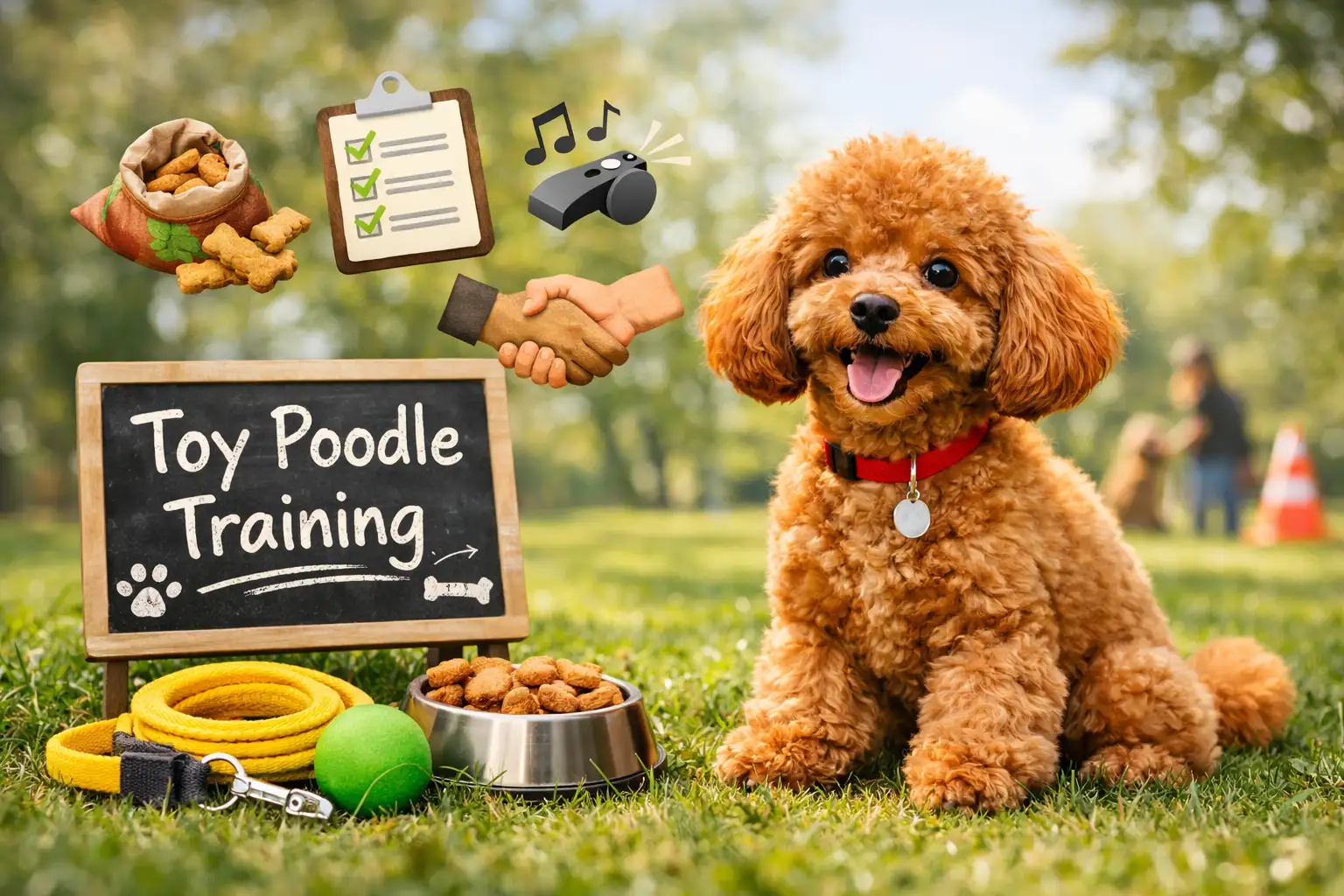
Toy Poodle Training Guide: Behavior, Obedience and Problem Fixes
Training a Toy Poodle is one of the best things you can do for your dog. Toy Poodles are very smart, loving, and quick learners, which makes training easier than many other breeds. But because they are so clever, they can also pick up bad habits just as fast if training is ignored. This guide is designed to help both new and experienced dog owners understand how to train a Toy Poodle in a simple, clear, and friendly way.
In this guide, you will learn why training is important, how Toy Poodles think and behave, and how to teach them good manners and obedience. Whether you have a playful puppy or an adult Toy Poodle, training helps them feel safe, confident, happy, and well-behaved at home and in public. It also strengthens your bond with your dog because Toy Poodles love attention, praise, and time with their owners.
We will also cover common problems like barking, stubborn behavior, separation anxiety, and how to fix them using kind and effective training methods. Everything is explained in easy language so anyone can understand and follow it.
Why Toy Poodle Training Matters
Training a Toy Poodle is not just about teaching tricks. It helps your dog learn how to behave, how to stay calm, and how to feel safe. Toy Poodles are very smart dogs. If you do not guide them, they can become noisy, stubborn, clingy, or playful in the wrong way. Good training helps them understand what you want and makes life easier for both you and your dog.
Training also builds trust. When you train kindly and patiently, your Toy Poodle feels closer to you. They learn to listen, follow rules, and feel confident in new places or around new people. Training also keeps them safe, especially during walks, in public places, or around other pets.
Here is a simple table to understand why training is important:
| Benefit | Why It Matters |
|---|---|
| Better behavior | Less barking, jumping, or naughty habits |
| Safer dog | Listens to commands and avoids danger |
| Strong bond | Builds trust and love between dog and owner |
| Happier life | Dog feels calm, confident, and understood |
| Easier home life | Fewer problems and stress for owners |
With the right training, a Toy Poodle grows into a polite, friendly, and joyful companion.
Understanding Toy Poodle Behavior and Learning Style
Toy Poodles are one of the smartest dog breeds. This is great for training, because they understand new things quickly. But it also means they can learn bad habits just as fast if you do not guide them. They are very alert, emotional, and deeply connected to their owners. This is why training should always be kind, patient, and positive.
Toy Poodles learn best through rewards like treats, praise, and play. Harsh punishment or shouting can scare them and make training harder. They respond well when training feels like a fun game. Short training sessions work best, because their brains like learning in small, happy steps.
Toy Poodles are also very people-focused. They enjoy staying close to their family and may become worried or clingy if left alone too much. With good training and confidence-building, they stay calmer, happier, and more secure.
Many other companion breeds share this emotional and smart nature.
Here is a simple table to understand their behavior in training:
| Behavior Trait | What It Means in Training |
|---|---|
| Very smart | Learns fast, needs mental challenges |
| Sensitive | Needs gentle and kind training |
| People-loving | Enjoys attention, praise, and closeness |
| Alert nature | May bark more if not trained |
| Playful | Learns well through fun activities |
| Emotional | Needs confidence-building and patience |
Understanding how your Toy Poodle thinks helps you train in a smarter and kinder way.
Step-by-Step Toy Poodle Training Guide
Training a Toy Poodle works best when you follow simple, clear steps. Always use rewards like treats, happy praise, and gentle encouragement. Try to train in a quiet place first so your dog can focus.
Start with basic obedience. Teach simple commands like sit, stay, come, and down. Practice every day for a few minutes instead of one long session. Short lessons help your Toy Poodle learn faster and enjoy training.
House training and crate training are also important, especially for puppies. Take your Toy Poodle outside often, praise them when they do the right thing, and keep a routine. Crate training helps with potty training, traveling, and gives your dog a safe space to relax.
Leash training teaches your Toy Poodle to walk calmly without pulling. Use a comfortable harness and practice walking slowly, rewarding your dog for staying near you. Socialization is important too. Let your dog meet new people, friendly dogs, and visit safe places so they become confident and calm in new situations.
Here is a simple table to understand training timing and progress:
| Training Area | Frequency | Session Time | Expected Progress |
|---|---|---|---|
| Basic commands | Daily | 5–10 minutes | 1–3 weeks |
| House training | Daily routine | Throughout the day | Few weeks |
| Crate training | Daily | Short calm time | 1–3 weeks |
| Leash training | Few times a week | 10–15 minutes | 2–4 weeks |
| Socialization | Regularly | Everyday situations | Ongoing |
Stay patient, stay positive, and make training fun. Your Toy Poodle will respond with love and quick learning.
Common Toy Poodle Training Problems and When to Get Help
Even with good training, Toy Poodles can sometimes show behavior problems. The good news is that most issues can be fixed with patience, consistency, and the right training steps.
Barking is one of the most common problems. Toy Poodles are alert and like to warn their owners about sounds or movement. Teach them when it is okay to bark and when to stay quiet by using calm voice training and rewards.
Some Toy Poodles may become clingy or anxious when left alone. This is because they love being near their owners. Leaving them slowly for short periods, giving toys, and building confidence can help reduce separation anxiety.
A few Toy Poodles may act stubborn at times. This usually happens when training is not fun or clear. Use short, happy training sessions and always reward good behavior.
Age can also affect behavior. As dogs grow older, they may act differently, just like humans do.
Here is a simple table to help you with common problems and quick fixes:
| Problem | Likely Cause | Simple Solution | When to Get Help |
|---|---|---|---|
| Too much barking | Alert nature or boredom | Teach quiet command, give toys, mental games | If barking is nonstop |
| Separation anxiety | Fear of being alone | Practice short alone times, build confidence | If panic becomes serious |
| Stubborn behavior | Bored or confused | Short, fun training with treats and praise | If no improvement |
| Shy or fearful | Lack of socialization | Gentle exposure to new people and places | If fear becomes severe |
| Pulling on leash | Excitement | Use harness, slow walking practice, rewards | If pulling is extreme |
If your Toy Poodle shows very aggressive behavior, extreme fear, sudden personality change, or does not improve even after trying training, it is a good idea to talk to a professional dog trainer or a veterinarian.
With patience, love, and good guidance, most Toy Poodle behavior problems can be solved, and your dog can live a happy, calm, and confident life.
You can also read more expert training advice from trusted sources like the American Kennel Club’s Toy Poodle training guide here: https://www.akc.org/dog-breeds/poodle-toy/
| Toy Poodle Dog Age Calculator |
| Toy Poodle Dog |
| Toy Poodle Age Calculator to Human Years – Age Chart |
| Toy Poodle Grooming Basics |
| Toy Poodle Nutrition & Feeding |
| Toy Poodle Cost of Ownership (Universal Guide) |
Toy Poodle Dog Guide 2025: Temperament, Care & Facts
[…] Toy Poodle General Training Guides […]