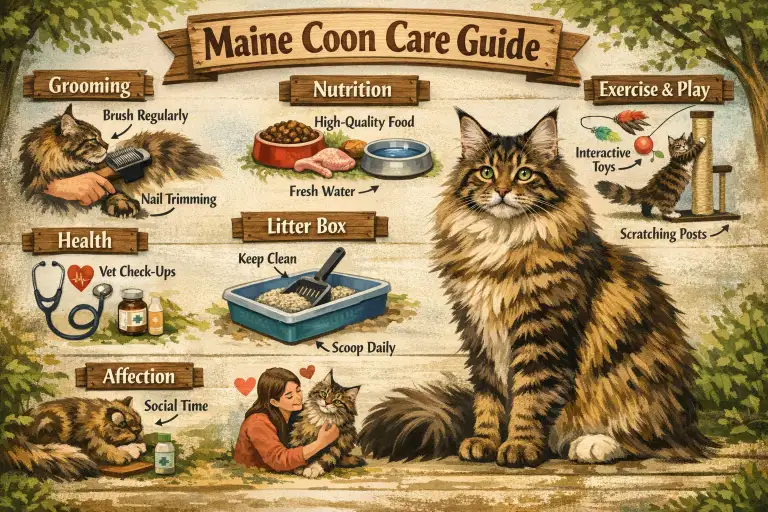
Maine Coons are not just bigger cats. They grow slower, live longer, and need more daily care than most regular house cats. This guide is for owners who want to care for a Maine Coon properly and avoid common mistakes that lead to stress, matting, or health problems.
One of the biggest surprises for new owners is how much time Maine Coons need. They enjoy human company, daily play, and regular grooming. If they are ignored or bored, they may become destructive or lazy. Good care keeps them calm, confident, and healthy.
Maine Coons also have special physical needs. Their long coat, large body, and strong bones mean grooming, litter setup, and exercise matter more than usual. Treating them like a normal short-haired cat often causes problems later.
Another important thing to understand is cost and effort. Maine Coons eat more, need bigger supplies, and may need extra grooming help as they age. Knowing this early helps owners stay prepared and confident.
Daily and Weekly Maine Coon Care Routine
Daily care keeps a Maine Coon healthy and happy. These cats need food, water, play, and attention every day. Skipping play or mental activity often leads to weight gain and boredom.
Fresh water should always be available. Many Maine Coons prefer wide bowls or water fountains because their whiskers are long and sensitive. Litter boxes should be large and easy to enter, especially for adult males.
Weekly care focuses on grooming and basic health checks. Brushing removes loose fur and prevents painful mats. Checking ears, eyes, and paws helps catch problems early.
Below is a simple care routine table that owners can follow.
| Care Task | How Often | Why It Matters |
|---|---|---|
| Feeding | Daily | Supports steady growth and energy |
| Fresh water | Daily | Prevents dehydration |
| Playtime | Daily | Prevents boredom and obesity |
| Litter cleaning | Daily | Encourages proper bathroom use |
| Brushing | 2–3 times weekly | Prevents matting |
| Nail check | Weekly | Avoids overgrown nails |
Grooming and Coat Maintenance for Maine Coons
Maine Coons have long, thick fur that can easily tangle. Grooming is not optional for this breed. Without regular brushing, mats can form near the chest, belly, and back legs.
Brushing should be gentle and calm. Start when the cat is relaxed. Use slow strokes and stop if the cat becomes upset. Many owners notice their Maine Coon enjoys grooming once it becomes routine.
Shedding increases during seasonal changes. During these times, brushing may be needed more often. Regular grooming also reduces hairballs, which are common in long-haired cats.
This table helps owners understand grooming needs by body area.
| Body Area | Grooming Need | Frequency |
|---|---|---|
| Neck & chest | High | 3 times per week |
| Belly | Very high | 3–4 times per week |
| Tail | Medium | Weekly |
| Back & sides | Medium | 2 times per week |
Common Maine Coon Care Mistakes and Safety Concerns
A common mistake is underestimating grooming time. Many owners brush too little and only notice problems when mats become painful. Another mistake is feeding too much just because the cat is large.
Ignoring behavior changes is also risky. A Maine Coon that hides, stops playing, or avoids grooming may be in pain or stressed. These signs should never be ignored.
Indoor safety is important. Maine Coons are curious and strong. Loose shelves, weak cat trees, or small litter boxes can cause accidents or stress.
Here is a quick mistake vs correct care table.
| Common Mistake | Better Approach |
|---|---|
| Rare brushing | Regular gentle brushing |
| Overfeeding | Measured meals |
| Small litter box | Extra-large litter box |
| Ignoring behavior | Early observation and action |
Special Care Tips and When to See a Vet
Kittens need early grooming training. Short, positive brushing sessions help them accept care later. Adult Maine Coons need steady routines to stay active and fit.
Senior Maine Coons may struggle with grooming and movement. Owners may need to brush more often and adjust the home to make climbing easier.
Multi-cat homes need extra litter boxes and space. Maine Coons are friendly but can feel stressed if resources are limited.
Watch for warning signs like sudden weight loss, limping, heavy matting, or changes in appetite. These signs mean it is time to see a veterinarian.
| Warning Sign | What It May Mean | Action |
|---|---|---|
| Limping | Joint pain | Vet visit |
| Heavy mats | Grooming difficulty | Groomer or vet |
| Loss of appetite | Illness | Vet visit |
| Behavior change | Stress or pain | Vet check |
Caring for a Maine Coon is a long-term commitment, but it is very rewarding. With proper grooming, daily attention, and early care, these gentle giants live happy and healthy lives.
For trusted veterinary-backed cat care guidance, you can also visit the American Association of Feline Practitioners:
https://catfriendly.com

Ata Ur Rehman is the founder of Pet Age in Human Years Calculator, an educational platform that provides age conversion charts and lifespan guides for dogs, cats, birds, and other companion animals. His work focuses on helping pet owners understand how animal ages translate into human years using commonly accepted age conversion formulas and published lifespan averages.
The website compiles breed and species lifespan data from kennel clubs, breed organizations, and general animal lifespan studies to present simple and easy-to-understand guides for pet owners worldwide.
This website was created to centralize animal age conversion charts into one easy reference platform for pet owners.