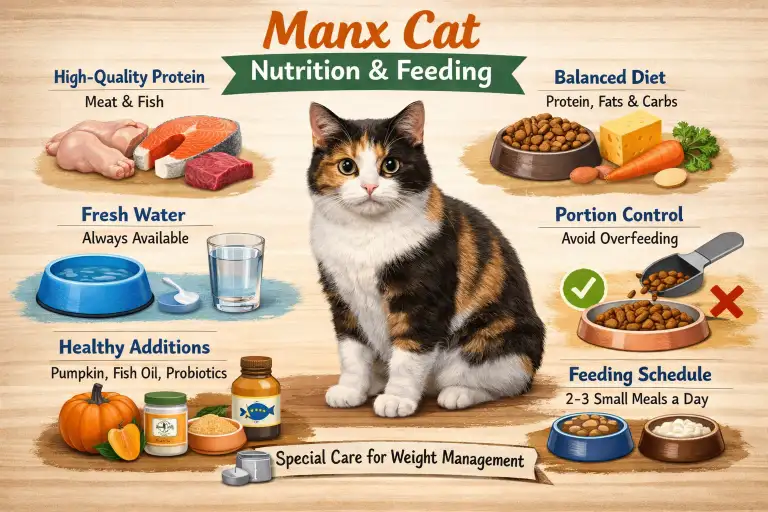
Manx cats are special because of their strong, muscular bodies and unique tail‑less trait. Their diet is very important to keep them healthy and active. Like all cats, Manx cats are obligate carnivores. This means they must eat animal-based protein to get the nutrients their bodies cannot make on their own. Protein is essential for muscles, energy, and overall health. Good protein sources include chicken, turkey, fish, and beef.
Fats are also important for Manx cats. Healthy fats provide energy, help the skin and coat stay shiny, and support brain health. Cats can digest fats well, and moderate amounts in their food are ideal. While cats can use some carbohydrates for energy, they don’t need a lot. Too many carbs can lead to weight gain or digestive issues.
Taurine is an essential amino acid that cats must get from their food. Taurine supports heart health, vision, and reproduction. A diet low in taurine can cause serious health problems. Vitamins and minerals are also important, but most commercial cat foods already contain balanced amounts. It’s important to feed foods labeled as complete and balanced according to AAFCO standards.
Moisture is another key factor. Cats naturally drink very little water, so wet food can help prevent dehydration and urinary problems. Even when feeding dry food, always provide fresh water. Watching your Manx cat’s body condition, energy level, and overall health will help you understand if their diet is meeting these essential needs.
Choosing the Right Food for Your Manx
Manx cats do best on high-quality commercial cat foods that meet their nutritional requirements. Wet food is higher in moisture, which helps with hydration and urinary health. Dry food is convenient and helps with dental health, but it usually contains less water. A mix of both wet and dry food can give your cat variety and balanced nutrition.
When choosing food, look at the protein source listed first on the ingredient list. Avoid foods with too many fillers like corn or wheat. High-quality foods are more digestible and provide the essential nutrients your Manx needs. Always check for AAFCO or similar regulatory approval to make sure the food meets cat nutrition standards.
Consider your cat’s lifestyle. Active Manx cats need slightly higher calories, while indoor or less active cats need fewer calories to prevent weight gain. If your cat is picky, offering a combination of flavors and textures can improve acceptance without compromising nutrition.
It’s also important to rotate foods gradually if changing brands or types. Sudden diet changes can upset a cat’s stomach. Introduce new foods slowly over 7–10 days while monitoring for vomiting or diarrhea.
Feeding Schedule & Portion Guide
Feeding your Manx cat the right amount at the right times helps maintain healthy weight and energy. Most adult cats do well with two meals per day, while kittens may need three to four smaller meals. Some owners prefer free-feeding, leaving dry food available all day, but scheduled meals are usually better for weight management.
Below is a conceptual portion guide based on cat size and activity. These are estimates, not medical prescriptions:
| Cat Weight | Wet Food per Day | Dry Food per Day | Notes |
|---|---|---|---|
| 5 lbs | 1/2 – 2/3 cup | 1/4 cup | Small, active cat |
| 8 lbs | 3/4 – 1 cup | 1/3 cup | Average adult |
| 12 lbs | 1 – 1 1/4 cup | 1/2 cup | Large or active cat |
Free-feeding can work if your cat self-regulates, but many indoor Manx cats are prone to obesity. Watching their body condition and adjusting portions accordingly is key.
Feeding at the same times each day also helps your cat develop routine and reduces begging behaviors. Always provide fresh water alongside meals, especially if feeding mostly dry food.
Hydration, Treats & Common Feeding Risks
Water is critical for your Manx cat’s health. Cats are naturally low-drinkers, so wet food can help meet their hydration needs. Always provide fresh water and consider using a cat water fountain if your cat ignores still water.
Treats should make up no more than 5–10% of your cat’s daily calories. Stick to small, high-protein cat treats and avoid giving human food, which can upset digestion or be toxic. Common unsafe foods include chocolate, onions, garlic, and alcohol.
Overfeeding is a common problem, especially for indoor cats. Obesity can lead to joint problems, diabetes, and decreased lifespan. Avoid “free-feeding” high-calorie dry foods for sedentary cats. Watch for signs of underfeeding too, such as weight loss, low energy, or poor coat quality.
Creating a feeding routine, limiting treats, and monitoring your cat’s weight are simple ways to prevent problems. Use feeding puzzles or slow feeders to make mealtime engaging and reduce overeating.
Life Stages & Special Feeding Considerations
Manx kittens have high energy needs to support growth. They need protein-rich food and slightly more fat for development. Feed kittens 3–4 meals per day and monitor their weight weekly.
Adult Manx cats benefit from balanced maintenance diets. Portion control is important, especially for indoor cats or spayed/neutered cats whose metabolism slows. Adjust calories gradually to maintain a healthy body condition.
Senior Manx cats may need diets with easily digestible protein, moderate fat, and joint-supporting nutrients. Keep an eye on hydration, as older cats may drink less.
Below is a life stage nutrient summary table to help owners understand general needs:
| Life Stage | Protein | Fat | Feeding Frequency | Notes |
|---|---|---|---|---|
| Kitten | High | High | 3–4 meals/day | Supports growth |
| Adult | Moderate | Moderate | 2 meals/day | Maintain weight |
| Senior | Moderate | Lower | 2 meals/day | Support digestion & joints |
Multi-cat households may need separate feeding areas to prevent competition. Spayed and neutered Manx cats often require fewer calories, so portion control is essential. Regular check-ins with your vet will help adjust diet as your cat ages.
For more information on cat nutrition and expert feeding guidelines, visit the WSAVA Nutrition Guidelines.

Ata Ur Rehman is the founder of Pet Age in Human Years Calculator, an educational platform that provides age conversion charts and lifespan guides for dogs, cats, birds, and other companion animals. His work focuses on helping pet owners understand how animal ages translate into human years using commonly accepted age conversion formulas and published lifespan averages.
The website compiles breed and species lifespan data from kennel clubs, breed organizations, and general animal lifespan studies to present simple and easy-to-understand guides for pet owners worldwide.
This website was created to centralize animal age conversion charts into one easy reference platform for pet owners.