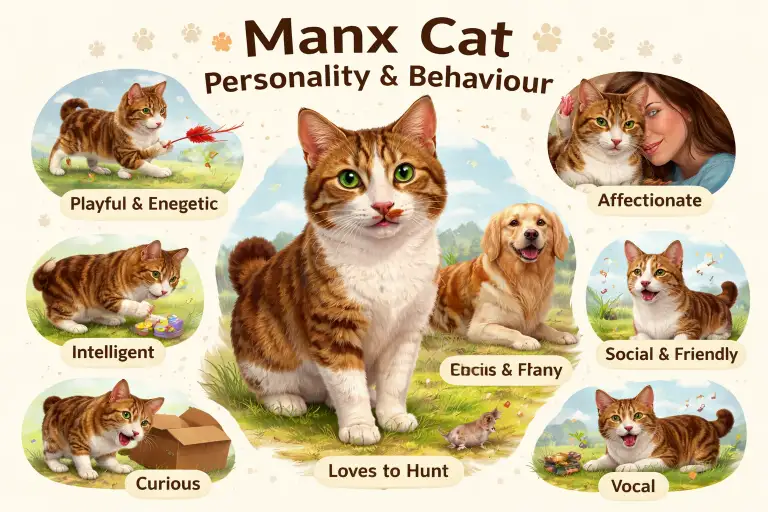
Manx cats are a unique and fascinating breed, but every cat is an individual. While some Manx cats are playful and adventurous, others can be calm and gentle. Their personality is shaped by both their genetics and their experiences growing up. Even within the same litter, you might see very different personalities.
Many Manx cats are known for their intelligence. They quickly learn routines, enjoy puzzle toys, and often figure out ways to get your attention. Along with being smart, they are also curious. A Manx may explore every corner of your home, peek into bags, or watch birds through the window for hours.
Manx cats also have a strong sense of loyalty. Some follow their owners around, sit near them while they work, or greet them when they come home. Despite their loyalty, many Manx cats are independent and enjoy having their own space. Understanding this balance helps owners appreciate their personality without thinking the cat is “aloof.”
The shape of their tail, or lack of one, can slightly influence their movement and play style. Rumpy Manx cats, which have no tail, often have a stronger back end and are excellent jumpers. Stumpy and longie tails may affect balance in subtle ways, but personality traits are more influenced by experience and environment than by tail length.
Common Manx Personality Traits
| Trait | Description | Real-Life Example |
|---|---|---|
| Intelligent | Learns quickly, notices routines | Solves puzzle feeder easily |
| Curious | Explores surroundings, investigates new things | Watches birds for long periods |
| Playful | Enjoys toys and interactive games | Chases feather wand or small ball |
| Loyal | Attaches to family members | Follows owner room-to-room or greets them at door |
| Independent | Likes alone time | Chooses to rest in a quiet corner or perch |
Communication and Social Behavior
Manx cats use a mix of sounds and body language to communicate. They are not as vocal as some breeds, but their chirps, trills, and soft meows often have a clear meaning. Some Manx cats even use short “chatty” sounds when they want attention or to greet you.
Body language is very important, especially since some Manx cats have little or no tail. Their ears, eyes, whiskers, and posture give clues about their mood. A forward-facing ear and wide-open eyes usually show interest, while flattened ears or crouching may signal fear or stress.
Social behavior with humans varies. Many Manx cats enjoy being near their family, sitting on a lap, or following you around the house. Others prefer to watch from a distance and interact only on their terms. Both behaviors are normal.
Manx cats also interact differently with other pets. They can be playful with dogs or other cats if introduced early. Watching how your Manx responds—whether approaching, sniffing, or swatting gently—helps you understand their comfort level.
Manx Communication Signals
| Signal | Meaning | Owner Interpretation Tip |
|---|---|---|
| Chirping/Trilling | Greeting or attention-seeking | Respond with gentle talk or play |
| Tail upright (if present) | Happy or confident | Pet or engage in interactive play |
| Flattened ears | Fear or discomfort | Give space and observe |
| Slow blink | Trust or affection | Blink back to show calmness |
| Crouched body | Stress or uncertainty | Avoid sudden movements, provide safe space |
Play, Hunting & Natural Instincts
Manx cats have strong hunting instincts. Even indoor cats often enjoy stalking, pouncing, and chasing toys that mimic prey. They may crouch low before pouncing on a feather wand or ball, showing a natural predatory sequence.
Play is important for both exercise and mental stimulation. Manx cats enjoy interactive play like wand toys, puzzle feeders, and small rolling balls. They also like exploring vertical spaces like shelves or cat trees, which taps into their climbing instincts.
Energy levels vary. Some Manx cats are highly active and enjoy long play sessions, while others have bursts of energy followed by quiet periods. Observing your cat’s natural rhythm helps in planning playtime and enrichment.
Manx cats often mix curiosity with hunting behavior. You may notice them stalking shadows, watching moving objects, or even gently “hunting” household items. These behaviors are normal and healthy expressions of instinct.
Stress, Comfort & Misunderstood Behaviors
Manx cats show stress in subtle ways. Hiding, crouching, or flattening ears can signal discomfort. Other signs include vocalizing differently, over-grooming, or avoiding interaction. Understanding these signs helps owners respond without scaring the cat.
Comfort behaviors include purring, kneading, stretching, and lying on soft surfaces. Some Manx cats enjoy high perches or cozy boxes where they can watch without being disturbed. Respecting these choices helps reduce stress.
Many behaviors are often misunderstood. Independence is normal and not a sign of dislike. Play aggression, like light swatting or pouncing during games, is natural. Vocalizations are not always demands—they can simply be greetings or expressions of curiosity.
Environmental changes, such as new furniture, guests, or loud noises, can temporarily affect behavior. Observing patterns over time helps distinguish normal reactions from chronic stress.
Life Stages and Personality Changes
Manx cats show different behaviors at each life stage. Kittens are curious and energetic, exploring every corner and learning social skills. Adolescents test boundaries, often engaging in more play and experimenting with independence.
Adult Manx cats often settle into routines, balancing play, affection, and alone time. Seniors may reduce activity and prefer comfort, resting more, but still enjoy occasional interactive play or bird-watching.
Life stages also affect social behavior. Kittens are more open to other pets, while older cats may be selective about interactions. Observing your Manx over time helps you understand their personality growth and changing preferences.
Manx Life Stages and Behavior
| Life Stage | Typical Behavior | Play/Energy Level | Social Style |
|---|---|---|---|
| Kitten | Exploring, learning, curious | High | Open, friendly |
| Adolescent | Testing boundaries, playful | Very high | Social but sometimes selective |
| Adult | Settled routines, balanced activity | Moderate | Loyal, interactive |
| Senior | More rest, occasional play | Low to moderate | Prefers calm and familiar settings |
For more detailed insights on cat personalities and behavior, visit International Cat Care.

Ata Ur Rehman is the founder of Pet Age in Human Years Calculator, an educational platform that provides age conversion charts and lifespan guides for dogs, cats, birds, and other companion animals. His work focuses on helping pet owners understand how animal ages translate into human years using commonly accepted age conversion formulas and published lifespan averages.
The website compiles breed and species lifespan data from kennel clubs, breed organizations, and general animal lifespan studies to present simple and easy-to-understand guides for pet owners worldwide.
This website was created to centralize animal age conversion charts into one easy reference platform for pet owners.