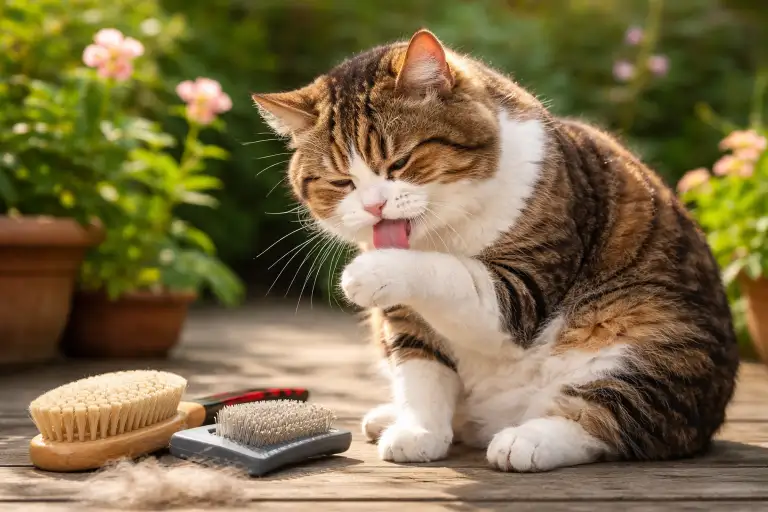
Grooming is an important part of keeping your Manx cat healthy and happy. Even though Manx cats have a short to medium-length coat, regular grooming helps prevent tangles, mats, and shedding problems. It also gives you a chance to check your cat’s skin, ears, eyes, and nails. Grooming isn’t just about appearance; it is about your cat’s comfort and overall health.
Manx cats have a unique body shape, especially with their tail variations. Some are rumpy (no tail), stumpy (short tail), or long-tailed. This can change how you handle grooming near the tail area. Cats with shorter tails may need extra care to avoid stress in sensitive spots.
Most Manx cats have a double coat that sheds seasonally. Brushing during shedding season helps remove loose hair and reduces hairballs. Indoor cats may shed less than outdoor cats, but they still benefit from regular brushing to prevent mats and keep their coat soft.
Starting grooming early, when your cat is a kitten, helps build positive habits. Cats that are used to brushing, nail trimming, and ear cleaning from a young age are calmer and more cooperative as adults. Using gentle, slow motions and praise makes grooming a bonding experience.
Cat Grooming Basics You Must Know
The first step in grooming your Manx cat is understanding the basic tasks. Brushing, nail trimming, bathing, ear cleaning, and dental care are the key parts. You don’t have to do everything at once; spreading tasks across the week keeps your cat calm.
Brushing removes loose hair and prevents tangles. Use a soft brush for short-haired Manx cats and a comb for medium-length coats. Always brush in the direction of hair growth. Gentle brushing prevents skin irritation and makes grooming a pleasant experience for your cat.
Nail trimming is another essential task. Cats’ nails grow quickly and can get sharp, causing scratches or getting caught in furniture. Use a proper cat nail clipper and trim only the clear part of the nail. If your cat struggles, trim one or two nails at a time and give a treat.
Dental care and ear cleaning are often overlooked. Wiping the ears gently with a damp cloth or using a cat-safe ear solution keeps infections away. Brushing your cat’s teeth regularly reduces plaque and gum problems. These small steps can prevent bigger health issues in the future.
Essential Grooming Tasks & How Often to Do Them
Knowing how often to groom your Manx cat makes the routine easier. Here’s a simple table to guide you:
| Grooming Task | Frequency |
|---|---|
| Brushing (short coat) | 2–3 times a week |
| Brushing (medium coat) | Daily or every other day |
| Nail trimming | Every 2–3 weeks |
| Bathing | Only when dirty or recommended by a vet |
| Ear cleaning | Once a week or as needed |
| Teeth brushing | 2–3 times a week |
Brushing helps reduce shedding and hairballs. Manx cats with longer hair may need daily attention. Nails grow fast, so check them regularly and trim as needed. Bathing is rarely required; most cats clean themselves. Only bathe your cat if it gets very dirty or your vet recommends it.
Checking your cat during grooming is also important. Look for signs of skin irritation, fleas, or unusual lumps. Early detection of problems can save your cat from discomfort and serious health issues.
Keeping a consistent grooming schedule builds trust. Your cat will know what to expect and become more relaxed. Positive reinforcement, like treats and praise, makes grooming a calm, stress-free activity.
Behavior-Aware Grooming: Stress Signals & Handling Tips
Cats can be sensitive during grooming. Understanding their behavior helps prevent stress and accidents. Watch for signs like flattened ears, twitching tails, growling, hissing, or trying to escape. These are warning signs that your cat feels uncomfortable.
Start grooming sessions short, especially for kittens or nervous cats. Gradually increase the time as your cat becomes more comfortable. Always handle your cat gently, supporting the body and avoiding pulling on the tail area.
A calm environment is important. Use a quiet room, soft lighting, and minimal noise. Some cats like having a towel or small blanket to feel secure. Speaking softly and moving slowly helps your cat stay relaxed.
Offering treats or play after grooming creates a positive association. Over time, your cat learns that grooming is not scary but part of a fun routine. If your cat becomes too stressed, stop and try again later.
Troubleshooting, Common Mistakes & FAQs
Even experienced cat owners make mistakes. Common errors include over-brushing, cutting nails too short, bathing too often, or ignoring stress signals. Avoid these mistakes to keep grooming safe and pleasant.
Here’s a quick reference table for common mistakes and solutions:
| Mistake | Solution |
|---|---|
| Brushing too hard | Use gentle strokes and soft brush |
| Cutting nails too short | Only trim the clear part of the nail |
| Ignoring stress signs | Stop grooming and try again later |
| Bathing too frequently | Only bathe when necessary |
| Skipping ear or teeth care | Check weekly to prevent issues |
FAQs:
- How often should I groom my Manx? Brushing 2–3 times a week for short coats, daily for longer coats.
- Do Manx cats need baths? Rarely; only if very dirty or advised by a vet.
- How do I trim nails safely? Use a proper cat clipper, trim small amounts, and avoid the pink quick.
- How can I reduce grooming stress? Short sessions, calm environment, and positive reinforcement.
- When should I see a vet? If you notice skin issues, unusual lumps, ear infection, or persistent stress.
For more detailed cat care tips, you can visit The Cat Fanciers’ Association Grooming Tips.

Ata Ur Rehman is the founder of Pet Age in Human Years Calculator, an educational platform that provides age conversion charts and lifespan guides for dogs, cats, birds, and other companion animals. His work focuses on helping pet owners understand how animal ages translate into human years using commonly accepted age conversion formulas and published lifespan averages.
The website compiles breed and species lifespan data from kennel clubs, breed organizations, and general animal lifespan studies to present simple and easy-to-understand guides for pet owners worldwide.
This website was created to centralize animal age conversion charts into one easy reference platform for pet owners.