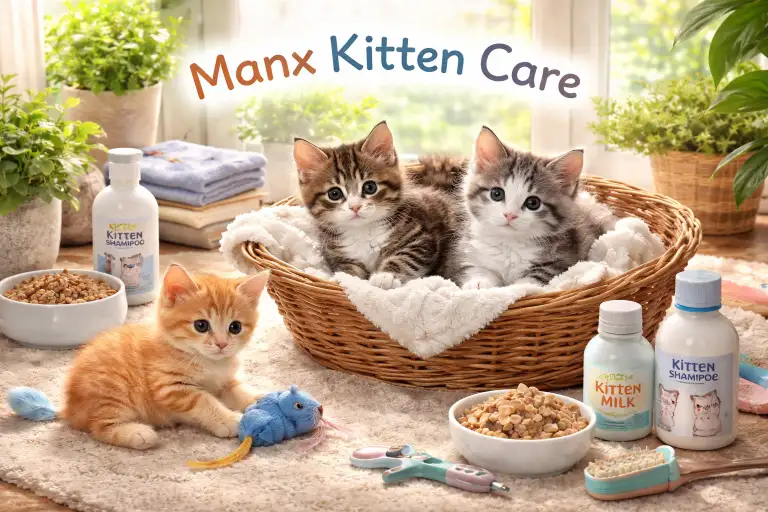
Manx kittens are special because of their unique tail types. Some have no tail at all, some have a short stub, and a few have a normal-length tail. This difference is normal and part of the breed. Owners should know that Manx kittens may move differently—they sometimes hop or appear to bounce instead of walking smoothly. This is normal and not a sign of illness.
Like all kittens, Manx kittens grow quickly. In the first few weeks, they mainly sleep and nurse. By around four weeks, they start exploring, playing with their siblings, and learning basic skills. By two to three months, they become very curious and energetic, often testing their jumping and climbing skills. Knowing these stages helps owners provide the right care at the right time.
Manx kittens are also known for being affectionate and social. They enjoy gentle handling, and early socialization with people and other pets is very important. Kittens that are exposed to gentle touch, play, and different safe experiences tend to grow into confident and happy adult cats.
Some behaviors might worry new owners, like hopping, rolling when playing, or using their back legs in unusual ways. These are usually normal Manx traits. However, it is important to watch your kitten for signs of pain, trouble walking, or unusual lethargy, and contact a vet if anything seems off.
Manx Kitten Development Stages
| Age | Key Skills & Behaviors | What to Expect |
|---|---|---|
| 0–4 weeks | Sleeping, nursing | Eyes open, starting to crawl |
| 4–8 weeks | Exploring, playing | Learning to use litter box, first solid food |
| 8–12 weeks | High energy, socializing | Play biting, climbing, interaction with humans |
| 3–6 months | Growth spurt | Stronger jumping, more coordinated play |
| 6–12 months | Adolescent independence | Developing personality, ready for full socialization |
Feeding & Nutrition: What, When, and How Much
Feeding a Manx kitten properly is very important for growth and health. Kittens need food that is made for their age, which has more protein and nutrients than adult cat food. Many owners start with wet food because it is easier for young kittens to eat, then slowly add dry food.
The amount of food depends on the kitten’s age. Very young kittens (up to 4 weeks) usually nurse or eat a special kitten formula. Between 4–8 weeks, they begin trying solid food several times a day. After 8 weeks, most kittens eat 3–4 small meals a day. Fresh water should always be available.
Manx kittens can be picky eaters. Some may prefer wet food, while others like dry kibble. If your kitten is not eating, try warming the food slightly or offering a small amount by hand. Avoid giving them milk from cows, as many cats cannot digest it and it can cause upset tummies.
Owners should also avoid overfeeding. Obesity can develop quickly in kittens and can cause health problems later. Watching your kitten’s body condition and adjusting portions as needed will keep them healthy and active.
Feeding Guide for Manx Kittens
| Age | Number of Meals | Food Type | Notes |
|---|---|---|---|
| 0–4 weeks | Every 2–3 hours | Nursing / Kitten formula | Feed small amounts frequently |
| 4–8 weeks | 4–6 times/day | Wet & dry mix | Introduce solid food gradually |
| 8–12 weeks | 3–4 times/day | Wet & dry kitten food | Watch for picky eating |
| 3–6 months | 3 times/day | Wet & dry kitten food | Adjust portions as growth slows |
| 6–12 months | 2–3 times/day | Kitten food transitioning to adult | Maintain healthy weight |
Litter Training, Grooming & Daily Care
Litter training is usually easy with Manx kittens. Start by placing the kitten in the litter box after meals, naps, and play. Use a low-sided box for younger kittens so they can climb in easily. If accidents happen, do not scold your kitten. Simply clean it up and encourage them to use the box next time.
Grooming is simple for Manx kittens. Short-haired Manx kittens need brushing once a week, while long-haired types may need it more often to prevent tangles. Trim nails carefully, check ears for dirt, and gently wipe their teeth with a soft cloth or finger brush. Baths are rarely needed unless the kitten gets very dirty.
Daily care includes monitoring eating, drinking, and play. Manx kittens are energetic and love interactive play. Toys that mimic prey, like small balls or feathers on sticks, are excellent. Rotate toys to keep the kitten interested and provide mental stimulation.
Keeping a daily routine helps the kitten feel secure. Feed at consistent times, play at similar periods, and have a set bedtime for quiet rest. Routine reduces stress and helps your Manx kitten adapt quickly to your home.
Litter Training Quick Tips & Common Errors
| Tip | Explanation |
|---|---|
| Place kitten in box often | After meals, naps, play |
| Use low-sided box | Easy access for small kittens |
| Clean accidents calmly | Avoid scolding |
| Keep litter clean | Encourages consistent use |
| Avoid scented litter at first | Some kittens dislike strong smells |
Health, Vet Visits & Safety at Home
Manx kittens need routine vet visits to stay healthy. The first check-up usually happens around 6–8 weeks. The vet will examine the kitten, check weight, and discuss preventive care. You do not need to worry about medical treatments in detail—just follow general advice from the vet.
Safety at home is very important. Remove cords, small objects, toxic plants, and chemicals. Make sure windows and balconies are secure. Manx kittens are curious climbers, so high furniture should be safe or off-limits until the kitten learns limits.
You should also watch for signs of illness, such as lack of appetite, unusual lethargy, vomiting, diarrhea, or difficulty walking. While Manx kittens have unique spinal traits, sudden changes in movement should be evaluated by a vet.
Indoor enrichment keeps kittens safe and happy. Provide scratching posts, climbing areas, and toys. Even short supervised outdoor time in a secure area is enough for stimulation without risking injury or escape.
Kitten Safety & Home Prep Checklist
| Item | Why it’s important |
|---|---|
| Electrical cords | Prevent chewing and shocks |
| Small objects | Avoid choking hazards |
| Toxic plants | Protect from poisoning |
| Windows & balconies | Prevent falls |
| Safe climbing areas | Encourage healthy exercise |
| Litter boxes | Encourage proper bathroom habits |
Bonding, Play & Common Challenges
Bonding with your Manx kitten is fun and important. Spend quiet time holding, petting, and talking to your kitten. Play together daily with safe toys to strengthen your relationship. Short, frequent play sessions are better than long ones to avoid over-stimulation.
Play biting and scratching are common challenges. Redirect your kitten to toys instead of hands or feet. Avoid yelling or punishment; gentle guidance teaches the kitten what is okay to bite or scratch. Praise positive behavior with gentle petting or a small treat.
Manx kittens are social and curious. Introducing them slowly to other pets, family members, and new environments helps them feel confident. Watch their body language to prevent stress. Gradual exposure works best.
Finally, remember that mistakes are normal. Accidents happen, and kittens will test boundaries. Patience, routine, and gentle guidance make the difference. Celebrate small successes, like using the litter box or learning not to scratch furniture. Your kitten will grow into a healthy, happy, and loving companion.
Common Challenges & Solutions
| Challenge | Solution |
|---|---|
| Play biting | Redirect to toys, praise gentle play |
| Scratching furniture | Provide scratching posts, discourage furniture |
| Shyness | Gradually introduce to people and pets |
| Accidents outside litter box | Reinforce litter box, clean accidents calmly |
| Overactive play | Short, frequent sessions, provide rest |
For more tips on Manx kitten care, you can visit The International Cat Association for breed-specific guidance.

Ata Ur Rehman is the founder of Pet Age in Human Years Calculator, an educational platform that provides age conversion charts and lifespan guides for dogs, cats, birds, and other companion animals. His work focuses on helping pet owners understand how animal ages translate into human years using commonly accepted age conversion formulas and published lifespan averages.
The website compiles breed and species lifespan data from kennel clubs, breed organizations, and general animal lifespan studies to present simple and easy-to-understand guides for pet owners worldwide.
This website was created to centralize animal age conversion charts into one easy reference platform for pet owners.