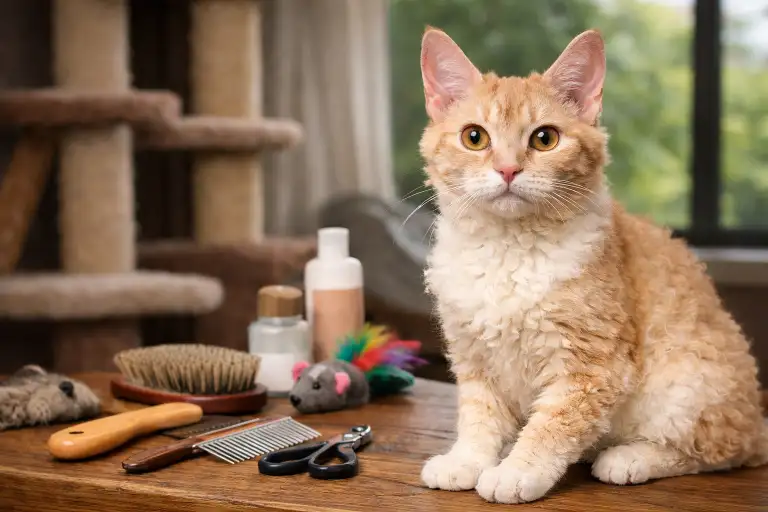
Caring for a LaPerm Shorthair is less about following a long list of complicated rules and more about understanding what makes this cat different from the average short-haired breed. Owners are often surprised to learn that despite the short coat, LaPerms don’t fit neatly into the “low-maintenance cat” category.
The most defining feature of the LaPerm Shorthair is its naturally curly coat. These curls are soft, springy, and irregular, and they behave very differently from straight fur. Brushing too often or too aggressively can flatten the curls, dry out the skin, and actually make the coat look worse rather than better. This means care has to be intentional and gentle, not frequent or forceful.
Beyond the coat, LaPerm Shorthairs are known for being highly social and people-oriented. Many owners describe them as “dog-like” in their desire to follow family members around the house, seek out laps, and stay involved in daily activities. This personality trait directly affects care: a LaPerm that doesn’t get enough interaction or stimulation may develop boredom behaviors, excessive vocalization, or attention-seeking habits.
Their light shedding is another area where expectations often don’t match reality. While LaPerm Shorthairs generally shed less than many other cats, this doesn’t mean grooming can be ignored. Loose hairs can still build up within the curls, and without occasional maintenance, the coat may lose definition or trap debris.
Skin sensitivity is also an important consideration. Many LaPerm owners notice that their cats react poorly to frequent bathing, scented grooming products, or harsh brushes. A healthy LaPerm coat is usually the result of doing less, not more—allowing natural oils to protect the skin and curls.
What makes LaPerm Shorthair care unique
| Care Aspect | Why It Matters |
|---|---|
| Curly coat | Needs gentle grooming, not frequent brushing |
| Social nature | Requires daily interaction |
| Light shedding | Still needs basic coat checks |
| Sensitive skin | Over-grooming can cause irritation |
At its core, LaPerm Shorthair care is about balance:
- Gentle grooming instead of routine brushing
- Daily social interaction instead of independence
- Mental stimulation rather than just physical activity
- Observation over overhandling
Understanding these needs early helps prevent common mistakes and sets the foundation for a healthy, comfortable, and happy LaPerm Shorthair
Daily and Weekly LaPerm Shorthair Care Routine
A LaPerm Shorthair does best with a simple and steady routine. You do not need to spend hours each day, but consistency matters. This section helps you understand what needs attention every day and what only needs to be done once in a while.
Daily vs weekly care tasks
| Care Task | How Often | Notes |
|---|---|---|
| Play and interaction | Daily | Helps prevent boredom |
| Social time | Daily | LaPerms dislike being ignored |
| Quick coat check | Daily | Look for dirt or dryness |
| Light brushing | Weekly | Use fingers or soft comb |
| Nail trimming | Every 2–3 weeks | Depends on activity |
Daily care basics
Most daily care is about time and attention, not tools.
Things to do every day:
- Spend time talking, playing, or sitting with your cat
- Use interactive toys for short play sessions
- Watch how your cat moves, eats, and rests
- Do a quick look at the coat to check for dirt or dryness
LaPerm Shorthairs enjoy being near people. If they feel ignored, they may meow more, follow you closely, or act restless. Daily interaction helps prevent boredom and stress.
Weekly and occasional care
Some care tasks only need to be done once a week or less.
Weekly or occasional tasks include:
- Gentle brushing with fingers or a soft comb
- Trimming nails every 2 to 3 weeks
- Cleaning ears if they look dirty
- Checking teeth and gums
Brushing should be light and slow. Too much brushing can make the curls lose shape. If your cat seems annoyed, stop and try again another day.
Indoor setup matters
Your home setup affects daily care more than most people realize.
Helpful basics:
- A clean litter box in a quiet spot
- Scratching posts to protect furniture and nails
- Window perches or cat trees for climbing
- Toys that your cat can chase, bat, or think about
LaPerm Shorthairs are curious and smart. A boring space can lead to bad habits, even if all physical needs are met.
Time and effort expectations
Many owners ask if LaPerm Shorthairs are easy to care for. The honest answer is yes, if you are present. They do not need heavy grooming, but they do need attention, play, and routine.
If you can give:
- Daily interaction
- Weekly light grooming
- A safe and interesting home
then this breed is usually a great match.
LaPerm Shorthair Grooming and Coat Care
The LaPerm Shorthair has a curly coat that needs gentle care, not frequent grooming. Many problems happen when owners treat this coat like a normal short-haired cat.
How often to groom
Most LaPerm Shorthairs only need light grooming once a week. Some need even less.
Good grooming habits:
- Use your fingers first to loosen hair
- If needed, use a wide-tooth comb or very soft brush
- Move slowly and stop if your cat seems annoyed
Brushing every day is usually too much and can make the curls lose shape.
Bathing your LaPerm Shorthair
LaPerm cats do not need regular baths.
Baths are only helpful if:
- Your cat is very dirty
- Something sticky or unsafe is on the coat
- Your vet tells you to bathe the cat
If you bathe your cat:
- Use a mild, cat-safe shampoo
- Rinse well so no soap stays on the skin
- Let the coat air-dry
Do not use a blow dryer. Heat can damage curls and dry the skin.
Shedding and coat changes
LaPerm Shorthairs usually shed less than many cats, but they still shed some hair.
Normal coat changes include:
- Curls becoming looser or tighter
- Light frizz at times
- Changes during seasons or growth
This is normal and not a health problem.
Grooming do’s and don’ts
| Do | Don’t |
|---|---|
| Groom gently | Brush aggressively |
| Let curls air-dry | Blow-dry the coat |
| Use soft tools | Use harsh brushes |
| Groom only when needed | Groom on a strict schedule |
Grooming mistakes to avoid
Avoid these common mistakes:
- Brushing too often
- Using strong brushes or slicker brushes
- Bathing on a schedule instead of when needed
- Using scented or human products
A healthy LaPerm coat looks soft and natural, not perfect or styled.
Common Care Mistakes, Safety Tips, and Warning Signs
Many LaPerm Shorthair problems come from small care mistakes. Most of these are easy to fix once you know what to watch for.
Common care mistakes
These are mistakes many new owners make:
- Brushing the coat too often
- Bathing the cat even when it is clean
- Leaving the cat alone for long hours without play
- Using strong grooming tools or scented products
These mistakes can lead to skin problems, stress, or changes in behavior.
Safety tips for everyday care
Simple habits can keep your LaPerm safe and comfortable:
- Always groom gently and slowly
- Let your cat walk away if it wants to stop
- Keep cleaning products and small objects out of reach
- Make sure windows and balconies are secure
LaPerm Shorthairs are curious and like to explore, so home safety is important.
Warning signs you should not ignore
| Sign | Possible Meaning |
|---|---|
| Sudden hair loss | Skin or health issue |
| Red or itchy skin | Irritation or allergy |
| Big behavior change | Stress or illness |
| Hiding often | Pain or anxiety |
Warning signs you should not ignore
Contact a vet or professional if you notice:
- Sudden hair loss or bald spots
- Red, itchy, or flaky skin
- Big changes in behavior or mood
- Hiding more than usual
- Not eating or drinking like normal
These signs do not always mean something serious, but they should be checked early.
Stress signs owners often miss
LaPerm cats are social, so stress can show in quiet ways:
- Following you everywhere and crying often
- Over-grooming the coat
- Refusing play
- Acting nervous when touched
Stress usually means something in the routine needs to change.
Special Situations, FAQs, and When to See a Vet
Some LaPerm Shorthairs need extra care depending on age, home life, or health. This section covers common situations and answers questions owners often ask.
Care needs by life stage
| Life Stage | Care Focus |
|---|---|
| Kitten | Gentle handling, light grooming |
| Adult | Routine, play, weekly grooming |
| Senior | Comfort, patience, less grooming |
Care by age
Kittens need gentle handling. Their curls are still forming, so grooming should be very light. Play helps them learn and use energy, but keep sessions short.
Adult LaPerm Shorthairs need a steady routine. Regular play, weekly grooming, and daily attention help them stay calm and happy.
Senior cats may move slower and may not enjoy grooming as much. Be patient, groom less often, and make resting spots easy to reach.
Multi-cat homes
LaPerm Shorthairs usually enjoy company, but they still need personal space.
Helpful tips:
- Give each cat its own food bowl and litter box
- Watch for bullying or hiding
- Make sure your LaPerm still gets one-on-one time
Stress from other cats can affect coat health and behavior.
Indoor-only and outdoor time
Indoor living is safer for LaPerm Shorthairs and better for their skin and coat.
If your cat goes outside:
- Use a leash or secure outdoor area
- Check the coat after outdoor time
- Watch for fleas or skin problems
Common questions owners ask
Are LaPerm Shorthairs hypoallergenic?
No cat is fully hypoallergenic, but some people with allergies do better with LaPerms.
Do LaPerm cats shed?
Yes, but usually less than many other cats.
Can a LaPerm lose its curls?
Yes, curls can change over time. This is usually normal.
Are LaPerm Shorthairs good for first-time owners?
Yes, if the owner can give daily attention and play.
When to see a vet
See a vet if:
- Skin problems do not improve
- Behavior changes last more than a few days
- Your cat stops eating, drinking, or playing
- You feel something is not right
Trust your instincts. Early care is always better.
For more expert-backed guidance on feline health, behavior, and care standards, you can explore resources from the International Cat Care (ISFM), a globally respected authority dedicated to improving the lives of cats through evidence-based advice.

Ata Ur Rehman is the founder of Pet Age in Human Years Calculator, an educational platform that provides age conversion charts and lifespan guides for dogs, cats, birds, and other companion animals. His work focuses on helping pet owners understand how animal ages translate into human years using commonly accepted age conversion formulas and published lifespan averages.
The website compiles breed and species lifespan data from kennel clubs, breed organizations, and general animal lifespan studies to present simple and easy-to-understand guides for pet owners worldwide.
This website was created to centralize animal age conversion charts into one easy reference platform for pet owners.