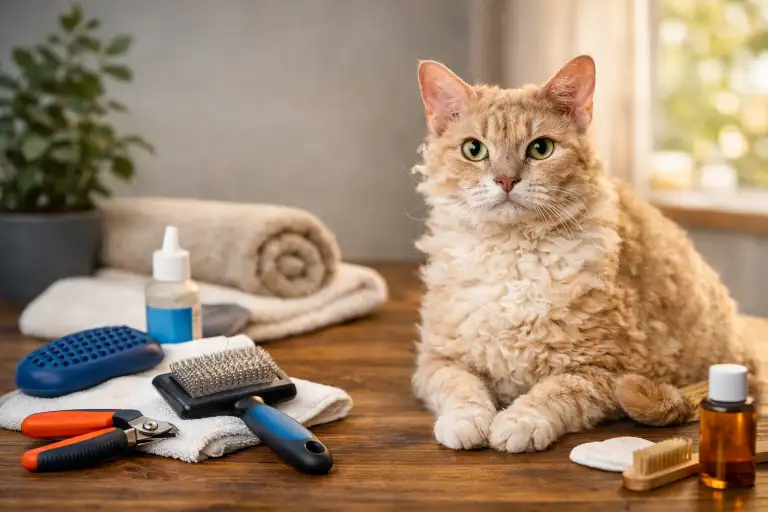
LaPerm Shorthairs are often described as “low-maintenance,” but that phrase gets misunderstood. Their short, curly coat does reduce heavy shedding and daily brushing compared to many breeds—but it does not mean grooming is optional. The goal with a LaPerm isn’t perfection or styling; it’s comfort, skin health, and preventing small issues from turning into stressful ones.
What makes this breed different is the springy, loose curl pattern. Those curls don’t mat as easily as long, straight coats, but they can frizz, break, or flatten if handled like a typical short-haired cat. Over-brushing is one of the most common beginner mistakes with LaPerms, and under-grooming nails, ears, and teeth is another.
For most owners, LaPerm Shorthair grooming is about:
- Gentle coat maintenance, not constant brushing
- Routine nail and hygiene care that cats won’t manage on their own
- Short, calm grooming sessions that respect feline stress limits
You don’t need a drawer full of tools or professional-level skills. You do need realistic expectations and an understanding of what’s safe to do at home—and what’s better left to a groomer or vet.
Here’s a quick overview of what typical LaPerm Shorthair grooming looks like for a healthy adult cat:
| Grooming Task | Typical Frequency | Why It Matters |
|---|---|---|
| Light brushing | Once every 1–2 weeks | Removes loose hair without damaging curls |
| Nail trimming | Every 2–4 weeks | Prevents overgrowth, snagging, and scratching injuries |
| Bathing | Occasionally, only if needed | Removes dirt or oils without drying skin |
| Ear & eye checks | Weekly visual check | Catches buildup or irritation early |
| Dental care | Weekly to daily (ideal) | Reduces dental disease risk |
As you move through this guide, keep one principle in mind: good grooming should never feel like a battle. If your cat is tense, resistant, or overwhelmed, the routine—not the cat—is what needs adjusting.
Understanding the LaPerm Shorthair Coat and Grooming Needs
The LaPerm Shorthair has a very special coat. Instead of lying flat, the hair forms soft, loose curls that feel light and springy. These curls are not just for looks—they change how grooming should be done.
Because of the curly texture, LaPerm Shorthairs usually shed less than many other cats, but they still shed some hair. Loose hair often stays trapped in the curls instead of falling out on furniture. This is why gentle brushing is helpful, even if your cat does not look fluffy or messy.
Here are a few important things owners should understand:
- Curly coats break more easily than straight coats if brushed too hard
- Too much brushing can cause frizz and flatten the curls
- Natural skin oils help keep the coat healthy, so over-bathing can dry the skin
- Mats are less common, but they can still form behind the ears or under the legs
Grooming needs also change over time:
- Kittens may have softer or uneven curls that change as they grow
- Adult cats usually have the most stable coat and need the least work
- Senior cats may groom themselves less and need extra help
Your cat’s lifestyle matters too:
- Indoor LaPerms usually stay cleaner and need less grooming
- Outdoor or indoor-outdoor cats may collect dirt, pollen, or oils faster
The key thing to remember is this:
LaPerm Shorthair grooming is about light care and consistency, not heavy tools or daily work.
Brushing and Coat Care for LaPerm Shorthairs
Brushing a LaPerm Shorthair is very different from brushing most cats. Their curls are soft and loose, and they do not need heavy brushing. In fact, brushing too much can damage the curls and make the coat look dry or frizzy.
For most LaPerm Shorthairs, light brushing is enough.
Here’s how to think about brushing:
- Brush gently, never pull or tug
- Short sessions work best, usually a few minutes
- Stop if your cat gets tense or annoyed
How often to brush:
- Once every 1 to 2 weeks for most adult LaPerm Shorthairs
- A little more often during heavy shedding seasons
- Seniors may need extra help if they stop grooming themselves well
Where to brush carefully:
- Behind the ears
- Under the front legs
- Around the neck and chest
These spots are more likely to collect loose hair.
Common brushing mistakes to avoid:
- Brushing every day when it’s not needed
- Using hard or sharp brushes meant for thick coats
- Brushing dry curls roughly to remove tangles
If you notice small tangles, do not pull them apart. Gentle finger work or leaving them alone is often safer. Large or tight mats should not be removed at home.
The goal is simple:
Keep the coat clean, comfortable, and natural-looking—not flat or fluffy.
Bathing, Nail Trimming, and Basic Hygiene
LaPerm Shorthairs stay clean on their own most of the time. Their coat does not trap dirt easily, so baths are not needed often. Too much bathing can dry the skin and harm the curls.
Bathing basics:
- Only bathe your cat if they are very dirty, greasy, or smelly
- Most LaPerm Shorthairs need a bath rarely or never
- Never bathe just because of shedding or normal smell
If your cat hates water, do not force it. Stressful baths can do more harm than good.
Nail trimming is more important than bathing.
Nail care tips:
- Trim nails every 2 to 4 weeks
- Indoor cats still need trims
- Long nails can get stuck, break, or cause pain
Always trim only the sharp tip. Never cut deep into the nail.
Basic hygiene checks help catch problems early:
- Ears: Look once a week for dirt or bad smell
- Eyes: A small amount of clear discharge is normal
- Teeth: Dental care helps prevent pain and infection
Here is a simple guide to basic hygiene care:
| Task | How Often | Important Note |
|---|---|---|
| Bathing | Only when needed | Over-bathing dries skin |
| Nail trimming | Every 2–4 weeks | Cut tips only |
| Ear check | Weekly | Do not dig inside ears |
| Eye check | Weekly | Wipe gently if needed |
| Dental care | Weekly or more | Start slow and gentle |
Never use cotton swabs deep in the ears or human products on your cat. If something looks painful or smells bad, it’s safer to ask a vet.
Grooming Safety, Stress Signals, and When to Get Help
Grooming should feel calm and safe for your LaPerm Shorthair. If your cat feels scared or upset, grooming can quickly turn into a bad experience. Learning to read stress signals helps you know when to slow down or stop.
Common stress signs to watch for:
- Ears turning sideways or flat
- Tail flicking fast or hitting the body
- Tense body or trying to pull away
- Growling, hissing, or swatting
If you see these signs:
- Stop what you are doing
- Give your cat space
- Try again later for a shorter time
Helpful safety tips:
- Groom when your cat is already calm or sleepy
- Keep sessions short, even 2–5 minutes is enough
- Speak softly and move slowly
- Never hold your cat down by force
Some grooming problems should not be handled at home.
Get help from a professional groomer or vet if:
- Mats are tight, large, or close to the skin
- Your cat becomes aggressive or very fearful
- You see red skin, sores, swelling, or pain
- Your senior cat can no longer groom themselves
Asking for help is not a failure. It protects your cat’s health and keeps grooming from becoming stressful.
Good LaPerm Shorthair grooming is simple:
- Be gentle
- Be patient
- Stop before stress starts
For more trusted, vet-backed guidance on cat care and behavior, you can visit the Cornell University College of Veterinary Medicine – Feline Health Center, which offers reliable information on grooming, health, and stress in cats.

Ata Ur Rehman is the founder of Pet Age in Human Years Calculator, an educational platform that provides age conversion charts and lifespan guides for dogs, cats, birds, and other companion animals. His work focuses on helping pet owners understand how animal ages translate into human years using commonly accepted age conversion formulas and published lifespan averages.
The website compiles breed and species lifespan data from kennel clubs, breed organizations, and general animal lifespan studies to present simple and easy-to-understand guides for pet owners worldwide.
This website was created to centralize animal age conversion charts into one easy reference platform for pet owners.