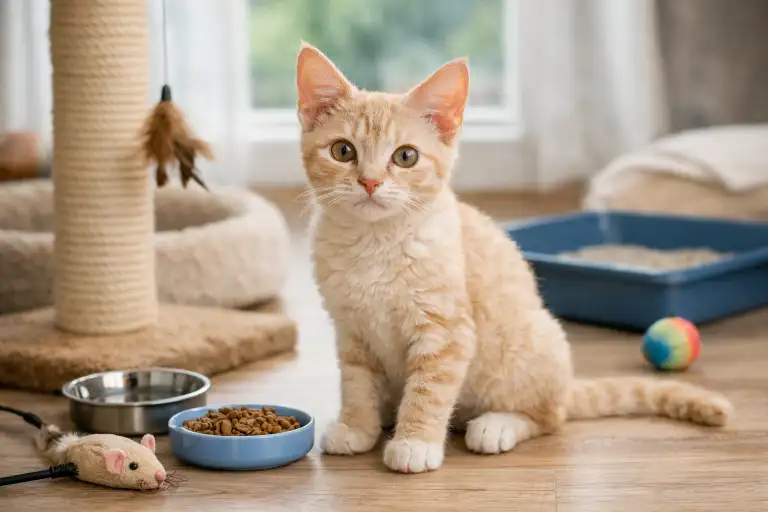
Bringing home a LaPerm Shorthair kitten is exciting, but the first few days go much more smoothly when your home is ready before your kitten arrives. A calm, prepared environment helps your kitten feel safe, confident, and curious instead of overwhelmed.
This stage isn’t about buying everything at once or creating a perfect setup. It’s about meeting a kitten’s basic needs and reducing stress during a big transition.
Start with a safe, quiet starter space
New kittens do best when they begin in a smaller, quiet area rather than having full run of the house right away. A spare room, bedroom, or large bathroom works well.
This space should include:
- A comfortable sleeping area away from noise and foot traffic
- Food and water placed well away from the litter box
- A litter box that’s easy to step into
- A few simple toys and one scratching surface
Keeping things simple at first helps your kitten learn where everything is and prevents overstimulation.
Gather the true essentials (less is more)
You don’t need dozens of products to care for a LaPerm Shorthair kitten. Focus on a few reliable basics:
- Kitten-appropriate food and a shallow bowl
- Fresh water in a sturdy, tip-resistant dish
- One litter box per kitten (plus one extra if space allows)
- Soft bedding or a washable blanket
- A scratching post or scratch pad
- A small selection of safe, lightweight toys
It’s normal if your kitten ignores some items at first. Exploration happens on their timeline.
Make your home kitten-safe
Kittens explore with their mouths, paws, and curiosity. Before your kitten arrives, take a slow walk through the space at floor level and look for potential hazards.
Pay extra attention to:
- Loose cords and chargers
- Small objects that could be swallowed
- Open windows or balconies without secure screens
- Houseplants that may not be kitten-safe
- Gaps behind appliances or furniture
Indoor-only care is the safest option for kittens, especially while they’re still learning boundaries and coordination.
Think comfort, not perfection
LaPerm Shorthair kittens don’t need luxury setups to feel at home. What matters most is warmth, consistency, and gentle handling. It’s normal if your kitten hides at first, sleeps a lot, or explores in short bursts.
Avoid rearranging the environment too often during the first week. Familiar smells and stable placement of food, water, and the litter box help kittens settle in faster.
A calm start builds confidence
The way you prepare your home sets the tone for your kitten’s adjustment. A safe space, a few essentials, and patience go a long way. Your LaPerm Shorthair kitten doesn’t need everything figured out on day one — they just need to feel safe enough to start learning.
LaPerm Shorthair Kitten Behavior & Development Stages
Kittens grow and change very fast, especially in the first few months. Many new owners worry because their kitten’s behavior seems confusing. Most of the time, what you see is completely normal.
LaPerm Shorthair kittens are often curious, playful, and people-focused, but every kitten still follows the same basic growth stages.
Understanding these stages helps you relax and know what to expect.
How kittens change as they grow
Kittens don’t behave the same way every week. Their energy, sleep, and confidence all change with age.
Here is a simple overview to help you understand what is normal.
| Kitten Age | What You May Notice | What This Means |
|---|---|---|
| 8–12 weeks | Sleeps a lot, short play bursts, may hide | Your kitten is adjusting and learning the new space |
| 3–4 months | More playful, climbing, chasing, biting during play | Learning coordination and hunting skills |
| 5–6 months | Longer play sessions, stronger confidence | Growing independence and curiosity |
| 6+ months | More routine, calmer moments between play | Slowly moving toward adult behavior |
Every kitten develops at their own pace. Some are bold early. Others take more time.
Common behaviors that are normal
New owners often worry about these behaviors, but they are part of healthy kitten growth:
- Sleeping most of the day
- Sudden energy bursts (often called “zoomies”)
- Play biting or grabbing hands
- Climbing furniture or curtains
- Following you from room to room
These behaviors mean your kitten is learning, not misbehaving.
LaPerm Shorthair personality basics
LaPerm Shorthair kittens are often known for being social and affectionate as they grow. As kittens, this can show as:
- Wanting to be near people
- Curiosity about voices and movement
- Enjoying interactive play
Still, shy moments are normal, especially in a new home. Trust builds with time, routine, and gentle handling.
When to slow down and observe
Instead of worrying right away, give your kitten time if you notice:
- Hiding during the first few days
- Eating small amounts while adjusting
- Sleeping more after busy play sessions
These usually improve as your kitten feels safe.
Feeding, Litter Training & Daily Routine Basics
This part of kitten care helps your LaPerm Shorthair kitten feel safe and settled every day. Food, bathroom habits, and simple routines give kittens structure. When these basics are steady, kittens are calmer and easier to understand.
Feeding basics for a growing kitten
Kittens need food often because their bodies are growing fast. Small meals spread through the day work best.
Simple feeding tips:
- Feed kitten food made for growing cats
- Offer meals at the same times each day
- Keep fresh water available all the time
- Do not force your kitten to eat if they are distracted at first
It is normal for a kitten to eat a little, walk away, then come back later.
Litter training made easy
Most kittens naturally know how to use a litter box. Your job is to make it easy for them.
Helpful litter box setup:
- Use a low-sided box so the kitten can step in easily
- Place the box in a quiet area
- Keep food and water far from the litter box
- Scoop often so the box stays clean
If your kitten has an accident, stay calm. Clean the area and gently place them back in the litter box later. Punishment only causes fear and confusion.
A simple daily routine for kittens
Kittens feel safer when their day follows a gentle pattern. This does not need to be strict.
Here is an example of a simple daily routine.
| Time of Day | What Usually Happens |
|---|---|
| Morning | Eat, short play time, then sleep |
| Midday | Snack or meal, explore, nap |
| Afternoon | Play, use litter box, rest |
| Evening | Meal, longer play session |
| Night | Calm time, sleep |
Your kitten may not follow this exactly every day, and that is okay.
What to expect day to day
Some days your kitten will eat more. Some days they will sleep longer. This is normal. As long as your kitten is active, curious, and using the litter box most of the time, small changes are nothing to worry about.
Feeding, bathroom habits, and routines may feel like a lot at first, but they become second nature quickly.
Play, Socialization & Gentle Grooming Needs
Play is not just for fun. Play helps your LaPerm Shorthair kitten learn, grow, and feel close to you. It also helps kittens use their energy in a healthy way.
Play helps kittens learn
Kittens play to practice skills they would use in the wild. This is why they chase, pounce, and grab.
Helpful play tips:
- Use toys instead of hands
- Short play sessions are better than long ones
- Play at least two times a day
- Stop play if biting gets too rough
If your kitten bites during play, it does not mean they are mean. They are learning. Gently stop and redirect them to a toy.
Social time builds confidence
Socialization means helping your kitten feel safe with people, sounds, and daily life. This happens slowly.
Good ways to socialize your kitten:
- Speak softly and move calmly
- Let your kitten come to you
- Hold your kitten gently for short times
- Let them explore new things at their own pace
LaPerm Shorthair kittens often enjoy being near people, but they still need quiet time too.
Gentle grooming basics
Even though LaPerm Shorthair kittens have short, curly coats, light grooming is still helpful. Grooming is also a bonding moment.
Simple grooming care:
- Brush lightly once or twice a week
- Touch paws gently to prepare for nail trims later
- Check eyes and ears during calm moments
Keep grooming short and calm. Stop if your kitten gets restless. It is better to try again later than to force it.
Why calm handling matters
How you touch and play with your kitten now affects how they act as adults. Gentle hands help kittens trust people and feel safe.
Play, social time, and grooming all work together to help your kitten grow into a confident cat.
Health Basics, Safety & Common New Owner Mistakes
This section brings everything together. You do not need to be a vet or an expert to care for your LaPerm Shorthair kitten. You just need to know what looks normal, how to keep your kitten safe, and which mistakes are common for new owners.
Basic signs of a healthy kitten
Most healthy kittens will:
- Eat regularly
- Use the litter box most of the time
- Be playful between naps
- Have clear eyes and a clean nose
- Gain confidence little by little
It is normal for kittens to have quiet days and busy days. Small changes in mood or appetite can happen as they grow.
First vet visit basics
Your kitten should see a vet early in life. This first visit helps:
- Check overall health
- Track growth
- Answer your basic care questions
You do not need to panic or prepare for problems. Most first visits are calm and routine.
Simple safety reminders
Kittens are curious and do not know danger yet. Keep your home safe by:
- Closing windows or using secure screens
- Hiding cords and small objects
- Keeping cleaning products locked away
- Blocking small gaps behind appliances
Indoor-only care is the safest choice for young kittens.
Common beginner mistakes and better choices
Many new owners make the same mistakes. This is normal and part of learning.
| Common Mistake | Why It Happens | Better Approach |
|---|---|---|
| Expecting calm behavior | Kittens look small and sweet | Remember kittens are playful and energetic |
| Using hands for play | It feels easy at first | Use toys to prevent biting |
| Changing food too fast | Trying to find the “best” food | Make changes slowly |
| Worrying too quickly | Everything feels new | Give time and observe calmly |
You are not doing anything wrong if you learn as you go.
A calm reminder for new owners
Caring for a LaPerm Shorthair kitten is a learning process. You do not need to be perfect. Your kitten needs food, safety, patience, and kindness more than anything else.
If your kitten feels safe and loved, you are already doing a good job.
For more general guidance on raising healthy kittens, you can also read the RSPCA’s kitten care advice, which offers clear, beginner-friendly information on early kitten needs and development.

Ata Ur Rehman is the founder of Pet Age in Human Years Calculator, an educational platform that provides age conversion charts and lifespan guides for dogs, cats, birds, and other companion animals. His work focuses on helping pet owners understand how animal ages translate into human years using commonly accepted age conversion formulas and published lifespan averages.
The website compiles breed and species lifespan data from kennel clubs, breed organizations, and general animal lifespan studies to present simple and easy-to-understand guides for pet owners worldwide.
This website was created to centralize animal age conversion charts into one easy reference platform for pet owners.