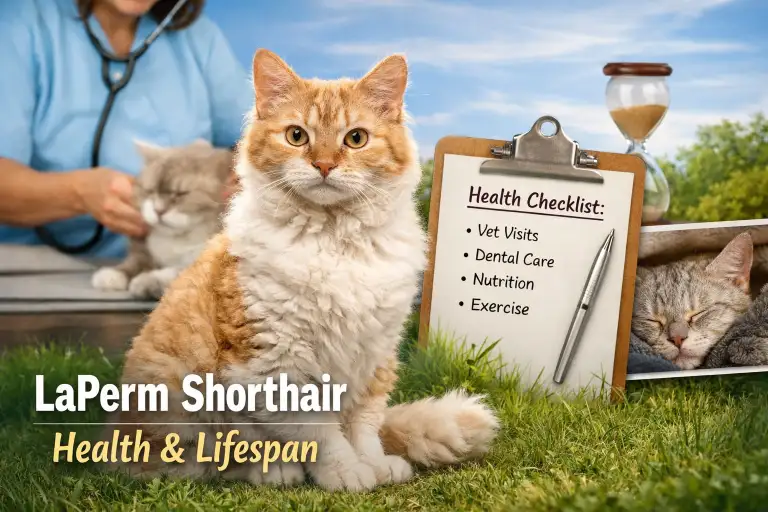
LaPerm Shorthair cats are generally considered a long-lived breed, especially when their care, environment, and routine health monitoring are well supported. While no cat’s lifespan can be predicted with certainty, most LaPerm Shorthairs tend to live well into their teens, with some reaching their late teens or beyond under favorable conditions.
As with all cats, lifespan is influenced far more by lifestyle and preventive care than by breed alone. Factors such as whether a cat lives primarily indoors, receives routine veterinary checkups, maintains a healthy body weight, and avoids chronic stress all play a significant role in how long a LaPerm Shorthair may live.
The table below gives a high-level view of typical lifespan expectations based on living environment. These ranges are averages, not guarantees, and are meant to set realistic, reassuring expectations for owners.
| Living Environment | Typical Lifespan Range | General Context |
|---|---|---|
| Indoor only | 12–18 years or longer | Indoor cats are generally protected from many external risks and tend to live longer |
| Indoor with supervised outdoor access | 12–16 years | Controlled outdoor time may provide enrichment while limiting hazards |
| Outdoor unsupervised | Often shorter on average | Increased exposure to accidents, parasites, and infectious risks |
It’s important to understand that a longer lifespan does not necessarily mean a cat will remain unchanged over time. Aging is a normal process, and even healthy LaPerm Shorthairs will experience gradual shifts in energy, activity, and physical resilience as they grow older. These changes are not signs of failure or poor care, but part of a natural feline life cycle.
Rather than focusing on a specific number of years, many veterinarians and experienced owners emphasize lifespan quality over lifespan length. Consistent care, early attention to subtle changes, and a safe, enriching environment all contribute to helping a LaPerm Shorthair enjoy a long, comfortable life at every stage.
Are LaPerm Shorthair Cats Healthy? Breed Health Overview
LaPerm Shorthair cats are often described as a generally healthy breed. This means that, as a group, they are not strongly linked to a long list of inherited health problems. However, being “healthy” does not mean a LaPerm Shorthair can never get sick. Like all cats, they can develop health issues during their lifetime.
Many health concerns seen in LaPerm Shorthairs are the same ones seen in cats of other breeds or mixed backgrounds. These issues are often related to age, lifestyle, diet, or lack of preventive care rather than the breed itself. This is reassuring for many owners, because it means everyday care choices play a big role in long-term health.
Here are a few important points to understand when thinking about LaPerm Shorthair health:
- No cat breed is completely free from health problems
- “Low risk” does not mean “no risk”
- Good care can greatly reduce the chance of serious issues
- Each cat is an individual, even within the same breed
LaPerm Shorthairs are known for being active, curious, and people-friendly. These traits can help owners notice changes earlier, such as lower energy, reduced appetite, or behavior shifts. Early noticing does not mean assuming something is wrong, but it can make it easier to ask the right questions during routine vet visits.
Overall, LaPerm Shorthair cats are often a good match for owners looking for a breed with a solid health reputation and manageable care needs. A calm home, regular checkups, and simple daily observation usually matter far more than breed labels alone.
Common Health Issues Seen in LaPerm Shorthair Cats
LaPerm Shorthair cats do not have many health problems that are unique to the breed. Most of the health issues they may face are common in cats in general. These problems often develop slowly and are linked to age, lifestyle, or daily care rather than genetics alone.
This section is meant to give a general overview, not to diagnose illness. Many cats with these conditions live comfortable lives, especially when changes are noticed early.
The table below shows common health areas owners should be aware of and why they matter.
| Health Area | Why It Matters | General Explanation |
|---|---|---|
| Dental health | Mouth pain can affect eating and mood | Tartar buildup and gum disease are common in cats |
| Weight and obesity | Extra weight stresses the body | Overweight cats may have lower energy and more health strain |
| Kidney health | Kidneys support daily body functions | Kidney changes are more common as cats age |
| Urinary health | Litter box habits reflect health | Urinary issues can cause discomfort and behavior changes |
| Parasites | Can affect comfort and nutrition | Fleas, worms, and ticks are preventable with routine care |
Some health problems are chronic, meaning they develop slowly and last a long time. Others are short-term and may improve with proper care. Not every LaPerm Shorthair will experience these issues, and many cats never develop serious problems at all.
What matters most is not memorizing health conditions, but noticing changes such as:
- Eating more or less than usual
- Weight gain or weight loss
- Less interest in play
- Changes in grooming or litter box use
These signs do not always mean illness, but they are useful information to share with a veterinarian during regular checkups.
How to Support a Healthy, Long Life for a LaPerm Shorthair
Helping a LaPerm Shorthair live a long and comfortable life is mostly about daily care and simple habits. You do not need to do anything extreme or complicated. Small, steady actions over time make the biggest difference.
Many health problems in cats are easier to manage when they are noticed early. This is why routine care and gentle observation are so important.
The table below shows key care areas that support long-term health.
| Care Area | Why It Helps |
|---|---|
| Regular vet visits | Helps track changes before they become serious |
| Healthy body weight | Reduces stress on joints and organs |
| Dental care awareness | Supports eating, comfort, and overall health |
| Balanced nutrition | Provides energy and supports body systems |
| Parasite prevention | Protects against avoidable illness |
| Play and mental activity | Keeps the body and mind active |
Here are simple ways owners can support good health at home:
- Feed measured meals instead of guessing portions
- Encourage gentle play each day
- Keep fresh water available at all times
- Notice small changes in behavior or habits
- Keep a calm and safe home environment
You do not need to be an expert to care for a LaPerm Shorthair. Paying attention, keeping routines steady, and asking questions during vet visits are often enough to support a healthy life.
Aging, Warning Signs, and When to Consult a Veterinarian
As LaPerm Shorthair cats grow older, slow and gentle changes are normal. Aging does not mean a cat is sick. Many senior cats stay happy and comfortable for years with the right care and attention.
Older cats may:
- Sleep more than before
- Move more slowly
- Play for shorter periods
- Prefer warm, quiet places
These changes are often part of normal aging. What matters most is noticing new or sudden changes, not small differences over time.
The table below helps explain the difference between normal aging and signs that should be checked by a veterinarian.
| Area | Normal Aging Changes | Signs Worth Checking |
|---|---|---|
| Appetite | Slightly smaller meals | Not eating or overeating |
| Energy | Less active but alert | Hiding or very low energy |
| Grooming | Slower grooming | Messy coat or no grooming |
| Movement | Stiffness after rest | Limping or trouble jumping |
| Litter box | Minor routine changes | Avoiding the litter box |
You should consider contacting a veterinarian if you notice:
- Big changes in eating or drinking
- Ongoing weight loss or gain
- Repeated vomiting or diarrhea
- Strong behavior changes, such as aggression or hiding
- Trouble walking, jumping, or using the litter box
Checking in with a veterinarian does not mean something is wrong. It is often a smart way to rule out problems and keep your cat comfortable as they age.
Paying attention, staying calm, and asking questions early can help your LaPerm Shorthair enjoy a better quality of life for many years.
For more general, science-based information about cat health and preventive care, you can visit the American Association of Feline Practitioners (AAFP), which provides owner-friendly resources created by feline-focused veterinarians.

Ata Ur Rehman is the founder of Pet Age in Human Years Calculator, an educational platform that provides age conversion charts and lifespan guides for dogs, cats, birds, and other companion animals. His work focuses on helping pet owners understand how animal ages translate into human years using commonly accepted age conversion formulas and published lifespan averages.
The website compiles breed and species lifespan data from kennel clubs, breed organizations, and general animal lifespan studies to present simple and easy-to-understand guides for pet owners worldwide.
This website was created to centralize animal age conversion charts into one easy reference platform for pet owners.