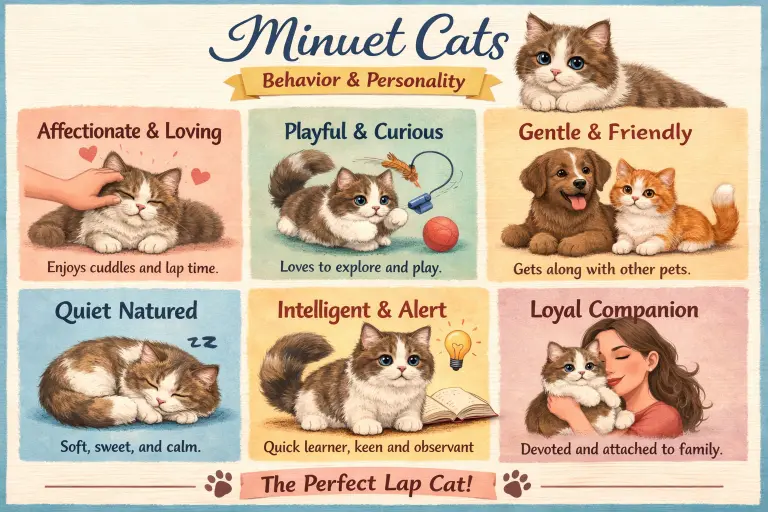
The Minuet cat, also known as the Napoleon cat, is best known for its gentle and people-focused personality. While many people notice the short legs first, what truly defines this breed is how emotionally tuned-in and calm it tends to be. Minuets are often described as soft-natured cats that enjoy being close to their humans without demanding constant attention.
In daily life, a Minuet usually prefers a peaceful routine. They like knowing where their people are, watching household activity, and joining in when invited. This does not mean they are clingy. Many Minuets are happy simply sitting nearby, making them a good match for owners who want companionship without nonstop interaction.
It is important to understand that personality is never identical from cat to cat. Some Minuets love laps, while others prefer to curl up next to you. Some are playful and curious, while others lean more toward relaxed observation. Breed tendencies guide behavior, but individual personality always matters more.
Minuets often do best in calm, emotionally aware homes. They tend to respond strongly to tone of voice, routine, and gentle handling. Owners who pay attention to small signals usually find that Minuets are easy to live with and deeply rewarding companions.
Minuet Personality Snapshot
| Trait | Typical Expression | What Owners Commonly Notice |
|---|---|---|
| Affection | Quiet and steady | Sits close rather than demanding |
| Energy level | Moderate | Short play sessions, long rest |
| Social nature | People-oriented | Follows owners room to room |
| Sensitivity | High | Reacts to mood and tone |
| Independence | Balanced | Comfortable alone, enjoys company |
Core Minuet Personality Traits Explained
One of the strongest Minuet cat personality traits is emotional warmth. Many Minuets form close bonds with their people and enjoy gentle affection. This can look like sitting beside you, sleeping near your feet, or calmly accepting petting without overstimulation.
Minuets often show a balanced mix of independence and attachment. They usually do not demand attention, but they do notice when their favorite person leaves or returns. This makes them feel emotionally present without being overwhelming, which many first-time cat owners appreciate.
Playfulness in Minuets is usually soft and thoughtful. Instead of wild jumping, they prefer ground-level games, light chasing, or batting toys. Their play style often matches their calm personality and physical build.
Another key trait is sensitivity. Minuets tend to pick up on changes in routine, noise, or emotional energy in the home. This sensitivity does not mean fearfulness. It simply means they respond best to gentle voices, predictable schedules, and respectful interaction.
Affection & Attachment Styles
| Behavior | What It Means | What It Does Not Mean |
|---|---|---|
| Sitting nearby | Comfortable bond | Not distant or cold |
| Following owners | Social interest | Not anxiety |
| Quiet cuddling | Trust | Not low affection |
| Leaving after petting | Self-regulation | Not rejection |
Minuet Cat Behavior With Humans & Pets
Minuets are generally very people-friendly cats. With adults, they often show calm curiosity and gentle affection. With children, they usually do best when kids are taught to handle them slowly and respectfully, as Minuets prefer calm touch over rough play.
In homes with other cats, Minuets often coexist peacefully. They are not typically dominant or territorial by nature. Instead, they observe first and engage later, once they feel safe. This makes them good companions for stable, non-aggressive pets.
When living with dogs, Minuets usually do well if introductions are slow and respectful. Their calm personality helps them avoid conflict, but they still need safe spaces where they can retreat and observe from a distance.
Minuets communicate comfort and discomfort in quiet ways. They may move away, pause, or watch silently instead of hissing or swatting. Owners who respect these boundaries often build very strong trust with their cat.
Social Behavior Scenarios
| Situation | Common Minuet Response | Owner Tip |
|---|---|---|
| New visitor | Observes from nearby | Allow choice to engage |
| Child interaction | Gentle tolerance | Supervise handling |
| Other cat present | Calm watching | Avoid forced contact |
| Dog in home | Cautious curiosity | Provide escape routes |
Communication, Play & Daily Behavior Patterns
Minuet cats communicate mostly through body language rather than loud sounds. Their tails, ears, and posture give clear signals when owners take time to notice them. A relaxed body and slow movements usually mean the cat feels safe and content.
Vocalization in Minuets is often soft and limited. Many Minuets will chirp or make small sounds instead of loud meows. When they do vocalize, it is usually for greeting, mild attention, or gentle requests.
Daily behavior patterns in Minuets tend to follow a calm rhythm. They enjoy short play periods, followed by long rest times. Many like to sit in low, comfortable spots where they can watch the room without climbing high furniture.
Play behavior is usually gentle and thoughtful. Instead of jumping or chasing wildly, Minuets prefer toys that move slowly or stay close to the ground. This matches both their physical comfort and emotional style.
Body Language & Vocalization Guide
| Signal | Likely Meaning | Common Context |
|---|---|---|
| Slow blinking | Trust | Relaxed interaction |
| Quiet chirp | Soft request | Greeting or attention |
| Tail wrapped around body | Calm comfort | Resting near people |
| Ears slightly sideways | Uncertainty | New situation |
Commonly Misunderstood Minuet Behaviors
Minuets are sometimes called “lazy,” but this is often misunderstood. Most Minuets are simply energy-efficient. They choose calm movement and thoughtful play instead of constant activity, which is normal and healthy behavior.
Another misunderstood behavior is following owners from room to room. This is usually a sign of social bonding, not anxiety. Minuets enjoy being part of household life, even if they are not always in your lap.
Some owners think a quiet cat is unhappy, but many Minuets are naturally low-vocal. Silence often means contentment, especially when paired with relaxed body language and regular routines.
Floor-level behavior is also often misread. Minuets may prefer lower viewpoints, but this does not mean they are limited or bored. Many simply feel most secure observing from comfortable, grounded spaces.
Myth vs Reality
| Misconception | Reality |
|---|---|
| Minuets are lazy | They prefer calm energy |
| They are clingy | They value quiet closeness |
| Quiet cats are unhappy | Silence often means comfort |
| Floor play means boredom | It matches their play style |
For more details visit: https://www.cfa.org/cat-breeds/

Ata Ur Rehman is the founder of Pet Age in Human Years Calculator, an educational platform that provides age conversion charts and lifespan guides for dogs, cats, birds, and other companion animals. His work focuses on helping pet owners understand how animal ages translate into human years using commonly accepted age conversion formulas and published lifespan averages.
The website compiles breed and species lifespan data from kennel clubs, breed organizations, and general animal lifespan studies to present simple and easy-to-understand guides for pet owners worldwide.
This website was created to centralize animal age conversion charts into one easy reference platform for pet owners.