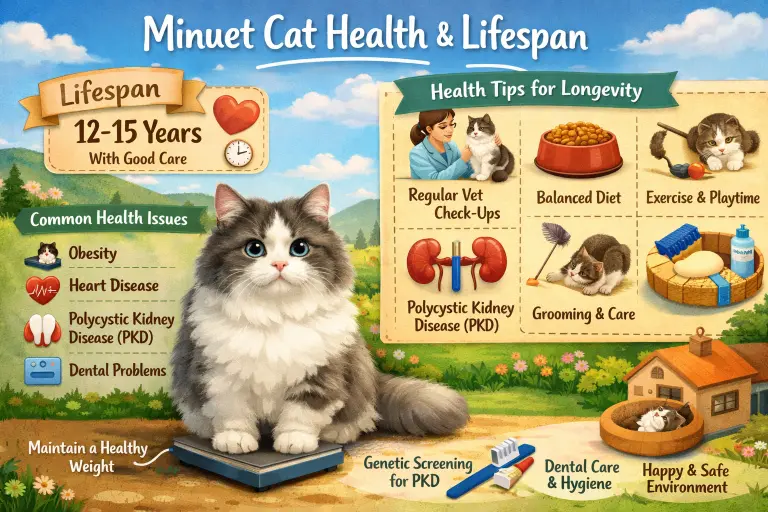
Minuet cats are known for their sweet nature and compact build, and many owners wonder how long they can expect to share life with one. In general, Minuet cats often live 12 to 15 years, with some living longer when they receive steady care, good nutrition, and regular veterinary checkups. Like most cats, lifespan is a range, not a promise. Two Minuets can live very different lives even with similar care.
Where a Minuet lives matters a lot. Cats kept indoors are usually protected from traffic, fights, and infectious diseases, which often helps them live longer. Outdoor access can shorten life expectancy due to higher risks that owners cannot fully control. Many Minuet owners choose indoor-only or supervised indoor–outdoor lifestyles for this reason.
Genetics also play a role, but they are only part of the picture. A well-bred Minuet may still face health challenges, while another may stay healthy well into old age. What matters most over time is daily care, early attention to small changes, and a calm, stable home environment.
It is also helpful to remember that “average lifespan” does not describe quality of life. A Minuet who lives slightly fewer years but stays comfortable, active, and engaged can still have a very good life. This guide focuses on helping owners understand what supports both longevity and comfort.
| Lifestyle | Typical Lifespan Range |
|---|---|
| Indoor-only Minuet | 13–16 years |
| Indoor with supervised outdoor time | 12–15 years |
| Unsupervised outdoor lifestyle | Often shorter and less predictable |
Factors That Influence a Minuet Cat’s Health and Longevity
Many things work together to shape a Minuet cat’s health over time. Genetics are important, but they do not act alone. Diet quality, daily movement, stress levels, and routine veterinary care all have strong effects on long-term wellbeing.
Because Minuets have a smaller body and shorter legs, keeping a healthy weight is especially important. Extra weight can quietly reduce comfort and movement over the years. Gentle play, climbing steps, and daily interaction help support both physical and mental health.
Routine matters more than most owners expect. Regular feeding times, clean litter boxes, and a predictable home reduce stress. Lower stress supports the immune system and can help cats age more smoothly.
Preventive veterinary care is another major factor. Wellness visits help track weight, teeth, and subtle changes that owners may not notice at home. Early awareness often leads to better long-term outcomes, even when no treatment is needed right away.
Common Health Issues Seen in Minuet Cats (Overview Only)
Minuet cats are not “unhealthy,” but like all breeds, they can have tendencies owners should understand. These are not guarantees or diagnoses, just patterns seen across many pet cats with similar body types.
Mobility and joint comfort may change as Minuets age, especially if weight increases. Dental issues are also common in many small or short-faced cats and can quietly affect appetite and comfort. Urinary tract sensitivity is another issue seen across many domestic cats, not just Minuets.
Some health concerns are age-related rather than breed-related. Kidney function, metabolism, and overall energy often change in later years. These shifts are part of normal aging and are best managed through observation and routine care rather than fear.
| Health Area | What Owners Often Notice |
|---|---|
| Mobility | Less jumping, slower movement |
| Dental health | Bad breath, dropping food |
| Weight balance | Gradual weight gain or loss |
| Urinary habits | Litter box behavior changes |
| Aging organs | Increased thirst or sleep |
Preventive Care, Early Detection, and Aging Changes
Preventive care is about noticing small changes early, not waiting for a crisis. Many health problems in cats develop slowly, and Minuets are no different. Regular checkups help create a “normal” baseline so changes are easier to spot.
At home, owners are often the first to notice early signs. Changes in grooming, sleep, appetite, or play can appear mild but still matter. These signs do not always mean illness, but they are useful information to share with a veterinarian.
As Minuets age, their needs may shift. They may prefer softer bedding, lower climbing steps, or quieter play. Adjusting the home environment can support comfort without limiting independence.
| Preventive Focus | Why It Matters |
|---|---|
| Routine wellness exams | Tracks subtle changes over time |
| Dental checks | Supports comfort and eating |
| Weight monitoring | Reduces strain on joints |
| Behavior observation | Early awareness of changes |
| Senior-friendly spaces | Improves daily comfort |
Quality of Life, When to Call the Vet, and Owner FAQs
Quality of life is about how a Minuet feels day to day. Comfort, curiosity, appetite, and social interest often matter more than age alone. Many cats live happily into their senior years with small adjustments and attentive care.
Owners sometimes worry about bothering the vet too early. In reality, asking questions and sharing observations is part of responsible care. A quick call or visit can offer reassurance, even when no action is needed.
Common questions often include whether Minuets are healthy overall and whether mobility issues are unavoidable. Most Minuets can live comfortable lives when weight, routine, and observation are well managed. Health outcomes vary, but attentive ownership makes a real difference.
| Life Stage | Common Changes |
|---|---|
| Kitten | High energy, rapid growth |
| Adult | Stable routines, steady activity |
| Mature | Slightly lower energy |
| Senior | More rest, comfort-focused needs |
For additional general feline health guidance from veterinary professionals, you can visit the American Association of Feline Practitioners: https://catvets.com

Ata Ur Rehman is the founder of Pet Age in Human Years Calculator, an educational platform that provides age conversion charts and lifespan guides for dogs, cats, birds, and other companion animals. His work focuses on helping pet owners understand how animal ages translate into human years using commonly accepted age conversion formulas and published lifespan averages.
The website compiles breed and species lifespan data from kennel clubs, breed organizations, and general animal lifespan studies to present simple and easy-to-understand guides for pet owners worldwide.
This website was created to centralize animal age conversion charts into one easy reference platform for pet owners.