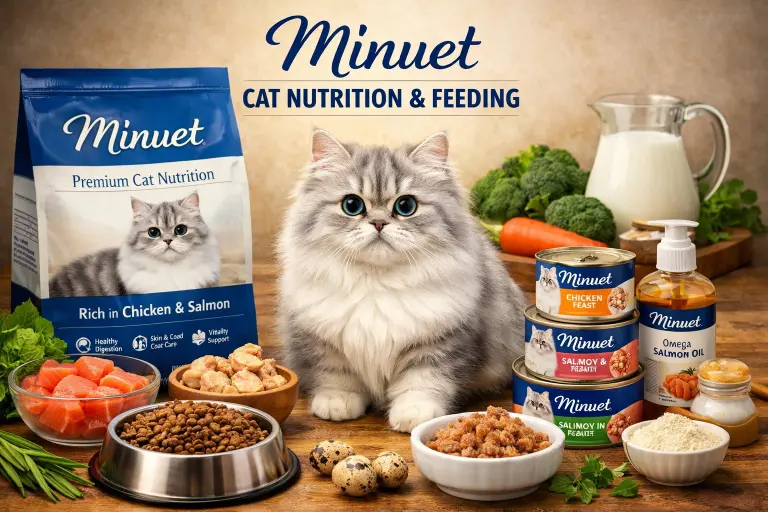
Feeding a Minuet cat is not about buying the most expensive food or following online trends. It is about giving the right balance of nutrients so your cat stays active, healthy, and comfortable throughout life. Minuet cats are small to medium in size and often live indoors, so what they eat every day matters a lot.
Minuet cats have a body shape that is a bit different from many other breeds. Their shorter legs and compact body mean they may not burn calories as fast as very active cats. Because of this, feeding too much food can slowly lead to weight gain without owners noticing early signs.
This guide is made to help cat owners understand what to feed, how much to feed, and how often to feed a Minuet cat. It focuses on everyday feeding decisions, not medical treatment or special diets. The goal is to make feeding simple, safe, and easy to follow.
You do not need to be an expert to feed your Minuet cat well. With basic knowledge, careful portions, and good food choices, most Minuet cats can stay healthy on a normal, balanced cat diet.
Understanding Minuet Cat Nutritional Needs
Minuet cats, like all cats, are obligate carnivores. This means their bodies are made to eat animal-based food. They need nutrients that come mainly from meat, not from plants or grains.
Protein is the most important part of a Minuet cat’s diet. It helps maintain muscles, supports energy levels, and keeps organs working properly. The quality of protein matters more than the amount. Animal-based proteins are easier for cats to use.
Fats are another key part of the diet. They give energy, support skin and coat health, and help cats feel full after meals. A diet too low in fat may leave a cat feeling hungry all the time, which can lead to begging.
Carbohydrates are not required for survival, but small amounts are commonly used in cat food. They help with food shape and energy, but they should not replace protein or fat. Minuet cats do best when carbs stay limited.
Basic role of macronutrients for Minuet cats
| Nutrient | Why it matters | Simple explanation |
|---|---|---|
| Protein | Muscle and energy | Keeps body strong |
| Fat | Energy and coat | Helps skin and fur |
| Carbs | Extra energy | Not essential, small amounts only |
Best Food Choices for Minuet Cats
Many owners ask what type of food is best for a Minuet cat. The answer depends on lifestyle, budget, and the cat’s eating habits. There is no single “perfect” food for every cat.
Wet food has high moisture content, which helps with hydration. This is helpful because many cats do not drink enough water on their own. Wet food can also make cats feel full with fewer calories.
Dry food is easy to store and measure. It can work well if portions are controlled carefully. The problem happens when bowls are left full all day, which can lead to overeating.
Mixed feeding means giving both wet and dry food. This option gives hydration from wet food and convenience from dry food. Many Minuet owners find this balance easier to manage.
Wet vs Dry vs Mixed feeding for Minuet cats
| Feeding type | Pros | Cons |
|---|---|---|
| Wet food | High moisture, filling | Higher cost |
| Dry food | Easy to measure | Easy to overfeed |
| Mixed | Balanced approach | Needs planning |
How Much and How Often to Feed a Minuet Cat
How much food a Minuet cat needs depends on age, activity level, and whether the cat is spayed or neutered. Portion size is more important than bowl size.
Most adult Minuet cats do well with two measured meals per day. Kittens need more frequent meals because they are growing fast. Senior cats may prefer smaller, more regular meals.
Free-feeding, where food is always available, often causes slow weight gain. This is especially common in indoor Minuet cats. Measuring food helps prevent this problem.
Treats should be limited and counted as part of daily calories. Treats are not “extra” food. Too many treats can unbalance an otherwise healthy diet.
Feeding frequency by life stage
| Life stage | Meals per day | General note |
|---|---|---|
| Kitten | 3–4 | High energy needs |
| Adult | 2 | Maintain weight |
| Senior | 2–3 | Smaller portions |
Common Feeding Mistakes and Special Considerations
One common mistake is feeding based on begging behavior. Cats often ask for food even when they are not hungry. This does not always mean they need more calories.
Indoor Minuet cats usually need fewer calories than outdoor cats. Less movement means slower calorie use. Adjusting portions helps prevent weight gain.
After spaying or neutering, a cat’s metabolism may slow down. Many owners do not reduce food portions after this change, which can lead to obesity over time.
In homes with more than one cat, food competition can happen. One cat may eat more than its share. Feeding cats separately can help control portions.
If your Minuet cat suddenly stops eating, eats much more than usual, or loses weight without reason, it is best to consult a veterinarian. This guide is for education, not diagnosis https://www.aafco.org/consumers/understanding-pet-food/

Ata Ur Rehman is the founder of Pet Age in Human Years Calculator, an educational platform that provides age conversion charts and lifespan guides for dogs, cats, birds, and other companion animals. His work focuses on helping pet owners understand how animal ages translate into human years using commonly accepted age conversion formulas and published lifespan averages.
The website compiles breed and species lifespan data from kennel clubs, breed organizations, and general animal lifespan studies to present simple and easy-to-understand guides for pet owners worldwide.
This website was created to centralize animal age conversion charts into one easy reference platform for pet owners.