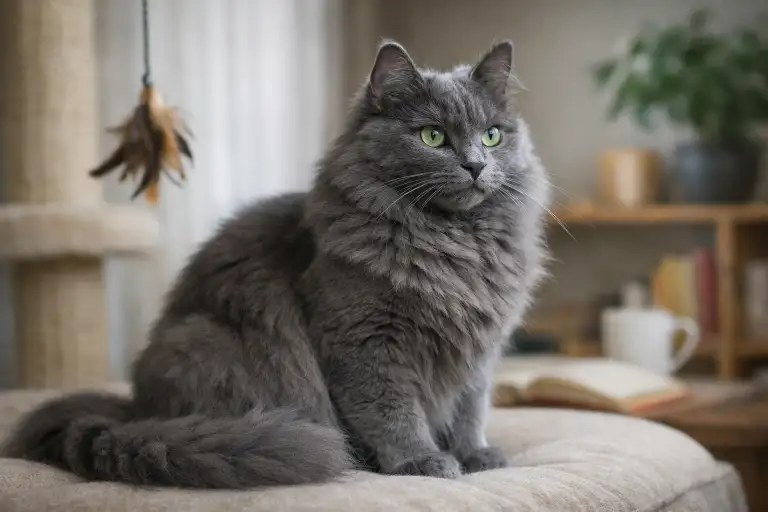
The Nebelung personality is often described as quiet, reserved, and deeply loyal—but those labels only scratch the surface. This breed’s temperament is best understood not through how much they demand attention, but through how carefully they observe, choose, and respond to the world around them. Nebelungs tend to be emotionally attuned cats who form strong internal bonds, even when their outward behavior appears subtle.
Recommended Dog Care Products
Based on your dog’s age, these products may help with comfort, health, grooming, and daily care.

Purina Pro Plan Veterinary Supplements
Daily probiotics for dogs to support digestive and gut health.
View on Amazon ↗
Earth Rated Poop Bags for Dogs
Leak-proof, extra thick waste bag refill rolls with lavender scent.
View on Amazon ↗
Greenies Pill Pockets for Dogs
Large dog treats for capsule medication, peanut butter flavor.
View on Amazon ↗
HONEY CARE All-Absorb Dog Wrap
Small male dog wraps, 50 count, useful for daily care support.
View on Amazon ↗
Seresto Flea & Tick Collar
Flea and tick treatment and prevention for dogs over 18 lbs.
View on Amazon ↗
Milk-Bone MaroSnacks
Small dog treats with real bone marrow in a 40 oz canister.
View on Amazon ↗
Vital Essentials Dog Treats
Freeze dried beef liver dog treats, grain free and single ingredient.
View on Amazon ↗
Stain & Odor Eliminator
Enzyme cleaner for pet stains, carpet messes, and strong odors.
View on Amazon ↗
Pur Luv Chicken Jerky Treats
Dog treats made with real chicken breast, high protein and chew-friendly.
View on Amazon ↗
Milk-Bone Flavor Snacks
Mini crunchy dog biscuits in a 36 oz canister for small rewards.
View on Amazon ↗As an Amazon Associate, we may earn from qualifying purchases.
Rather than being aloof, most Nebelungs are selectively social. They prefer depth over breadth in relationships, often investing their trust in a small circle of people instead of seeking attention from everyone in the room. This makes their affection feel earned and intentional. Many owners notice that a Nebelung’s presence is steady and reassuring—quietly nearby, watching, listening, and engaging on their own terms.
Intelligence plays a central role in Nebelung behavior. These cats are observant problem-solvers who learn household patterns quickly. They recognize routines, anticipate daily events, and often seem to “read the room” before deciding how to interact. This mental sharpness is paired with emotional sensitivity, which explains why Nebelungs tend to thrive in calm, predictable environments.
Importantly, Nebelung personality traits exist on a spectrum. While many share common tendencies—such as quiet companionship and strong loyalty—individual cats may lean more outgoing or more reserved depending on early experiences, environment, and personal preference. Understanding this variability helps owners avoid rigid expectations and instead appreciate the cat in front of them.
Below is a snapshot of core Nebelung personality traits and how they’re commonly misunderstood.
Recommended Dog Care Products
Based on your dog’s age, these products may help with comfort, health, grooming, and daily care.
Purina Pro Plan Veterinary Supplements
Daily probiotics for dogs to support digestive and gut health.
View on Amazon ↗
Earth Rated Poop Bags for Dogs
Leak-proof, extra thick waste bag refill rolls with lavender scent.
View on Amazon ↗
Greenies Pill Pockets for Dogs
Large dog treats for capsule medication, peanut butter flavor.
View on Amazon ↗
HONEY CARE All-Absorb Dog Wrap
Small male dog wraps, 50 count, useful for daily care support.
View on Amazon ↗
Seresto Flea & Tick Collar
Flea and tick treatment and prevention for dogs over 18 lbs.
View on Amazon ↗
Milk-Bone MaroSnacks
Small dog treats with real bone marrow in a 40 oz canister.
View on Amazon ↗
Vital Essentials Dog Treats
Freeze dried beef liver dog treats, grain free and single ingredient.
View on Amazon ↗
Stain & Odor Eliminator
Enzyme cleaner for pet stains, carpet messes, and strong odors.
View on Amazon ↗
Pur Luv Chicken Jerky Treats
Dog treats made with real chicken breast, high protein and chew-friendly.
View on Amazon ↗
Milk-Bone Flavor Snacks
Mini crunchy dog biscuits in a 36 oz canister for small rewards.
View on Amazon ↗As an Amazon Associate, we may earn from qualifying purchases.
| Trait | How It Commonly Appears | What Owners Often Misinterpret |
|---|---|---|
| Quiet demeanor | Watches more than vocalizes | Lack of interest or engagement |
| Selective affection | Chooses specific people or moments | Aloofness or distance |
| High intelligence | Anticipates routines, solves problems | Stubbornness or independence |
| Emotional sensitivity | Responds to tone and environment | Fragility or anxiety |
| Loyal attachment | Stays nearby without demanding contact | Disinterest in affection |
Seen through a behavioral lens, the Nebelung personality is less about shyness and more about discernment. These cats tend to value calm connection, thoughtful interaction, and emotional consistency—qualities that often deepen with time rather than appearing all at once.
What Shapes Nebelung Behavior: Bonding, Environment, and Routine
A Nebelung’s behavior is shaped by both who they are and where they live. While this breed has natural personality tendencies, daily life plays a big role in how those traits show up. Understanding this helps explain why some Nebelungs seem deeply attached and confident, while others stay more reserved.
Bonding style matters a lot.
Many Nebelungs form a strong bond with one main person. This does not mean they dislike others. It simply means they feel safest with someone they know well. They may follow that person from room to room, sit nearby, or quietly watch them. This is a sign of trust, not neediness.
The home environment affects their comfort.
Nebelungs usually do best in calm homes. Loud noise, sudden changes, or too much activity can make them pull back. In peaceful spaces, they are more likely to show their affectionate side. A quiet home helps them feel in control and safe.
Routine helps them relax.
Most Nebelungs like knowing what comes next. Regular feeding times, familiar sleeping spots, and daily habits make them feel secure. When routines stay the same, their behavior often becomes more open and relaxed. When routines change often, they may become more watchful or distant.
Early experiences still matter, but they are not everything.
A well-socialized Nebelung may warm up faster, while others take more time. Even so, patience and consistency can help most Nebelungs feel comfortable over time. Trust is built slowly, but it lasts.
Overall, Nebelung behavior is shaped by gentle bonding, a steady environment, and predictable daily life. When these needs are met, their quiet loyalty and calm nature tend to shine.
How Nebelung Cats Communicate: Body Language, Quiet Vocalizations, and Signals
Nebelung cats are not very loud or dramatic when they communicate. Instead, they use soft sounds and small body movements. Because their signals are quiet, many people miss them or misunderstand what the cat is trying to say.
Body language is their main tool.
Nebelungs often show feelings with their eyes, tail, and posture. Slow blinking usually means they feel safe and trust you. Sitting near you without touching is another common sign of affection. They like being close, but they also like their personal space.
They are usually quiet, and that is normal.
Many Nebelungs do not meow often. This does not mean they are unhappy or ignoring you. Silence often means they feel calm and content. When they do make sounds, the meows are usually soft and gentle, used mainly with people they trust.
Distance can still mean affection.
A Nebelung may choose to watch you from across the room or sit at your feet instead of on your lap. This is still a form of bonding. They enjoy being part of what you are doing, even without physical contact.
Below is a simple guide to common Nebelung communication signals and what they usually mean.
| Signal | Common Situation | What It Usually Means |
|---|---|---|
| Slow blinking | Calm eye contact | Trust and comfort |
| Sitting nearby | Resting close to you | Quiet affection |
| Soft or rare meowing | Daily interaction | Contentment |
| Tail resting loosely | Relaxed posture | Feeling safe |
| Watching from a distance | New or busy situation | Curiosity and caution |
Learning these small signals helps owners understand that Nebelungs communicate clearly, just very softly. Once you notice these signs, their behavior feels less mysterious and more meaningful.
Social, Play, and Territorial Behavior in Nebelung Cats
Nebelung cats are social in a calm and thoughtful way. They enjoy company, but they do not rush into it. They like gentle interaction and feel best when they can choose how close to be.
Social behavior with people and pets
Nebelungs are usually polite and respectful. With people they trust, they stay nearby and watch quietly. With other cats or pets, they prefer slow introductions and peaceful sharing of space. They do best with animals that are not too loud or rough.
Play style is smart and focused
Nebelungs like play that makes them think. They often watch a toy first before jumping in. Short play sessions are common. They enjoy games that let them stalk, chase, and pause. This matches their natural hunting instincts.
Territory and space are important
These cats like having their own spots. High places, quiet corners, and safe hiding areas help them feel secure. Watching from a perch is normal and enjoyable for them. It does not mean they are avoiding you.
Here is a quick look at common Nebelung play and space preferences.
| Behavior | What You May Notice |
|---|---|
| Play style | Watches first, then plays |
| Energy level | Short, calm play sessions |
| Social play | Prefers one-on-one time |
| Territory use | Likes high or quiet places |
| Rest spots | Same favorite areas each day |
When Nebelungs have calm social time, smart play, and safe space, they feel balanced and relaxed. These needs help explain many of their daily behaviors.
Commonly Misunderstood Nebelung Behaviors and Behavior Changes Over Time
Many Nebelung behaviors are often misunderstood because they are quiet and subtle. What looks like distance or shyness is usually just a thoughtful way of interacting with the world. Understanding this helps owners feel more confident and less worried.
Quiet does not mean unhappy.
Nebelungs are naturally calm cats. They may not meow often or ask for attention. Most of the time, this means they feel safe and relaxed. A content Nebelung often shows happiness by resting nearby or watching calmly.
Not all affection looks the same.
Some Nebelungs enjoy lap time, but many prefer sitting close instead. Following you from room to room, sleeping in the same space, or waiting nearby are all strong signs of attachment.
Hiding is not always a problem.
Nebelungs enjoy quiet places. Sitting under furniture or in a corner is often just their way of resting or observing. As long as they still eat, play, and interact at their normal times, this behavior is usually normal.
Behavior changes with age are natural.
Kittens are often more playful and curious. Adult Nebelungs tend to become calmer and more selective. Older cats may rest more and play less, but their attachment often becomes deeper and steadier.
Here is a simple table to clear up common myths about Nebelung behavior.
| Common Thought | What Is Usually True |
|---|---|
| “My Nebelung is antisocial” | They are selectively social |
| “They do not like affection” | They prefer quiet closeness |
| “They hide because they are scared” | Often just resting or watching |
| “They changed as they got older” | Maturity brings calm and trust |
Showing patience and understanding helps Nebelungs feel safe being themselves. When their behavior is seen clearly, their quiet loyalty becomes easy to appreciate.
If you’d like to explore more about the Nebelung’s history, temperament, and care tips, check out this detailed breed profile on The Spruce Pets.

Ata Ur Rehman is the founder of Pet Age in Human Years Calculator, an educational platform that provides age conversion charts and lifespan guides for dogs, cats, birds, and other companion animals. His work focuses on helping pet owners understand how animal ages translate into human years using commonly accepted age conversion formulas and published lifespan averages.
The website compiles breed and species lifespan data from kennel clubs, breed organizations, and general animal lifespan studies to present simple and easy-to-understand guides for pet owners worldwide.
This website was created to centralize animal age conversion charts into one easy reference platform for pet owners.