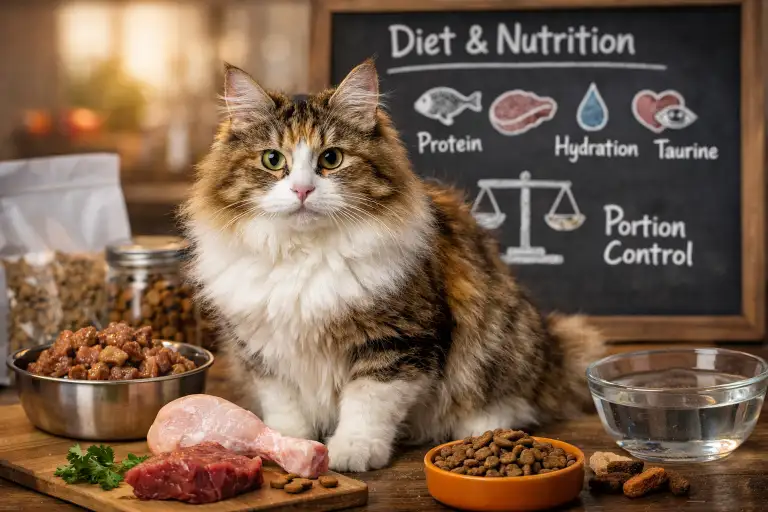
Kurilian Bobtail Longhair cats may look powerful and rugged, but when it comes to nutrition, their needs are not exotic or breed-specific. Like all domestic cats, they are obligate carnivores, meaning their bodies are biologically designed to rely on nutrients that come primarily from animal tissues. A good diet for a Kurilian Bobtail Longhair supports lean muscle, steady energy, healthy skin and coat, and overall long-term wellbeing.
It’s important to separate breed characteristics from dietary requirements. While Kurilian Bobtails are often described as active, muscular, and hardy, these traits do not mean they require a special or unusual diet. What matters most is feeding a complete and balanced cat food that meets established feline nutritional standards and matches the cat’s age, lifestyle, and body condition.
Cats as Obligate Carnivores
Cats have evolved to eat prey. Their digestive systems, metabolism, and nutrient requirements reflect this:
- They depend on animal-based protein to supply essential amino acids
- They use fat as a major energy source
- They do not require carbohydrates in the same way omnivores do
- Certain nutrients, such as taurine, must be provided directly through the diet
Understanding this biology helps owners make sense of food labels and marketing claims without feeling overwhelmed.
Key Nutrients Kurilian Bobtail Longhair Cats Rely On
The table below summarizes the core nutritional components that matter most in a Kurilian Bobtail Longhair’s diet, along with what they mean in practical, everyday terms for owners.
| Nutrient | Why It Matters for Cats | Practical Owner Takeaway |
|---|---|---|
| Protein | Supports muscle, organs, immune function | Prioritize animal-based protein sources |
| Fat | Primary energy source, supports skin and coat | Healthy fat is essential, not something to avoid |
| Carbohydrates | Minor energy source, not biologically required | Acceptable in moderation but not necessary |
| Taurine | Essential for heart, vision, and reproduction | Must come from a complete cat food |
Protein Quality Matters More Than Hype
Many cat foods advertise “high protein,” but for cats, protein quality is just as important as quantity. Proteins derived from animal sources naturally provide the amino acids cats need, while plant proteins are less biologically appropriate. A well-formulated diet does not need extreme protein numbers to be suitable; it needs to be balanced and digestible.
No “Special Breed Diet” Required
Despite breed-specific marketing, Kurilian Bobtail Longhair cats do not need food formulated specifically for their breed. What they do need is:
- A diet labeled as complete and balanced for cats
- Appropriate calories for their life stage and activity level
- Consistent feeding habits and portion awareness
Focusing on these fundamentals is far more effective than chasing breed-targeted products. A calm, balanced approach to nutrition gives Kurilian Bobtail Longhairs exactly what they need to thrive without unnecessary complexity.
Best Food Choices for Kurilian Bobtail Longhair Cats
Choosing the right food for a Kurilian Bobtail Longhair does not have to be confusing. The best food is one that is safe, balanced, and fits your cat’s daily needs. Most healthy cats can do well on different food types as long as the diet is complete and fed in the right amount.
Many owners wonder if one type of food is better than another. The truth is that each option has benefits and limits.
Wet food, dry food, and mixed feeding
Wet food has a high water content. This helps support hydration, which is important because many cats do not drink much water on their own. Wet food is also very tasty for most cats, which can help picky eaters.
Dry food is easy to store and measure. It often costs less and works well for busy homes. However, dry food contains much less moisture, so it should not be the only water source for your cat.
Mixed feeding means using both wet and dry food. This is a popular choice because it combines the benefits of both. Many owners feed wet food for meals and use a small amount of dry food as part of the daily routine.
| Food Type | Main Benefits | Possible Downsides | Best Use |
|---|---|---|---|
| Wet food | High moisture, very tasty | Higher cost, shorter shelf life | Daily meals or hydration support |
| Dry food | Easy to store, budget-friendly | Low moisture | Small portions or mixed feeding |
| Mixed feeding | Balanced approach | Needs portion control | Most households |
Reading cat food labels the simple way
You do not need to understand every word on a cat food label. Focus on a few key points:
- The food should say “complete and balanced” for cats
- Animal-based proteins should be listed early
- The food should match your cat’s life stage
Avoid choosing food based only on buzzwords like “premium” or “natural.” These terms do not always mean better nutrition.
Cost and nutrition balance
Good nutrition does not always mean the most expensive food. A safe, balanced diet that fits your budget is better than an expensive food that causes stress or inconsistency. What matters most is feeding the right amount and sticking to a routine.
How Much and How Often to Feed a Kurilian Bobtail Longhair
Knowing how much food to give is just as important as choosing the right food. Even good food can cause problems if a cat eats too much or too little. Kurilian Bobtail Longhairs can look bigger because of their fur, so it helps to watch body shape, not just the bowl.
How often to feed
Most cats do best with set meal times instead of food being available all day.
- Kittens need more meals because they are growing fast
- Adult cats usually do well with two meals a day
- Senior cats may prefer smaller meals spread out
| Life Stage | Meals Per Day | Helpful Tip |
|---|---|---|
| Kittens | 3–4 meals | Supports growth and energy |
| Adult cats | 2 meals | Helps control weight |
| Senior cats | 2–3 meals | Easier on digestion |
How much food is enough
There is no one perfect amount for every cat. The right portion depends on:
- Age
- Activity level
- Indoor or outdoor lifestyle
- Spay or neuter status
Food labels give a starting point, but they are not exact rules. Watch your cat’s body and behavior. A healthy cat should have a visible waist when viewed from above and you should be able to feel the ribs under the fur without pressing hard.
Indoor and spayed cats need extra care
Indoor cats and spayed or neutered cats often burn fewer calories. This means they may need smaller portions than very active or outdoor cats. Overfeeding can slowly lead to weight gain, even if the food is high quality.
Signs of overfeeding or underfeeding
Signs your cat may be eating too much:
- Weight gain
- Less interest in play
- Trouble grooming due to body size
Signs your cat may not be eating enough:
- Visible ribs or spine
- Low energy
- Constant hunger behavior
If you notice sudden changes in weight or appetite, it is best to speak with a veterinarian.
Life Stage Feeding for Kurilian Bobtail Longhair Cats
A Kurilian Bobtail Longhair’s diet should change as they grow. Kittens, adult cats, and senior cats all use food in different ways. Feeding for the right life stage helps support health and comfort over time.
Feeding kittens
Kittens grow fast and use a lot of energy. They need food made for kittens, which has more calories and nutrients to support growth.
- Feed small meals several times a day
- Choose food labeled for kittens or “all life stages”
- Do not limit food too much during growth
Kittens may eat more one week and less the next. This is normal as long as they are active and growing.
Feeding adult cats
Adult Kurilian Bobtail Longhairs need steady, balanced meals to maintain their weight and muscle.
- Most adults do well on two meals a day
- Watch body shape, not just weight
- Adjust portions if activity levels change
This is the life stage where overfeeding often happens, especially for indoor cats.
Feeding senior cats
As cats age, they may move less and lose muscle more easily. Some seniors eat less, while others ask for food more often.
- Smaller, more frequent meals may help
- Watch for changes in appetite or weight
- Choose food that is easy to chew and digest
| Life Stage | Main Nutrition Focus | Owner Reminder |
|---|---|---|
| Kitten | Growth and energy | Do not restrict food |
| Adult | Maintenance and balance | Monitor weight |
| Senior | Muscle support | Watch appetite changes |
Any big or sudden change in eating habits should be checked by a veterinarian.
Treats, Hydration, and Common Feeding Mistakes to Avoid
Treats and water are a small part of feeding, but they can make a big difference in your cat’s health. Many feeding problems come from small habits that build up over time.
Treats should stay limited
Most cats love treats, but treats should only make up a small part of the diet.
- Treats should be less than 10 percent of daily food
- Too many treats can lead to weight gain
- Treats should never replace meals
Some human foods are unsafe for cats. Foods like chocolate, onions, garlic, grapes, and cooked bones should never be given.
Water and hydration matter
Cats often do not drink enough water on their own. Low water intake can affect overall health.
Ways to support better hydration:
- Feed wet food regularly
- Provide clean, fresh water every day
- Use water fountains if your cat prefers moving water
- Place water bowls away from food bowls
A well-hydrated cat usually has normal energy, good appetite, and healthy urine habits.
Common feeding mistakes and better choices
Many feeding issues happen without owners realizing it. The table below shows common mistakes and safer habits.
| Common Mistake | Why It’s a Problem | Better Choice |
|---|---|---|
| Too many treats | Adds hidden calories | Limit treats and use play as reward |
| Only dry food | Low moisture intake | Add wet food or extra water sources |
| Free-feeding all day | Can cause weight gain | Feed set meals |
| Guessing portions | Overfeeding risk | Measure food and adjust slowly |
When to talk to a veterinarian
You should contact a veterinarian if you notice:
- Sudden weight loss or gain
- Loss of appetite
- Ongoing vomiting or diarrhea
- Big changes in drinking or urination
This guide is for general education and daily feeding habits. Medical concerns should always be checked by a professional.
For more general guidance on balanced cat nutrition and feeding standards, you can visit the Association of American Feed Control Officials (AAFCO), which sets widely used nutritional guidelines for commercial pet foods: https://www.aafco.org

Ata Ur Rehman is the founder of Pet Age in Human Years Calculator, an educational platform that provides age conversion charts and lifespan guides for dogs, cats, birds, and other companion animals. His work focuses on helping pet owners understand how animal ages translate into human years using commonly accepted age conversion formulas and published lifespan averages.
The website compiles breed and species lifespan data from kennel clubs, breed organizations, and general animal lifespan studies to present simple and easy-to-understand guides for pet owners worldwide.
This website was created to centralize animal age conversion charts into one easy reference platform for pet owners.