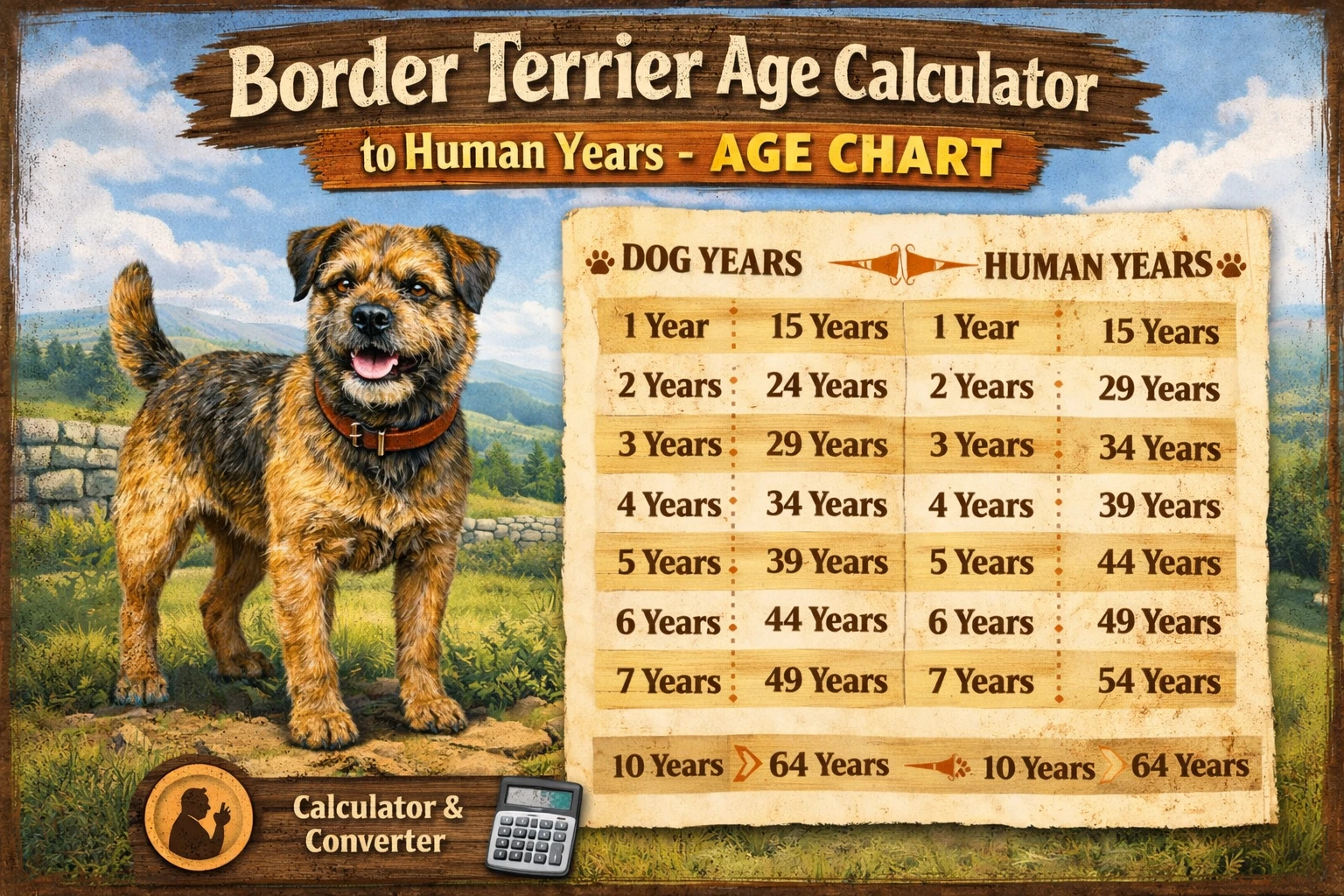
A Border Terrier age chart helps you compare your dog’s age in dog years to human years without relying on the outdated “1 dog year = 7 human years” rule. Border Terriers are small, hardy dogs, so they mature quickly in the first two years and then age more slowly as adults. This guide shows the estimated Border Terrier age in human years, life stages, and what each age usually means.
For an exact conversion based on your dog’s current age, use the Border Terrier Age Calculator.
How to use this Border Terrier age chart
- Find your Border Terrier’s current age in the chart.
- Match that age to the estimated human-year equivalent.
- Check the life stage to understand what is normal at that age.
The examples below follow the common small-breed aging pattern: fast puppy development, early adult maturity, and slower aging through the adult and senior years.
Quick Border Terrier Age Conversion Examples
| Border Terrier Age | Human Age Equivalent | Life Stage |
|---|---|---|
| 6 months | About 10 human years | Puppy |
| 1 year | About 15 human years | Adolescent |
| 2 years | About 24 human years | Young adult |
| 5 years | About 36 human years | Adult |
| 8 years | About 48 human years | Mature adult |
| 10 years | About 56 human years | Senior |
| 12 years | About 64 human years | Senior |
How to read this table: Border Terriers age fastest as puppies, reach young adulthood around 2 years old, and then gain human-year equivalents more gradually as adult dogs.
Border Terrier Age Chart: Dog Years to Human Years
This Border Terrier age chart gives a quick estimate of how old your dog is in human years. It is designed for owners who want a simple chart instead of a full calculator. Because Border Terriers are small dogs, they usually reach senior age later than many large breeds.
Border Terrier Age to Human Years Chart
| Border Terrier Age | Human Age Equivalent | Life Stage | What This Usually Means |
|---|---|---|---|
| 2 months | About 3 years | Puppy | Rapid growth and early learning |
| 4 months | About 6 years | Puppy | Teething, curiosity, and high energy |
| 6 months | About 10 years | Puppy | Fast learning and active play |
| 1 year | About 15 years | Adolescent | Still maturing and very active |
| 2 years | About 24 years | Young adult | Full size and stronger routine |
| 3 years | About 28 years | Adult | More settled adult behavior |
| 4 years | About 32 years | Adult | Prime adult years |
| 5 years | About 36 years | Adult | Stable energy and routine |
| 6 years | About 40 years | Adult | Slight slowdown may begin |
| 7 years | About 44 years | Mature adult | Needs consistent exercise and weight control |
| 8 years | About 48 years | Mature adult | More rest between activity |
| 9 years | About 52 years | Senior | Early senior signs may appear |
| 10 years | About 56 years | Senior | Slower movement and more naps |
| 11 years | About 60 years | Senior | Closer health monitoring helps |
| 12 years | About 64 years | Senior | Comfort and routine become more important |
| 13+ years | About 68+ years | Senior | Extra support and regular care are recommended |
How to read the Border Terrier age chart
- Use the first column to find your Border Terrier’s real age.
- Use the second column to estimate the matching human age.
- Use the life stage column to understand whether your dog is a puppy, adult, mature adult, or senior.
This chart is a general estimate. Your Border Terrier may feel younger or older depending on weight, health, activity level, diet, and daily care.
If you want a more direct result for your dog’s exact age, use the Border Terrier Age Calculator. This chart explains the age ranges, while the calculator gives a faster conversion for a specific age.
Border Terrier Lifespan vs Age Chart
A Border Terrier age chart shows how your dog’s current age compares to human years. Lifespan is different. Lifespan means how long a Border Terrier may live overall, while the age chart helps you understand what stage your dog is in today.
Most Border Terriers are considered long-living small dogs. Many stay active well into their senior years, especially with healthy weight, regular exercise, and routine vet care.
| Topic | What It Means | Best Use |
|---|---|---|
| Age Chart | Compares Border Terrier dog years to human years | Understanding current age and life stage |
| Age Calculator | Converts a specific Border Terrier age into human years | Getting a quick age result |
| Lifespan | Estimates how long Border Terriers usually live | Planning long-term care |
How Border Terriers Age Compared to Humans
Many people still believe the old idea that 1 dog year equals 7 human years, but that method is no longer considered accurate. Border Terriers, like most small dog breeds, age very quickly during the early years and then age more slowly through adulthood.
This is why a proper Border Terrier age chart gives a more realistic estimate of your dog’s age in human years.
Why the 7-year rule is inaccurate
- Dogs mature much faster during puppyhood.
- A 1-year-old Border Terrier is closer to a teenager than a small child.
- After the first two years, aging slows down considerably.
- Small breeds usually age more slowly than large dogs during adulthood.
Because dogs do not age at a constant speed, modern dog-age models are based on breed size and real canine development patterns instead of a simple multiplication rule.
Why Border Terriers often age more slowly than larger dogs
Border Terriers are considered a small and long-living breed. Compared to large dogs, they usually:
- Reach senior years later
- Remain active for more years
- Have a longer average lifespan
- Maintain mobility longer with proper care
That means a 10-year-old Border Terrier may still behave younger than many large-breed dogs of the same age.
Dog Aging Methods Compared
| Aging Method | How It Works | Accuracy Level | Why It Matters |
|---|---|---|---|
| 7-Year Rule | Every dog year equals 7 human years | Low | Very simple but outdated |
| Linear Aging Models | Adds fixed human years every year | Medium | More realistic than the 7-year rule |
| Modern Small-Breed Aging Models | Fast puppy aging and slower adult aging | High | Better matches real Border Terrier development |
Modern aging estimates follow how dogs actually grow and mature, which makes them far more accurate for Border Terriers and other small breeds.
Simple way to understand Border Terrier aging
- Puppy years: rapid growth and development
- Adult years: slower and more stable aging
- Senior years: gradual slowing with increased care needs
Border Terrier Life Stages and Signs of Aging
Border Terriers go through several life stages as they age. Each stage brings changes in behavior, activity level, physical condition, and care requirements. Understanding these stages helps owners know what changes are normal over time.
Border Terrier Life Stages Timeline
| Life Stage | Age Range | Physical Changes | Behavior Changes | Main Care Focus |
|---|---|---|---|---|
| Puppy | 0–1 year | Fast growth and teething | Curious and highly playful | Training and socialization |
| Young Adult | 1–3 years | Full size and muscle development | Very active and energetic | Exercise and structure |
| Adult | 3–7 years | Stable body condition | More balanced behavior | Diet and regular vet care |
| Mature Adult | 7–9 years | Slight slowdown and more rest | Reduced intensity during play | Weight management and joint support |
| Senior | 9+ years | Slower movement and stiffness | More sleep and calmer routine | Comfort and health monitoring |
Common signs of aging in Border Terriers
As Border Terriers grow older, many owners notice gradual age-related changes such as:
- Slower walking or reduced stamina
- Longer sleeping periods
- Less interest in intense activity
- Gray hairs around the muzzle
- Stiffness after resting
These changes are common in older Border Terriers and usually become more noticeable during the senior years.
When aging signs may need extra attention
Some symptoms may require additional monitoring or veterinary care, including:
- Sudden weight changes
- Difficulty standing or climbing
- Major behavior changes
- Confusion or disorientation
- Significant loss of appetite or energy
Early attention and regular health checks can help senior Border Terriers stay healthier and more comfortable as they age.
Helping Your Border Terrier Stay Healthy as They Age
Border Terriers are known for being active, energetic, and long-living dogs. As they move through different life stages, daily care plays an important role in keeping them healthy, comfortable, and active. Proper nutrition, exercise, routine vet care, and weight management can all help support healthy aging.
Border Terrier Care Priorities by Age
| Life Stage | Food Focus | Exercise Needs | Health Care Focus | Helpful Home Support |
|---|---|---|---|---|
| Puppy (0–1 year) | Balanced puppy nutrition | Short and playful activity | Vaccines and growth monitoring | Training and socialization |
| Adult (1–7 years) | Healthy adult diet | Daily walks and active play | Routine yearly checkups | Maintain healthy weight |
| Mature Adult (7–9 years) | Controlled calorie intake | Moderate daily exercise | Joint and dental monitoring | Comfortable sleeping areas |
| Senior (9+ years) | Senior-support nutrition | Gentle walks and light movement | More frequent vet visits | Easy movement around the home |
Healthy weight and nutrition
Maintaining a healthy body weight becomes increasingly important as Border Terriers age. Excess weight can place additional pressure on the joints, heart, and mobility.
- Feed balanced meals appropriate for your dog’s age
- Limit unnecessary treats and overfeeding
- Monitor weight changes during senior years
- Adjust calorie intake as activity levels decrease
Exercise and activity levels
Border Terriers usually remain energetic for many years, but exercise needs often change with age.
- Daily walks help maintain mobility and healthy weight
- Older dogs may benefit more from shorter, gentler exercise sessions
- Light play and mental stimulation help maintain activity
- Consistent movement supports joint health during aging
Routine vet care during aging
Regular veterinary care becomes more important as Border Terriers enter mature adult and senior years. Routine health checks may help identify age-related issues earlier.
- Monitor joint health and mobility
- Watch for dental problems and weight changes
- Discuss senior nutrition needs with your vet
- Schedule more frequent checkups during senior years
Making home life more comfortable for senior Border Terriers
Simple home adjustments can help older Border Terriers stay more comfortable and active.
- Provide soft and supportive bedding
- Keep food and water easily accessible
- Reduce excessive jumping when possible
- Create quiet resting areas with easy access
With proper care, many Border Terriers continue to stay active, social, and affectionate well into their senior years.
Related Border Terrier Guides
To learn more about Border Terrier care, training, and health, explore these related guides:
- Border Terrier Dog Full Guide
- Border Terrier Training Guide
- Border Terrier Grooming Guide
- Border Terrier Nutrition and Feeding Guide
- Border Terrier Cost of Ownership Guide
Border Terrier Age Chart FAQs
How old is a Border Terrier in human years?
A Border Terrier’s human age depends on their real age and life stage. For example, a 1-year-old Border Terrier is about 15 human years, while a 10-year-old Border Terrier is about 56 human years.
Is the 7-year dog age rule accurate for Border Terriers?
No. The 7-year rule is too simple because dogs age faster during puppyhood and more slowly as adults. Small breeds like Border Terriers need a more realistic age chart.
At what age is a Border Terrier considered senior?
A Border Terrier is usually considered senior at around 9 years old. Some dogs may show senior signs earlier or later depending on health, weight, and activity level.
How old is a 10-year-old Border Terrier in human years?
A 10-year-old Border Terrier is about 56 human years. At this stage, many Border Terriers are seniors but may still remain active with proper care.
What is the difference between a Border Terrier age chart and age calculator?
A Border Terrier age chart gives a full age comparison table, while the age calculator gives a direct result for one specific age. Use the chart for understanding life stages and the calculator for quick conversion.

Ata Ur Rehman is the founder of Pet Age in Human Years Calculator, an educational platform that provides age conversion charts and lifespan guides for dogs, cats, birds, and other companion animals. His work focuses on helping pet owners understand how animal ages translate into human years using commonly accepted age conversion formulas and published lifespan averages.
The website compiles breed and species lifespan data from kennel clubs, breed organizations, and general animal lifespan studies to present simple and easy-to-understand guides for pet owners worldwide.
This website was created to centralize animal age conversion charts into one easy reference platform for pet owners.