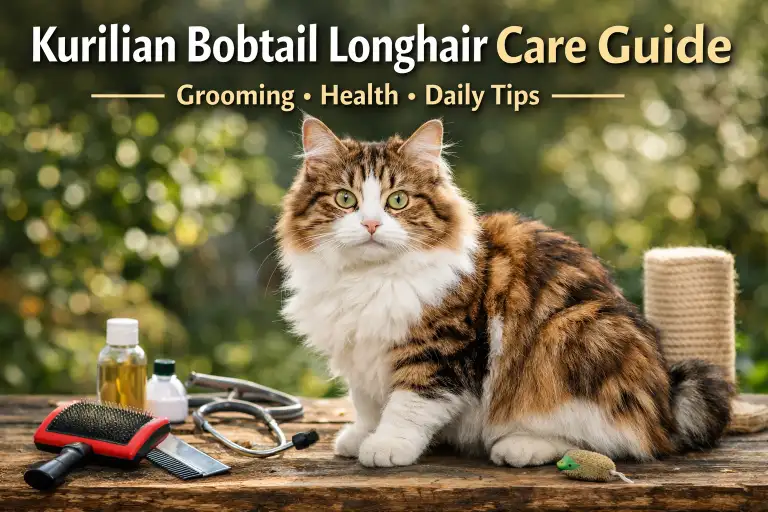
Kurilian Bobtail Longhairs are generally considered a long-lived cat breed, especially when raised in a stable, well-managed home environment. While no two cats age the same way, most Kurilian Bobtail Longhairs fall within a lifespan range that is comparable to, or slightly above, that of the average domestic cat.
In many cases, a Kurilian Bobtail Longhair can live well into its mid to late teens. Some individuals may live longer, particularly when preventive care, nutrition, and lifestyle factors consistently support good health over time. Lifespan figures should always be viewed as broad estimates rather than promises, as genetics and daily care both play major roles.
Living environment has a noticeable influence on longevity. Cats that live primarily indoors are typically exposed to fewer risks than those with outdoor access, which can affect average life expectancy.
| Living environment | Typical lifespan range |
|---|---|
| Indoor-only | Approximately 14–18 years |
| Indoor–outdoor | Approximately 12–15 years |
| Outdoor-only | Often shorter, varies widely |
Indoor cats tend to live longer largely because they are less exposed to hazards such as traffic, predators, infectious diseases, and environmental toxins. They are also more likely to receive regular veterinary care and consistent nutrition, both of which support long-term health.
It’s also important to understand that lifespan numbers describe population trends, not individual outcomes. A Kurilian Bobtail Longhair’s longevity can be influenced by factors such as early-life health, responsible breeding, weight management, stress levels, and how quickly subtle changes are noticed as the cat ages.
For owners, the most useful takeaway is not the exact number of years, but the understanding that attentive, preventive care anAre Kurilian Bobtail Longhairs Healthy Cats?
Kurilian Bobtail Longhairs are often described as generally healthy cats. This reputation comes from their natural development as a breed and their strong, muscular build. Many owners report that these cats stay active and alert well into their adult and senior years.
That said, being “healthy” does not mean a cat will never have health problems. Like all cats, Kurilian Bobtail Longhairs can still develop common feline conditions over time. Health can vary from one cat to another, even within the same breed. Genetics, daily care, diet, and living environment all play an important role.
One helpful thing to understand is the difference between being low-risk and being risk-free. Kurilian Bobtail Longhairs are not known for having many inherited health problems, but this does not mean health issues are impossible. Regular checkups and simple monitoring at home still matter.
Owners sometimes believe that a strong or rare breed does not need much care. This is a common misunderstanding. Even healthy cats benefit from routine vet visits, good nutrition, dental care, and a calm, stable routine.
Overall, Kurilian Bobtail Longhairs are considered a solid and resilient breed, but their long-term health still depends on attention and prevention rather than luck.
Common Kurilian Bobtail Longhair Health Issues to Be Aware Of
Kurilian Bobtail Longhairs are usually healthy, but like all cats, they can still face certain health concerns during their lifetime. These issues are not guaranteed to happen. They are simply areas that owners should be aware of so changes can be noticed early.
Most of the health concerns seen in this breed are also common in many other cats. They often develop slowly and may be linked to age, lifestyle, or daily care rather than the breed itself.
| Health area | Why it matters | General preventive focus |
|---|---|---|
| Dental health | Dental problems are common in cats and can affect eating and comfort | Regular vet checks and oral care awareness |
| Weight and obesity | Even active cats can gain weight if food intake is not balanced | Healthy portions and daily activity |
| Urinary health | Litter box issues can affect comfort and behavior | Good hydration and routine monitoring |
| Kidney health | Kidney changes are common as cats grow older | Senior checkups and early awareness |
| Joint and mobility health | Aging can affect movement and flexibility | Weight balance and watching activity changes |
Dental health is one area many owners overlook. Cats often hide mouth pain, so problems may not be obvious at first. Weight is another important factor. A cat that gains too much weight may move less and face other health challenges over time.
Urinary and kidney health are often linked to hydration and age. Changes in litter box habits, even small ones, should never be ignored. Joint and movement changes may appear slowly, especially in older cats, and can show up as less jumping or shorter play times.
The key thing to remember is that “common” does not mean “expected.” Many Kurilian Bobtail Longhairs live their whole lives without serious health trouble, especially when owners stay observant and act early.
How Preventive Care Supports a Longer, Healthier Life
Preventive care means taking small steps over time to help a cat stay healthy. For Kurilian Bobtail Longhairs, these steps can make a big difference in how long and how comfortably they live.
Regular vet visits are one of the most important parts of preventive care. These visits help spot small changes before they turn into bigger problems. Even when a cat looks fine, routine checkups still matter.
Dental care is another key area. Mouth problems can affect eating, mood, and overall comfort. Many cats hide dental pain, so regular checks help catch issues early.
Keeping a healthy weight also supports long-term health. Extra weight can make it harder for a cat to move, play, or groom properly. Balanced meals and daily activity help keep the body strong.
Preventive care also changes as a cat grows older. Older cats may need closer monitoring, even if they seem healthy.
| Life stage | Preventive care focus |
|---|---|
| Young cats | Routine exams, parasite prevention |
| Adult cats | Dental checks, weight monitoring |
| Senior cats | Health screenings, mobility awareness |
Simple daily habits matter too. Watching how your cat eats, drinks, plays, and uses the litter box can help you notice changes early. These small observations often lead to quicker help and better outcomes.
Preventive care is not about doing everything at once. It is about steady attention and working with a veterinarian over your cat’s lifetime.
Final Thoughts on Kurilian Bobtail Longhair Health & Lifespan
Kurilian Bobtail Longhairs are known for being strong, active, and generally healthy cats. Many of them live long lives, especially when they are cared for with attention and consistency. Their lifespan and health are shaped more by daily care and environment than by breed alone.
Understanding possible health concerns helps owners stay prepared, not worried. Most issues develop slowly and can often be managed better when noticed early. Simple habits like regular vet visits, healthy feeding, and watching daily behavior play a big role.
It is also important to remember that every cat is different. Some Kurilian Bobtail Longhairs may need more care as they age, while others stay playful for many years. There is no single path that fits every cat.
The best approach is to build a long-term partnership with a veterinarian and stay involved in your cat’s daily life. With calm observation and preventive care, many Kurilian Bobtail Longhairs enjoy a comfortable and happy life.
For more trusted, science-based information on general cat health and lifelong care, you can visit the International Cat Care (ISFM) website:
https://icatcare.org

Ata Ur Rehman is the founder of Pet Age in Human Years Calculator, an educational platform that provides age conversion charts and lifespan guides for dogs, cats, birds, and other companion animals. His work focuses on helping pet owners understand how animal ages translate into human years using commonly accepted age conversion formulas and published lifespan averages.
The website compiles breed and species lifespan data from kennel clubs, breed organizations, and general animal lifespan studies to present simple and easy-to-understand guides for pet owners worldwide.
This website was created to centralize animal age conversion charts into one easy reference platform for pet owners.