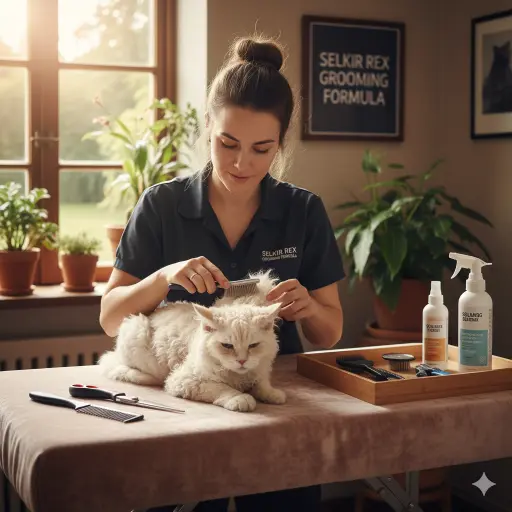
The Selkirk Rex is known for its soft, curly coat that feels very different from most cats. Because of these curls, many owners think this breed needs heavy grooming every day. In real life, Selkirk Rex cats need gentle and smart grooming, not constant brushing. Their coat can be short or long, and both types share the same curly texture. The curls are loose and plush, not tight like a poodle, and they can flatten or frizz if handled the wrong way.
One important thing to understand is that Selkirk Rex cats still groom themselves like other cats. Their tongues help remove dirt and loose hair. Your job is not to replace self-grooming but to support it, especially during shedding seasons. Over-grooming can damage curls, irritate the skin, and make grooming stressful for the cat.
Selkirk Rex coats also hold natural oils closer to the skin. These oils help keep curls soft and healthy, but they can make the coat look greasy if baths are done too often. This is why grooming for this breed is about balance. Too little care can lead to tangles, while too much care can ruin the coat texture.
Another key grooming factor is age. Kittens usually have softer, looser curls that change as they grow. Adult Selkirk Rex cats have more defined curls and need more careful handling. Senior cats may groom themselves less, so owners may need to help more with light brushing and coat checks.
Here is a simple table to show how grooming needs change based on coat length:
| Selkirk Rex Coat Type | Grooming Focus | Overall Effort |
|---|---|---|
| Short-haired | Light coat checks, gentle brushing | Low |
| Long-haired | Mat prevention, careful brushing | Moderate |
Brushing and Coat Care for Selkirk Rex Cats
Brushing a Selkirk Rex is very different from brushing a straight-haired cat. The main goal is not to make the coat smooth. Brushing is done to remove loose hair and prevent mats, especially in long-haired Selkirk Rex cats. Brushing too often or too hard can pull apart curls and make the coat look fluffy or frizzy.
Most Selkirk Rex cats only need brushing once or twice a week. During heavy shedding times, such as spring and fall, you may need to brush a little more often. Always brush slowly and gently. Short sessions work best and help your cat stay calm.
Never brush a dry, tangled coat aggressively. If you find a small tangle, use your fingers first to loosen it. Pulling with a brush can hurt the skin and make your cat fear grooming. Mats close to the skin should not be cut at home because cat skin is thin and easy to injure.
This simple do and don’t table helps prevent common mistakes:
| Do | Don’t |
|---|---|
| Use slow, gentle strokes | Brush hard or fast |
| Brush 1–2 times a week | Brush daily without need |
| Stop if your cat shows stress | Force brushing |
| Use fingers for small tangles | Pull on mats |
Watch your cat’s body language while brushing. Signs like tail flicking, ears turning sideways, or skin rippling mean it is time to stop. Ending grooming early is better than pushing and causing fear.
Bathing a Selkirk Rex Cat Safely
Many Selkirk Rex cats need baths more often than other breeds, but that does not mean frequent bathing is always good. Their curly coat can trap oils close to the skin, which may cause the coat to look greasy over time. A bath can help reset the coat when it becomes oily or dirty.
Most Selkirk Rex cats only need a bath every few months. Some may need one more often, especially if they have very oily skin. Bathing too often can dry out the skin and damage the curls. Always use warm water and move slowly to avoid stress.
Drying is just as important as bathing. Do not rub the coat with a towel. Rubbing breaks curls and causes frizz. Instead, gently press the towel against the coat to absorb water. Let the coat air-dry when possible. Blow dryers are usually too loud and stressful for cats.
Never bathe a cat that is already upset or scared. Grooming should feel safe. If your cat strongly resists baths, it may be better to spot-clean with a damp cloth instead.
Basic Grooming Tasks Beyond the Coat
Grooming is not only about fur. Nail trimming, ear checks, eye cleaning, and dental care are all part of basic Selkirk Rex grooming. These tasks help prevent health problems and should be done gently and slowly.
Nails usually need trimming every two to three weeks. Only trim the sharp tip and avoid the pink area inside the nail. If your cat struggles, stop and try again another day. Trimming one or two nails at a time is fine.
Ears should be checked once a week. Selkirk Rex cats can build up ear wax faster than some other breeds. If the ears look dirty or smell bad, a vet should check them. Never push anything deep into the ear canal.
Eyes can be gently wiped with a soft, damp cloth if discharge appears. Teeth brushing is helpful but can be difficult. Even a few seconds of brushing a few times a week is better than nothing.
Grooming Frequency, Safety, and Common Selkirk Rex Mistakes
Knowing how often to groom helps keep routines calm and safe. Overdoing grooming is one of the most common mistakes with Selkirk Rex cats. Gentle and regular care is better than long grooming sessions.
Here is a clear grooming frequency table:
| Grooming Task | How Often |
|---|---|
| Brushing | 1–2 times per week |
| Bathing | Every few months |
| Nail trimming | Every 2–3 weeks |
| Ear checks | Weekly |
| Eye cleaning | As needed |
Safety always comes first. Never hold a cat down or force grooming. If your cat becomes upset, stop and try later. Grooming should build trust, not fear.
Common mistakes include brushing too often, bathing too much, cutting mats at home, and ignoring stress signals. Avoid these to keep your Selkirk Rex healthy and relaxed
For additional trusted feline care guidance, you can visit the Cornell University College of Veterinary Medicine feline health resources:
https://www.vet.cornell.edu/departments-centers-and-institutes/cornell-feline-health-center

Ata Ur Rehman is the founder of Pet Age in Human Years Calculator, an educational platform that provides age conversion charts and lifespan guides for dogs, cats, birds, and other companion animals. His work focuses on helping pet owners understand how animal ages translate into human years using commonly accepted age conversion formulas and published lifespan averages.
The website compiles breed and species lifespan data from kennel clubs, breed organizations, and general animal lifespan studies to present simple and easy-to-understand guides for pet owners worldwide.
This website was created to centralize animal age conversion charts into one easy reference platform for pet owners.