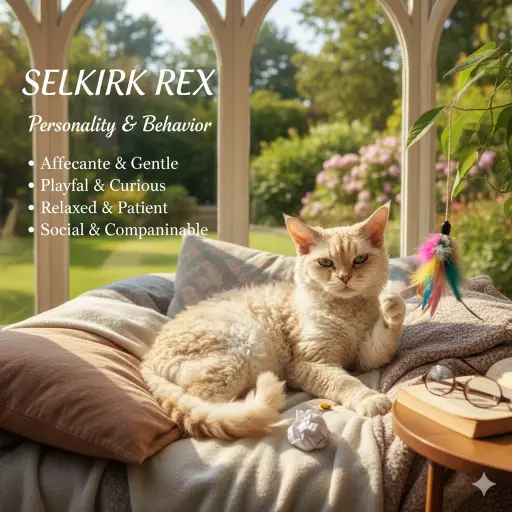
The Selkirk Rex is often noticed first for its curly coat, but living with this cat quickly shows that personality matters far more than looks. This breed is known for having a calm, steady, and people-friendly nature. Many owners describe Selkirk Rex cats as emotionally balanced cats that enjoy being part of daily life without demanding constant attention. They are usually comfortable sharing space with humans and tend to adapt well to home routines.
Selkirk Rex cats are often described as “easy to live with” because their behavior feels predictable and relaxed. They like being around people, but they usually do not follow owners from room to room or cry for attention all day. Instead, they prefer quiet companionship. You may find your Selkirk Rex resting nearby, watching what you are doing, or joining you later when things calm down.
Another important part of the Selkirk Rex personality is tolerance. These cats often handle gentle handling well and are less likely to become overwhelmed by normal household noise. This does not mean they enjoy everything or have no boundaries, but they often show patience, especially when raised in stable homes. This makes them appealing to families who want a cat that fits into everyday life rather than controlling it.
It is also important to understand that breed traits describe tendencies, not rules. Not every Selkirk Rex will behave the same way. Some may be more playful, others more reserved. Personality is shaped by genetics, early experiences, and the environment they live in. This guide focuses on common patterns seen in Selkirk Rex cats, while still respecting individual differences.
Core Selkirk Rex Personality Traits
Selkirk Rex cats are often affectionate, but their affection style is usually calm and low-pressure. Many are not classic lap cats, yet they enjoy being close to their people. They may sit beside you instead of on you, or choose to sleep nearby rather than curled in your arms. This gentle closeness is one of the most loved traits of the breed.
Their activity level is moderate. Selkirk Rex cats enjoy play, especially short play sessions, but they are not constantly in motion. They balance playtime with long rest periods. This makes them suitable for homes that prefer a relaxed atmosphere rather than nonstop energy.
Intelligence is another quiet strength of the Selkirk Rex. They tend to learn routines quickly and understand household patterns. Instead of using intelligence to get into trouble, many use it to fit smoothly into daily life. They often wait patiently for meals and learn which behaviors get gentle attention.
Emotionally, Selkirk Rex cats are often steady. They are not usually high-strung or dramatic. When changes happen, they may observe quietly before reacting. This emotional balance is part of why many people describe them as comforting companions.
Selkirk Rex Personality Traits at a Glance
| Trait | Typical Expression |
|---|---|
| Affection style | Gentle, calm, prefers closeness |
| Energy level | Moderate |
| Playfulness | Enjoys short play sessions |
| Independence | Comfortable alone for periods |
| Intelligence | Learns routines easily |
| Emotional tone | Calm and steady |
Selkirk Rex Behavior in Daily Life
Daily life with a Selkirk Rex is usually peaceful and predictable. These cats often follow regular routines and appreciate consistency. They may greet you when you come home, but usually in a quiet way, such as walking over or watching from a favorite spot. Loud or constant vocal behavior is not typical for the breed.
Vocalization in Selkirk Rex cats tends to be soft and limited. They may use gentle sounds to ask for food or attention, but they are not known for constant talking. Many communicate more through body language, such as sitting close, slow blinking, or relaxed postures.
Play behavior is usually controlled and thoughtful. Selkirk Rex cats often enjoy toys that allow gentle chasing or batting rather than intense jumping. They may play enthusiastically for a few minutes and then stop on their own. This self-regulation helps prevent overstimulation and makes playtime easy for owners.
Rest and comfort are very important to this breed. Selkirk Rex cats often choose soft, secure places to nap. They may rotate between several favorite spots. Their love of comfort does not mean laziness; it reflects their preference for calm environments where they feel safe.
Activity Level, Vocalization, and Play Style
| Daily Behavior | What Owners Commonly See |
|---|---|
| Activity | Calm with short bursts |
| Vocalization | Quiet to moderate |
| Play style | Gentle and focused |
| Routine preference | Likes predictable schedules |
| Rest habits | Enjoys long naps |
Selkirk Rex Social Behavior
Selkirk Rex cats usually form strong but relaxed bonds with humans. They often enjoy spending time with people of all ages, including children, as long as interactions are gentle and respectful. Their tolerant nature can make them feel less reactive in busy homes, though they still benefit from calm handling.
With adults, Selkirk Rex cats often show loyalty without clinginess. They may choose one or two favorite people but still remain friendly toward others. This balanced attachment allows them to feel secure even when their favorite person is not home.
In homes with other cats, Selkirk Rex cats often adjust well. They are usually not overly territorial and may coexist peacefully. Proper introductions matter, but their calm temperament often helps reduce tension. With dogs, many Selkirk Rex cats do well when dogs are respectful and not overly energetic.
Social comfort does not mean they want constant interaction. Selkirk Rex cats appreciate having the choice to engage or retreat. Respecting this choice builds trust and helps the cat feel safe in shared spaces.
Social Compatibility with Humans and Pets
| Social Situation | Typical Selkirk Rex Response |
|---|---|
| Adults | Calm and affectionate |
| Children | Tolerant with gentle handling |
| Other cats | Usually cooperative |
| Dogs | Often adaptable with calm dogs |
| Visitors | Observant, not fearful |
Commonly Misunderstood Selkirk Rex Behaviors
One common misunderstanding is thinking that a calm Selkirk Rex is bored or unhappy. In reality, many are simply content. They do not need constant stimulation to feel fulfilled. Their relaxed behavior often means they feel safe and comfortable.
Another misunderstanding is assuming all Selkirk Rex cats want to be held often. While many tolerate handling well, tolerance is not the same as enjoyment. Some prefer sitting nearby instead. Respecting these preferences leads to stronger bonds.
Quiet behavior is sometimes mistaken for lack of affection. Selkirk Rex cats may show love through presence rather than action. Sitting close, sleeping nearby, or following routines together are all signs of attachment.
People may also assume that because Selkirk Rex cats are tolerant, they have no limits. Like all cats, they still need space and respect. Ignoring subtle signals, such as turning away or moving off, can cause stress even in gentle cats.
Behavior Myth vs Reality
| Myth | Reality |
|---|---|
| Calm means lazy | Calm often means content |
| Tolerant means loves handling | Tolerance is not always enjoyment |
| Quiet cats are distant | Quiet cats can be deeply bonded |
| Easygoing cats have no limits | All cats need boundariede |
For additional breed background and general information, you can visit the Cat Fanciers’ Association Selkirk Rex breed profile:
https://cfa.org/selkirk-rex/

Ata Ur Rehman is the founder of Pet Age in Human Years Calculator, an educational platform that provides age conversion charts and lifespan guides for dogs, cats, birds, and other companion animals. His work focuses on helping pet owners understand how animal ages translate into human years using commonly accepted age conversion formulas and published lifespan averages.
The website compiles breed and species lifespan data from kennel clubs, breed organizations, and general animal lifespan studies to present simple and easy-to-understand guides for pet owners worldwide.
This website was created to centralize animal age conversion charts into one easy reference platform for pet owners.