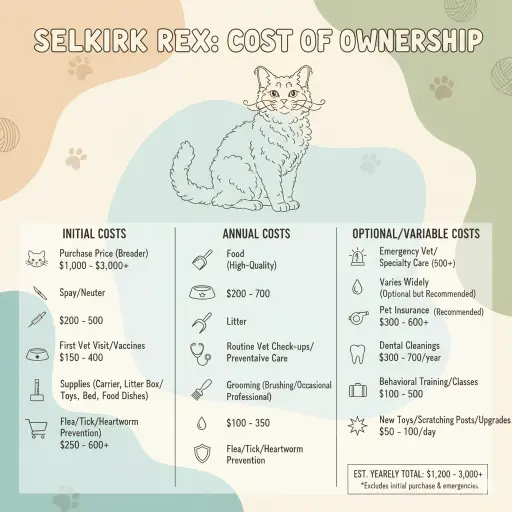
Owning a Selkirk Rex cat is not only about the cute curly Owning a Selkirk Rex cat is not only about the cute curly coat and calm personality. It also comes with real and ongoing costs that many new owners do not fully think about at first. This guide explains those costs in a clear and honest way, so you can plan better and avoid surprises.
The cost of ownership includes more than just buying the cat. You also need to think about food, vet care, grooming, supplies, and long-term care as your cat grows older. These costs add up over many years, not just in the first month.
Selkirk Rex cats are known for being friendly, relaxed, and good with families. Because of this, many people choose them as indoor pets. Indoor cats usually live longer, which is wonderful, but it also means more years of expenses.
This article is educational only. It does not give medical advice or tell you what to buy. Its goal is to help you understand the financial side of caring for a Selkirk Rex so you can be a responsible and confident owner.
| Cost Type | What It Includes | Why It Matters |
|---|---|---|
| One-time costs | Purchase price, setup items | High at the start |
| Monthly costs | Food, litter, grooming | Ongoing expenses |
| Long-term costs | Vet care, aging support | Grows over time |
Initial Purchase Price of a Selkirk Rex
The first cost most people think about is the price of the Selkirk Rex itself. This breed is not very common, so prices are usually higher than for mixed-breed cats.
A pet-quality Selkirk Rex from a responsible breeder often costs more because of health screening, proper care, and ethical breeding practices. Longhair Selkirk Rex cats may sometimes cost more than shorthair ones because of grooming needs and demand.
Prices can also change based on where you live. In areas where breeders are rare, travel or shipping costs may increase the total amount you pay. Very low prices can be a warning sign of poor breeding or lack of proper care.
Adoption may be possible, but Selkirk Rex cats are rarely found in shelters. If you do find one, the cost is usually much lower, but availability is unpredictable.
| Source | Typical Price Range | Notes |
|---|---|---|
| Ethical breeder | $800–$2,000 | Most common option |
| Show-quality cat | $2,000+ | Not needed for pets |
| Adoption | $100–$300 | Very rare |
One-Time Setup Costs for New Owners
Before bringing your Selkirk Rex home, you will need basic supplies. These are mostly one-time purchases, but they are important for your cat’s comfort and safety.
Items like litter boxes, scratching posts, food bowls, and a carrier are required from day one. Selkirk Rex cats are indoor-friendly, so creating a safe and calm home space is important.
You may also need grooming tools that work well with a curly coat. While their fur looks thick, it is soft and needs gentle care to avoid mats.
These setup costs usually happen in the first month and can feel expensive, but most items last for years if chosen carefully.
| Item | Estimated Cost | How Often Replaced |
|---|---|---|
| Litter box & scoop | $25–$60 | Rarely |
| Scratching post | $40–$120 | Every few years |
| Carrier | $30–$80 | Rarely |
| Grooming tools | $20–$50 | Long-term |
Ongoing Monthly Costs
Monthly costs are the most consistent part of owning a Selkirk Rex. These include food, litter, and small replacement items.
Quality food is important for long-term health. While Selkirk Rex cats do not need special diets just for their breed, balanced nutrition helps support a healthy coat and body weight.
Litter costs depend on the type you choose and how many cats you have. Some owners also budget for treats and toys, which are not required but help with bonding and mental stimulation.
These costs may feel small month to month, but over a year they become a major part of ownership expenses.
| Monthly Item | Average Cost | Notes |
|---|---|---|
| Food | $30–$70 | Quality varies |
| Litter | $15–$30 | Depends on type |
| Toys & treats | $10–$20 | Optional |
Veterinary Care and Health Costs
Routine veterinary care is a key part of responsible cat ownership. Even healthy Selkirk Rex cats need regular checkups to catch issues early.
Annual exams, basic vaccinations, and parasite prevention are common yearly expenses. These visits help your vet track changes over time and support a longer, healthier life.
Unexpected vet visits can happen with any cat. While Selkirk Rex cats are generally healthy, no breed is completely risk-free. Having savings or insurance can help reduce stress during emergencies.
This section is for cost awareness only and does not replace professional veterinary guidance.
| Vet Expense | Estimated Annual Cost | Frequency |
|---|---|---|
| Routine exam | $50–$100 | Once a year |
| Vaccinations | $75–$150 | As advised |
| Emergency fund | $300–$1,000+ | As needed |
Grooming and Coat Care Expenses
Selkirk Rex cats have a unique curly coat that needs gentle care. While they are not high-maintenance compared to some breeds, grooming is still part of ownership.
Most owners can handle grooming at home with the right tools. Brushing too often can flatten curls, so light and careful grooming is best.
Some owners choose professional grooming once or twice a year, especially for longhair Selkirk Rex cats. This is optional but can help with shedding and cleanliness.
Understanding grooming needs helps prevent coat problems and unexpected costs later.
| Grooming Option | Cost | How Often |
|---|---|---|
| Home grooming | $0–$10/month | Regular |
| Professional grooming | $50–$100 | 1–2 times/year |
| Grooming tools | $20–$50 | One-time |
Long-Term Ownership Costs Over a Lifetime
Selkirk Rex cats often live 12–15 years or more, especially when kept indoors. A longer life means more years of care and expenses.
Costs usually increase as cats age. Senior cats may need more vet visits and special support to stay comfortable and active.
Planning ahead helps owners avoid financial stress later. Long-term ownership is not about fear, but about realistic preparation.
When spread over many years, even small monthly costs become a large total amount.
| Time Frame | Estimated Cost | What It Includes |
|---|---|---|
| Per year | $800–$1,500 | All basics |
| 10 years | $8,000–$15,000 | Lifetime care |
| Senior years | Higher range | More vet care |
Lifestyle Factors That Change Costs
Your lifestyle plays a big role in how much you spend on your Selkirk Rex. Indoor-only cats usually have fewer risks but live longer, which affects long-term costs.
Single-cat homes may spend less on supplies, while multi-cat homes can share some costs but increase others like food and litter.
Travel is another factor. Boarding or pet-sitting costs should be considered if you travel often.
Where you live also affects prices, especially for vet care and grooming services.
| Lifestyle Choice | Cost Impact | Example |
|---|---|---|
| Indoor living | Medium–High | Longer lifespan |
| Multi-cat home | Medium | Shared supplies |
| Frequent travel | High | Pet sitting |
Is a Selkirk Rex Affordable for You?
Affordability is personal. A Selkirk Rex may be affordable for one household and difficult for another.
Beyond money, time and attention are also important. Grooming, play, and routine care are part of the commitment.
This breed suits people who prefer calm, indoor companionship and steady routines. Planning ahead makes ownership more enjoyable and less stressful.
Thinking honestly about your budget now helps prevent regret later.
| Question | Why It Matters |
|---|---|
| Stable income | Covers long-term costs |
| Emergency savings | Reduces stress |
| Time availability | Daily care needs |
Final Cost of Ownership Summary
Owning a Selkirk Rex is a long-term responsibility that goes far beyond the purchase price. From monthly food and litter to veterinary care and grooming, costs add up steadily over time.
With good planning, these costs are manageable for many households. The key is understanding what to expect and preparing for both routine and unexpected expenses.
This breed offers a calm, loving companion in return for consistent care and financial responsibility. Being informed helps both you and your cat enjoy a better life together.
| Cost Category | Low Range | High Range |
|---|---|---|
| First year | $1,500 | $3,000+ |
| Annual average | $800 | $1,500 |
| Lifetime | $10,000 | $20,000+ |
For additional breed standards and general cat care guidance, you can visit the Cat Fanciers’ Association:
https://cfa.org

Ata Ur Rehman is the founder of Pet Age in Human Years Calculator, an educational platform that provides age conversion charts and lifespan guides for dogs, cats, birds, and other companion animals. His work focuses on helping pet owners understand how animal ages translate into human years using commonly accepted age conversion formulas and published lifespan averages.
The website compiles breed and species lifespan data from kennel clubs, breed organizations, and general animal lifespan studies to present simple and easy-to-understand guides for pet owners worldwide.
This website was created to centralize animal age conversion charts into one easy reference platform for pet owners.