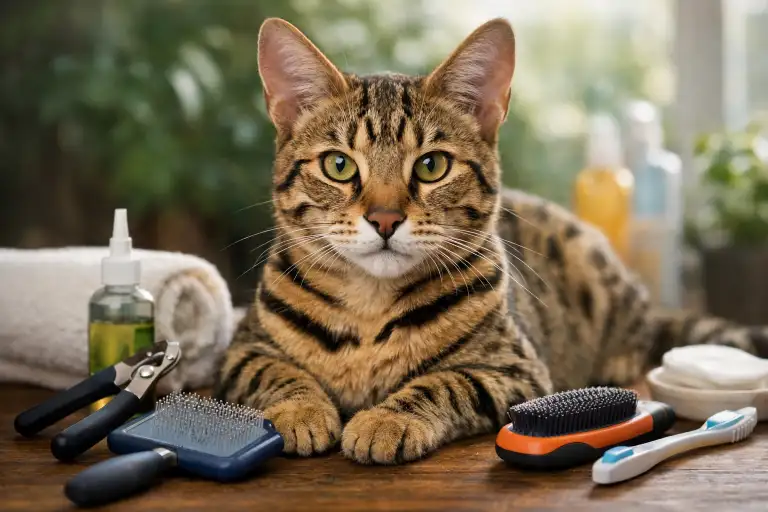
Savannah cats may have short, sleek coats, but that doesn’t mean they’re maintenance-free. Grooming plays a much bigger role in their health and behavior than many new owners expect. Done correctly, it supports skin health, reduces shedding, prevents painful nail issues, and helps you spot problems early—long before they turn into vet visits.
Savannahs are highly active, intelligent, and physically powerful cats. That combination makes grooming especially important. Long nails can snag during climbing, dirty ears can go unnoticed because the cat appears “fine,” and minor skin issues can escalate quickly if they’re missed under the assumption that short-haired cats don’t need much care.
Regular grooming also helps with something just as important: relationship building. Savannah cats are confident and curious, but they’re also sensitive to overstimulation. Gentle, predictable grooming routines teach them that handling is safe and temporary. This reduces defensive reactions later in life, especially during nail trims or vet exams.
Another key reason grooming matters is early detection. When you brush, check nails, or look in your cat’s ears, you’re more likely to notice:
- Changes in skin or coat condition
- Unusual shedding or dandruff
- Cracked or overgrown nails
- Ear debris or odor
- Weight changes or soreness when touched
Catching these early is far easier—and safer—than trying to fix a problem after your Savannah has already become uncomfortable or reactive.
Finally, grooming sets realistic expectations. Savannah cats are often described as “low grooming,” which leads owners to skip routines entirely. In reality, Savannahs need consistent but minimal grooming done correctly. A few minutes at the right frequency is far better than long, stressful sessions done only when something goes wrong.
Understanding Savannah Cat Grooming Needs
To groom a Savannah cat properly, you first need to understand what makes them different from other cats. Savannah cats are very active, curious, and alert. They move a lot, climb often, and use their bodies more than most house cats. Because of this, their grooming needs are simple but still important.
Savannah cats usually have a short, smooth coat. It does not tangle easily, but it still sheds. Most Savannah cats shed a little all year and more during spring and fall. Even though the coat is short, brushing helps remove loose hair and keeps the skin healthy.
Here are a few things every Savannah owner should know about their grooming needs:
- Savannah cats shed more during seasonal changes
- Indoor Savannah cats usually shed less than outdoor ones
- Kittens need gentle grooming to learn handling
- Older Savannah cats may groom themselves less
- Very active cats may dislike long grooming sessions
Savannah cats are also sensitive to touch in certain areas. Many do not like their belly, back legs, or tail handled for too long. This is normal. Grooming works best when sessions are short and calm.
Below is a simple overview of Savannah coat and shedding traits to help set expectations.
Savannah Coat and Shedding Overview
| Factor | What owners should know |
|---|---|
| Coat length | Short and close to the body |
| Coat texture | Smooth and dense |
| Shedding level | Low to moderate |
| Seasonal shedding | Higher in spring and fall |
| Mat risk | Very low, higher in senior cats |
Another important part of grooming is behavior. Savannah cats are smart and can get bored or annoyed quickly. This means grooming should feel quick and predictable. It is better to groom for two or three minutes often than to force a long session once in a while.
Understanding these needs helps you groom in a way your Savannah can accept. It also lowers stress and reduces the chance of scratching or biting during care.
Brushing, Bathing, and Coat Care for Savannah Cats
Savannah cats have short coats, but they still need regular coat care. Brushing helps remove loose hair, keeps the skin healthy, and reduces shedding around your home. It also helps your cat get used to being handled.
Brushing a Savannah cat does not need to take long. Most cats do best with short sessions.
Helpful brushing tips:
- Brush in the direction the hair grows
- Start with gentle strokes
- Avoid the belly and tail unless your cat allows it
- Stop if your cat flicks their tail, flattens ears, or walks away
Most Savannah cats only need brushing one or two times a week. During heavy shedding seasons, you may brush a little more often.
Brushing and Bathing Frequency
| Grooming task | How often |
|---|---|
| Brushing | 1–2 times per week |
| Heavy shedding | 2–3 times per week |
| Bathing | Only when needed |
| Coat wipe-down | As needed |
Many people think Savannah cats love water. Some do enjoy playing with water, but that does not mean they enjoy baths. Bathing is usually not needed unless your cat gets very dirty or has something on their coat that cannot be brushed out.
Baths should be avoided if:
- Your cat is stressed or fearful
- There are no skin or coat problems
- You are bathing only to reduce shedding
If your Savannah needs a bath, keep it short and calm. Never force your cat into water. For most cats, brushing is enough to keep the coat clean and healthy.
Coat care should always feel safe and gentle. The goal is not perfection. The goal is comfort and trust.
Nail Trimming, Ear, Eye, and Dental Care Basics
Grooming a Savannah cat is not only about the coat. Nails, ears, eyes, and teeth also need regular care. These tasks help keep your cat comfortable and prevent small problems from becoming big ones.
Nail trimming is very important for Savannah cats. They jump, climb, and run a lot. Long nails can catch on furniture or skin and cause pain.
Basic nail care tips:
- Trim nails every few weeks
- Only cut the sharp tip, never the pink part
- Stop if your cat pulls away or gets upset
- Short, calm sessions work best
Ear care is simple but must be done carefully. Savannah cats can build up ear wax, even if they look clean.
Ear care basics:
- Check ears once a week
- Clean only if you see dirt or wax
- Never put anything deep into the ear
- Redness or bad smell means a vet visit
Eye care is usually easy. Most Savannah cats keep their eyes clean on their own.
Eye care tips:
- Wipe only if you see discharge
- Use a soft, clean cloth
- Clear discharge is usually normal
- Thick or colored discharge is not normal
Dental care is often skipped, but it matters. Healthy teeth help prevent pain and infections.
Dental care basics:
- Try dental care a few times per week
- Start slowly and gently
- Do not force your cat
- Bad breath or drooling needs vet care
Below is a simple guide to how often each task should be done.
Nail, Ear, Eye, and Dental Care Frequency
| Grooming task | How often |
|---|---|
| Nail trimming | Every 2–3 weeks |
| Ear check | Once a week |
| Ear cleaning | Only when needed |
| Eye cleaning | As needed |
| Dental care | 2–3 times per week |
Always stop grooming if your Savannah shows stress. Hissing, growling, tail whipping, or stiff body posture means it’s time to stop.
Grooming Frequency, Safety, and Common Mistakes
Having a simple grooming routine makes caring for a Savannah cat much easier. You do not need to groom every day, but you do need to be consistent. Short and calm sessions help your cat stay relaxed and cooperative.
A weekly plan can help you remember what to do without overdoing it.
Weekly Savannah Grooming Schedule
| Day | Grooming task |
|---|---|
| Day 1 | Brushing |
| Day 2 | Nail check |
| Day 3 | Dental care |
| Day 4 | Brushing |
| Day 5 | Ear and eye check |
Safety is always more important than finishing a task. Savannah cats are strong and fast. If they feel trapped or upset, they may scratch or bite to escape.
Watch for stress signs like:
- Tail whipping or thumping
- Ears pulled back or flat
- Growling or hissing
- Stiff body or sudden pulling away
If you see these signs, stop grooming right away. Take a break and try again later or another day.
Many grooming problems happen because of common mistakes. Try to avoid these:
- Grooming for too long in one session
- Holding your cat down or forcing grooming
- Ignoring early stress signs
- Cutting nails too short
- Cleaning ears too deeply
- Waiting too long between grooming sessions
Some situations need professional help. You should use a groomer or vet if:
- Your cat becomes aggressive during grooming
- Nails are very overgrown
- There are skin problems or wounds
- Ear infections or dental pain are suspected
Grooming should never feel like a fight. When done gently and often, it becomes part of your Savannah cat’s normal routine.
For more general feline grooming and health guidance supported by veterinarians, you can also read the American Veterinary Medical Association’s cat care resources.

Ata Ur Rehman is the founder of Pet Age in Human Years Calculator, an educational platform that provides age conversion charts and lifespan guides for dogs, cats, birds, and other companion animals. His work focuses on helping pet owners understand how animal ages translate into human years using commonly accepted age conversion formulas and published lifespan averages.
The website compiles breed and species lifespan data from kennel clubs, breed organizations, and general animal lifespan studies to present simple and easy-to-understand guides for pet owners worldwide.
This website was created to centralize animal age conversion charts into one easy reference platform for pet owners.