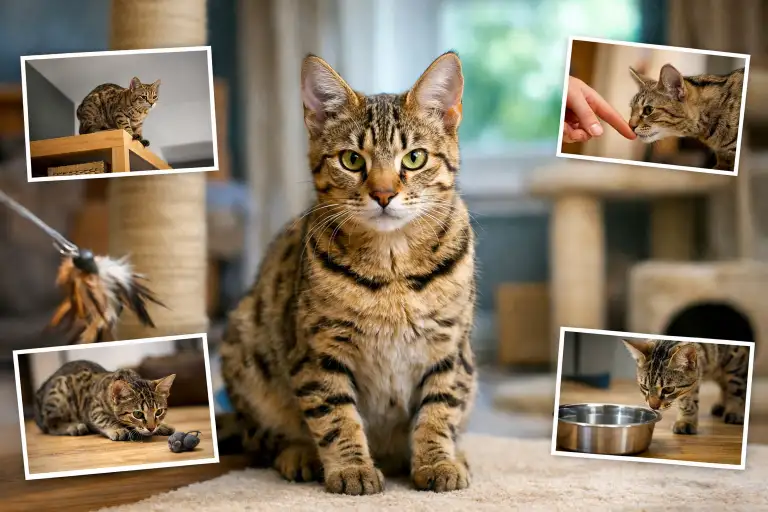
Savannah cats don’t come with a single, fixed personality type. Even within the same litter, two Savannahs can grow into very different adults. Understanding what shapes their behavior helps set realistic expectations and prevents common misinterpretations.
At the foundation is genetics, which influences baseline traits like energy level, curiosity, confidence, and reactivity. Savannah cats descend from both domestic cats and the African serval, but that ancestry doesn’t dictate behavior in a rigid way. It simply sets a range of possibilities, not a guarantee of intensity, boldness, or “wild” tendencies.
Equally important is early social experience. Savannah kittens that are gently exposed to people, sounds, handling, and everyday household routines often grow into cats that are socially confident and adaptable. Those with limited early exposure may be more cautious, observant, or selective in how they interact — which is still a normal personality expression, not a flaw.
The environment a Savannah lives in continues to shape behavior throughout life. Space to move, vertical areas to climb, predictability in daily routines, and the emotional tone of the household all influence how outgoing, relaxed, or vigilant a cat becomes. Savannahs are particularly responsive to environmental feedback; they tend to notice changes quickly and adjust their behavior accordingly.
Finally, human interaction style plays a major role. Savannah cats often mirror the energy, consistency, and boundaries of the people they live with. Calm, respectful interaction tends to produce confident and communicative cats, while unpredictable or overly intrusive interaction can lead to withdrawal or overstimulation — not because the cat is difficult, but because they are highly perceptive.
To summarize how these influences work together, this table offers a quick reference without oversimplifying the process:
| Influence Factor | How It Commonly Shows Up in Behavior |
|---|---|
| Genetics | Baseline energy, curiosity, confidence range |
| Early socialization | Comfort with people, novelty, handling |
| Living environment | Exploration level, stress tolerance, adaptability |
| Human interaction style | Attachment patterns, communication intensity |
The key takeaway is that Savannah personality is context-shaped, not predetermined. When behavior is viewed through this lens, traits make more sense — and owners are better able to appreciate the individuality of the cat in front of them, rather than measuring them against a stereotype.
Core Savannah Personality Traits and Temperament
Savannah cats are often described as intense, smart, or highly active, but those words don’t tell the full story. Their personality is best understood as engaged and aware, not extreme or difficult. Many Savannahs simply notice more, think more, and respond more clearly than quieter cats.
One common trait is curiosity. Savannah cats like to explore their space and understand what is happening around them. They may watch closely, follow people from room to room, or investigate new objects. This doesn’t mean they need constant attention. It means they like to stay informed.
Another strong trait is intelligence. Savannah cats often learn patterns quickly, such as daily routines or where things are kept. Some cats show this by opening doors or solving simple problems. Others show it by carefully watching before acting. Both are signs of awareness, not mischief.
Many Savannah cats show social interest without clinginess. Some enjoy sitting on laps, but many prefer to stay close instead, like lying nearby or choosing the same room as their person. This is still affection. It just looks different from what people expect.
Independence is also part of their temperament. Savannah cats are usually comfortable spending time on their own, especially if their environment feels safe and interesting. Independence does not mean they don’t bond. It means they balance closeness with personal space.
Some Savannah cats are also sensitive. They may react to changes in tone, routine, or energy in the home. This sensitivity often shows as awareness rather than fear. These cats tend to do best with calm, steady interaction.
This table gives a quick look at common Savannah traits and how they often appear in daily life:
| Personality Trait | How It Commonly Appears |
|---|---|
| Curiosity | Watching, exploring, following movement |
| Intelligence | Learning routines, problem-solving |
| Social interest | Staying nearby, checking in often |
| Independence | Comfort being alone for short periods |
| Sensitivity | Strong response to mood or changes |
It’s important to remember that not every Savannah cat shows all of these traits, and the strength of each trait can change with age or environment. A quieter Savannah is still a Savannah. Personality is about range, not rules.
Savannah Cat Behavior: Communication, Social Life, and Daily Interaction
Savannah cats communicate clearly, but not always loudly. Many of their signals are quiet and easy to miss if you don’t know what to look for. Learning how they communicate helps owners understand their needs and moods better.
Body language is one of the main ways Savannah cats communicate. A relaxed body, upright tail, and soft eyes usually mean the cat feels safe and comfortable. A stiff body, low tail, or ears turned to the side often means the cat needs space. These signals are not bad behavior. They are polite ways of setting boundaries.
Vocal sounds also matter. Savannah cats may use chirps, trills, or short calls instead of long meows. These sounds often mean greeting, excitement, or interest. Silence can also be communication. A quiet Savannah may simply be calm and focused, not unhappy.
In daily life, Savannah cats often show social interest in simple ways. Many like to follow people, sit nearby, or watch what is happening. This is how they stay connected. Some cats enjoy physical contact, while others prefer closeness without touching. Both styles show bonding.
Savannah cats can also be selective with other animals. Some enjoy the company of other cats or pets, while others prefer their own space. Their reactions depend more on personality and past experience than on breed.
This table helps explain common Savannah behaviors and what they usually mean:
| Behavior | What It Often Communicates |
|---|---|
| Following you | Interest, connection, curiosity |
| Chirping or trilling | Greeting, excitement |
| Sitting nearby | Comfort and trust |
| Avoiding touch | Need for space, not rejection |
Understanding these signals helps prevent confusion. When owners listen to how Savannah cats communicate, daily life becomes calmer and more predictable for both sides.
Play, Hunting Instincts, and Natural Behaviors in Savannah Cats
Savannah cats are very active and alert. This comes from strong natural instincts, not from bad behavior. Many actions that worry owners are simply normal ways a cat moves, plays, and explores.
Play is often intense. Savannah cats like to chase, jump, and pounce. They may run fast, leap high, or focus deeply on moving objects. This kind of play looks serious, but it is usually friendly and controlled. It helps them use their energy and stay mentally engaged.
Hunting instincts also show up during play. Savannah cats may stalk toys, watch shadows, or chase hands and feet if movement surprises them. This does not mean they are aggressive. It means their brain is wired to react to motion. Play behavior becomes clearer when owners understand this instinct.
Many Savannah cats love climbing and high places. They feel safer and more confident when they can see their space from above. Jumping onto shelves, furniture, or ledges is a normal way for them to explore and relax.
Some Savannah cats also show interest in water. They may watch running water, dip a paw into a bowl, or follow people into the bathroom. This curiosity is normal and often linked to exploration, not play alone.
This table helps separate normal behaviors from common misunderstandings:
| Behavior | Often Misunderstood As | What It Really Is |
|---|---|---|
| Fast, rough play | Aggression | High-energy play |
| Chasing movement | Dominance | Natural hunting response |
| Jumping and climbing | Hyperactivity | Normal exploration |
| Water curiosity | Strange behavior | Curiosity and focus |
When these behaviors are seen as natural, Savannah cats make more sense. They are not trying to cause trouble. They are expressing instincts that are part of who they are.
Commonly Misunderstood Savannah Behaviors and How They Change Over Time
Many Savannah cat behaviors are misunderstood because they look different from what people expect. These cats are often more alert and expressive, which can make normal actions seem unusual.
One common misunderstanding is thinking Savannah cats are aggressive. Strong play, fast movement, or focused staring can look intense, but these are usually signs of energy and attention, not anger. Real aggression is rare and looks very different, such as constant fear or loss of control.
Another misunderstanding is believing Savannah cats are not affectionate. Some Savannahs do not enjoy being held, but they often show love by staying close, following their people, or choosing the same room. Affection does not always mean cuddling.
Savannah behavior also changes with age, just like in other cats. Kittens are usually very active and curious. Young cats may test limits and explore more. Adult Savannah cats often become calmer, more focused, and more selective with their energy. Older cats usually enjoy routine and quiet comfort.
Changes over time are normal and expected. A calmer cat is not unhappy, and an energetic young cat is not out of control. Behavior shifts often show growth and confidence.
This table shows how Savannah behavior often changes as cats grow:
| Life Stage | Common Behavior Patterns |
|---|---|
| Kitten | High energy, constant curiosity |
| Young cat | Bold exploring, learning limits |
| Adult | Balanced energy, strong bonding |
| Mature | Calm routines, steady habits |
When owners understand these changes, they worry less and enjoy each stage more. Savannah cats are not difficult. They are simply expressive, aware, and shaped by time and experience.
For readers who want to learn more about general feline behavior and communication, the guides from International Cat Care offer clear, science-based explanations that help owners better understand what their cats are trying to express.

Ata Ur Rehman is the founder of Pet Age in Human Years Calculator, an educational platform that provides age conversion charts and lifespan guides for dogs, cats, birds, and other companion animals. His work focuses on helping pet owners understand how animal ages translate into human years using commonly accepted age conversion formulas and published lifespan averages.
The website compiles breed and species lifespan data from kennel clubs, breed organizations, and general animal lifespan studies to present simple and easy-to-understand guides for pet owners worldwide.
This website was created to centralize animal age conversion charts into one easy reference platform for pet owners.