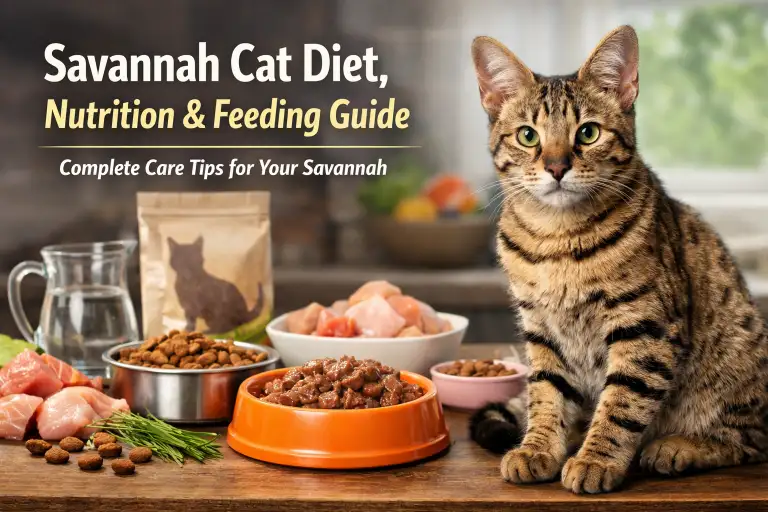
Savannah cats are domestic cats, but their typically high activity levels and lean, muscular build mean their nutrition deserves a bit of extra thought. A well-planned diet supports steady energy, healthy muscle maintenance, good digestion, and long-term wellbeing—without drifting into myths about “wild” or extreme feeding.
At their core, Savannah cats share the same biological requirements as all domestic cats. They are obligate carnivores, which means their bodies are designed to get essential nutrients primarily from animal-based foods. This doesn’t mean their diet must be exotic or complicated, but it does mean certain nutrients matter more than others.
What really matters in a Savannah cat’s diet
Savannah cats tend to thrive on diets that prioritize:
- High-quality animal protein for muscle maintenance and daily activity
- Adequate fat as a concentrated energy source
- Essential amino acids, especially taurine
- Sufficient moisture to support hydration and urinary health
- Controlled calories to prevent gradual weight gain in indoor settings
Carbohydrates are not nutritionally essential for cats, but small amounts can be used safely in complete and balanced commercial foods. The key is that carbs should not displace animal protein as the main ingredient.
Protein quality over protein hype
Savannah cats are often described as “high-protein cats,” but protein quality is more important than extreme protein percentages. Named animal sources (such as poultry, fish, or meat meals) provide the amino acids cats are biologically adapted to use. Simply feeding more protein than needed does not automatically improve health and can increase calorie intake if portions are not adjusted.
The role of fat and energy balance
Dietary fat provides energy, supports nutrient absorption, and improves food palatability. Active Savannah cats may utilize dietary fat efficiently, but excess calories—whether from fat or protein—can still lead to unwanted weight gain, especially after spaying or neutering.
Why moisture is a big deal
Many Savannah cats, like other cats, have a naturally low thirst drive. Diets that include moisture (such as wet food or mixed feeding) help support hydration and may benefit urinary and kidney health over time. This is especially relevant for cats that eat mostly dry food.
Core nutritional priorities at a glance
| Nutrient / Factor | Why It Matters | Practical Owner Takeaway |
|---|---|---|
| Animal protein | Supports muscle, energy, and essential amino acids | Look for named meat or fish sources |
| Dietary fat | Provides energy and flavor | Avoid ultra–low-fat diets |
| Taurine | Essential for heart, vision, digestion | Must come from animal ingredients |
| Carbohydrates | Non-essential but usable | Should not dominate the formula |
| Moisture | Supports hydration and urinary health | Wet or mixed feeding helps |
Understanding these fundamentals makes it much easier to evaluate food options, set feeding routines, and avoid common diet mistakes.
Best Food Choices for Savannah Cats (Wet, Dry, or Mixed Diets)
Choosing the right food for a Savannah cat does not need to be confusing. The goal is simple: provide a complete and balanced diet that gives enough protein, energy, and moisture for daily health and activity.
Most Savannah cats do well on commercial cat foods that meet recognized nutrition standards. These foods are made to support a cat’s basic needs when fed in the right amounts.
Wet food for Savannah cats
Wet food has a high water content and means your cat gets extra moisture with every meal. This can be helpful because many cats do not drink much water on their own.
Wet food is often:
- Higher in animal protein
- Easier to chew
- More filling because of moisture
The downside is that it usually costs more and must be stored properly once opened.
Dry food for Savannah cats
Dry food is easy to store and simple to measure. Many owners choose it because it is convenient and affordable.
Dry food can:
- Work well when portions are controlled
- Be left out for short periods without spoiling
However, dry food contains much less water, so cats eating mostly dry food should always have fresh water available.
Mixed feeding: a common choice
Many Savannah cat owners use a mixed feeding approach, offering both wet and dry food. This gives the benefits of moisture from wet food and the convenience of dry food.
Mixed feeding can:
- Improve hydration
- Add variety to meals
- Make portion control easier when planned carefully
Comparing food types at a glance
| Food Type | Main Benefits | Possible Limits | Best Fit For |
|---|---|---|---|
| Wet food | High moisture, strong smell | Higher cost, storage needs | Cats needing more hydration |
| Dry food | Easy to use, budget friendly | Low moisture | Busy households |
| Mixed feeding | Balanced and flexible | Needs planning | Most Savannah cats |
What to look for on cat food labels
When choosing any food, look for:
- A statement that the food is “complete and balanced”
- Named animal ingredients listed first
- Clear feeding instructions
Avoid choosing food only because it sounds “wild” or “exotic.” Savannah cats are domestic cats and do best on diets made for cats, not specialty or extreme feeding plans.
How Much and How Often to Feed a Savannah Cat
Feeding the right amount of food is just as important as choosing the right food. Even high-quality food can cause problems if a Savannah cat eats too much or too little.
Savannah cats are often active and playful, but their calorie needs still depend on age, size, and daily activity.
How often should you feed a Savannah cat?
Most Savannah cats do best with scheduled meals instead of food being available all day.
Common feeding patterns include:
- Two meals per day for most adult cats
- Three smaller meals for very active cats or kittens
- Measured meals instead of free-feeding
Scheduled feeding helps:
- Prevent overeating
- Make weight changes easier to notice
- Support healthy digestion
How much food is enough?
There is no single amount that fits every Savannah cat. Food needs change based on:
- Body size and build
- Activity level
- Indoor or outdoor lifestyle
- Whether the cat is spayed or neutered
Always start with the feeding guide on the food package, then adjust slowly based on your cat’s body condition and energy level.
Activity level and feeding rhythm
| Activity Level | Meals Per Day | Helpful Notes |
|---|---|---|
| Very active | 2–3 meals | Supports steady energy |
| Moderately active | 2 meals | Works for most adult cats |
| Low activity | Measured meals | Avoid free-feeding |
Signs your cat may be overfed
Watch for:
- Weight gain over time
- Less interest in play
- Leaving food unfinished
Signs your cat may be underfed
Watch for:
- Visible ribs or hip bones
- Constant hunger or begging
- Low energy
Any sudden or strong change in weight or appetite should be discussed with a veterinarian.
Feeding Savannah Cats by Life Stage and Lifestyle
A Savannah cat’s diet should change as they grow and as their daily life changes. Feeding the same way at every age can lead to health and weight problems over time.
Feeding Savannah kittens
Savannah kittens grow fast and use a lot of energy. They need food that supports growth and muscle development.
Kittens usually need:
- Food made for kittens
- More calories than adult cats
- Smaller meals given more often
Most kittens eat three meals a day until they are closer to adulthood.
Feeding adult Savannah cats
Adult Savannah cats need a balanced diet that helps maintain muscle and energy without adding extra weight.
Adult feeding tips:
- Use adult cat food, not kitten food
- Feed measured meals
- Watch body shape, not just the scale
Feeding senior Savannah cats
As Savannah cats age, they may become less active and may digest food more slowly.
Senior cats may benefit from:
- Easily digestible food
- Slightly smaller portions
- Close monitoring of appetite and weight
Any major appetite or weight change in older cats should be checked by a veterinarian.
Spayed or neutered Savannah cats
After spaying or neutering, many cats need fewer calories. Appetite may increase even though energy needs go down.
Helpful steps include:
- Reducing portion sizes slowly
- Avoiding extra treats
- Watching for gradual weight gain
Lifestyle differences that matter
Indoor cats often burn fewer calories than cats that go outdoors or have large play areas. Feeding amounts should match how active your Savannah cat is each day.
Feeding needs by life stage at a glance
| Life Stage | Main Focus | Feeding Notes |
|---|---|---|
| Kitten | Growth and energy | More meals, kitten food |
| Adult | Maintenance | Portion control |
| Senior | Digestion and appetite | Monitor closely |
| Spayed/Neutered | Lower calories | Adjust portions |
Treats, Hydration, and Common Feeding Mistakes to Avoid
The main meals are the most important part of a Savannah cat’s diet, but treats, water, and daily habits also play a big role in long-term health.
Treats: how much is too much?
Treats should be a small bonus, not a main food source.
Good treat rules:
- Treats should make up less than 10% of daily food
- Use treats for training or bonding, not boredom
- Choose cat-specific treats when possible
Too many treats can quickly lead to weight gain, even in active Savannah cats.
Human foods to avoid
Some human foods can be unsafe for cats. Avoid feeding:
- Onions and garlic
- Chocolate
- Grapes and raisins
- Spicy or salty foods
Even small amounts can cause problems, so it’s best to keep human food off the menu.
Why water matters so much
Cats often do not drink enough water on their own. This makes hydration very important.
Ways to support water intake:
- Offer fresh water daily
- Use wide, clean bowls
- Add wet food to meals
- Place water bowls away from litter boxes
Good hydration helps support kidney and urinary health over time.
Common feeding mistakes Savannah cat owners make
| Mistake | Why It Happens | Better Choice |
|---|---|---|
| Overfeeding | Large size or high activity | Measure meals |
| Too many treats | Training or affection | Limit treats |
| Dry food only | Convenience | Add wet food |
| Ignoring weight changes | Changes happen slowly | Check body shape |
When to talk to a veterinarian
If you notice sudden changes in:
- Appetite
- Weight
- Energy level
It’s important to get professional advice. This guide is for general education, not medical care.
For more general guidance on how complete and balanced cat foods are formulated and regulated, you can visit the Association of American Feed Control Officials (AAFCO), which sets widely used nutritional standards for commercial pet foods.

Ata Ur Rehman is the founder of Pet Age in Human Years Calculator, an educational platform that provides age conversion charts and lifespan guides for dogs, cats, birds, and other companion animals. His work focuses on helping pet owners understand how animal ages translate into human years using commonly accepted age conversion formulas and published lifespan averages.
The website compiles breed and species lifespan data from kennel clubs, breed organizations, and general animal lifespan studies to present simple and easy-to-understand guides for pet owners worldwide.
This website was created to centralize animal age conversion charts into one easy reference platform for pet owners.