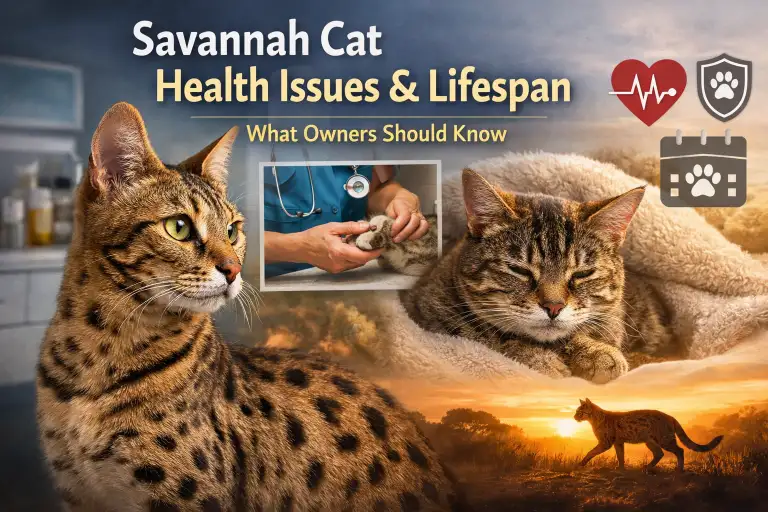
Savannah cats are often described as athletic, intelligent, and long-lived, but their lifespan is best understood as a range rather than a promise. Most healthy, well-cared-for Savannah cats live between 12 and 20 years, with many falling comfortably in the middle of that span. Individual outcomes vary based on genetics, lifestyle, preventive care, and everyday management.
Like other cats, Savannahs benefit greatly from an indoor lifestyle, consistent routines, and early attention to subtle health changes. Their active nature doesn’t mean they age faster or slower by default—it simply means their needs can look a little different at each life stage.
To give a quick, skimmable overview, the table below shows how lifespan expectations are typically discussed at a high level.
| Savannah Cat Lifestyle | Typical Lifespan Range | General Context |
|---|---|---|
| Indoor-only Savannah | 15–20 years | Lower exposure to hazards, parasites, and trauma |
| Indoor/Outdoor Savannah | 12–16 years | Increased environmental risks and stressors |
| Outdoor-only Savannah | Often shorter | Higher risk from accidents, illness, and predators |
| Domestic cats (general) | 12–18 years | Used as a broad comparison point |
It’s also common for owners to wonder whether a Savannah’s generation (often labeled F1 through F5+) determines lifespan. While early-generation Savannahs may have different temperaments or care considerations, generation alone does not reliably predict longevity. Long-term health is far more closely tied to nutrition, preventive veterinary care, dental health, weight management, and a stable, enriching environment.
Rather than focusing on a specific number of years, most veterinarians encourage owners to think in terms of healthy years lived. With attentive care and regular wellness monitoring, many Savannah cats remain active, engaged, and comfortable well into their senior years.
Factors That Affect a Savannah Cat’s Health and Longevity
A Savannah cat’s health and lifespan are shaped by many small, everyday factors. No single thing decides how long a cat will live. Instead, it’s the overall pattern of care, environment, and lifestyle that matters most.
Here are the main factors that influence a Savannah cat’s long-term health, explained in simple terms.
| Factor | Why It Matters | What Owners Can Notice or Support |
|---|---|---|
| Genetics | Every cat is born with different strengths and limits | Keeps health expectations realistic |
| Diet quality | Food affects energy, weight, and organs over time | Steady weight, good appetite, shiny coat |
| Activity and play | Savannahs are very active cats | Regular play, climbing, and exploration |
| Stress and routine | Sudden changes can affect health | Calm behavior and stable daily habits |
| Living environment | Indoor cats face fewer dangers | Fewer injuries and illnesses |
| Preventive vet care | Small problems are found earlier | Routine checkups and dental visits |
Many Savannah cats come from different generations, often labeled F1 through F5 and beyond. These labels describe how closely related a Savannah is to its wild ancestor, but they do not decide how long a cat will live. Daily care and long-term habits play a much bigger role than generation alone.
Because Savannah cats are energetic and curious, they often need more mental and physical activity than some other cats. Boredom or stress can sometimes show up as behavior changes, appetite changes, or weight issues. Keeping their environment interesting helps support both mental and physical health.
Another important factor is preventive care. Regular veterinary visits, dental checks, parasite prevention, and weight monitoring help catch small issues before they become bigger ones. This doesn’t mean something is wrong—it’s simply part of long-term wellness.
Common Savannah Cat Health Issues to Be Aware Of
Savannah cats are generally strong and active, but like all cats, they can have health issues at different stages of life. Knowing what problems can happen helps owners notice changes early, without assuming something is wrong.
The health concerns below are shared at a high level. They are meant for awareness, not diagnosis.
| Health Area | What This Means | When It’s More Common |
|---|---|---|
| Digestive health | Some Savannah cats have sensitive stomachs | Any age |
| Dental health | Teeth and gums can slowly develop problems | Adult and senior years |
| Joint and mobility | Active cats can develop stiffness over time | Middle age and older |
| Heart health | Some heart conditions are seen in cats | Often detected during routine exams |
| Parasites | Fleas, worms, and ticks affect many cats | All ages, especially outdoors |
| Weight balance | Too much or too little weight affects health | Adult years |
Digestive sensitivity can show up as changes in appetite, loose stools, or food pickiness. This doesn’t always mean illness, but it’s something owners often notice first.
Dental health is another common issue. Cats are very good at hiding mouth pain, so dental disease can progress quietly. Bad breath, drooling, or trouble chewing may appear later, which is why routine dental checks are important.
Savannah cats are known for jumping, running, and climbing. Over time, some may develop joint stiffness, especially as they age. Small changes in movement can be easy to miss if they happen slowly.
Heart conditions in cats are usually found during regular veterinary exams, not at home. Many cats show no clear signs early on, which is why checkups matter even when a cat seems healthy.
Parasites and weight-related issues are often preventable. Indoor living, parasite prevention, and steady feeding routines all help lower risk.
Preventive Care and Early Signs Savannah Owners Should Watch For
Preventive care means helping your cat stay healthy before problems start. This is one of the most important parts of helping a Savannah cat live a long and comfortable life.
Many health issues are easier to manage when they are noticed early. Savannah cats are very good at hiding discomfort, so small changes can matter.
Here are key parts of preventive care that support long-term health:
- Regular veterinary checkups, even when your cat seems fine
- Dental checkups to protect teeth and gums
- Keeping a healthy body weight
- Parasite prevention, especially for cats that go outside
- Daily play and mental stimulation
- A calm and predictable home routine
Owners are often the first to notice early changes. These changes do not mean a cat is sick, but they are worth paying attention to.
| Change You May Notice | What It Can Mean | Why It Matters |
|---|---|---|
| Eating more or less than usual | Appetite change | Can be an early health signal |
| Drinking more water | Body changes | Often noticed before illness |
| Litter box changes | Urine or stool changes | Easy early sign to spot |
| Lower energy or hiding | Behavior change | Cats often hide discomfort |
| Less jumping or playing | Movement change | May appear slowly over time |
| Poor coat or less grooming | Comfort or health change | Cats groom less when not feeling well |
It’s important to look at patterns, not one bad day. A single skipped meal or lazy afternoon is normal. Changes that last several days or keep returning are more important to notice.
Preventive care does not mean assuming the worst. It means working as a team with your veterinarian to support your cat’s health over time.
Aging, Quality of Life, and Long-Term Care for Savannah Cats
As Savannah cats grow older, their needs slowly change. Aging is normal, and it does not always mean illness. Many Savannah cats stay playful and alert well into their senior years, especially with good daily care.
Because Savannah cats are very active when young, aging changes can feel more noticeable over time. These changes usually happen little by little, not all at once.
Here are common age-related changes owners may notice:
| Area | Possible Changes | What Owners Can Do |
|---|---|---|
| Energy level | Less running and jumping | Offer gentle play and rest time |
| Movement | Stiffer joints or slower climbs | Add steps, ramps, or soft bedding |
| Appetite | Eating a bit less or slower | Keep feeding times calm and steady |
| Weight | Easier weight gain or loss | Monitor body shape regularly |
| Senses | Hearing or vision changes | Keep furniture and routines familiar |
| Grooming | Less self-cleaning | Help with gentle brushing |
Quality of life is about comfort, safety, and happiness. Simple things make a big difference, such as:
- Soft, warm sleeping spots
- Easy access to food, water, and litter boxes
- Regular but gentle play
- Quiet spaces to rest
- Keeping daily routines the same
Senior cats often benefit from more frequent wellness visits, even if they seem fine. These visits help track changes over time and support comfort as cats age.
The goal is not to stop aging, but to help your Savannah cat age comfortably and confidently. Many older cats enjoy strong bonds with their owners and continue to live happy, relaxed lives.
For more general information about feline health and preventive care, you can visit the American Association of Feline Practitioners (AAFP), a trusted veterinary organization focused on cats.

Ata Ur Rehman is the founder of Pet Age in Human Years Calculator, an educational platform that provides age conversion charts and lifespan guides for dogs, cats, birds, and other companion animals. His work focuses on helping pet owners understand how animal ages translate into human years using commonly accepted age conversion formulas and published lifespan averages.
The website compiles breed and species lifespan data from kennel clubs, breed organizations, and general animal lifespan studies to present simple and easy-to-understand guides for pet owners worldwide.
This website was created to centralize animal age conversion charts into one easy reference platform for pet owners.