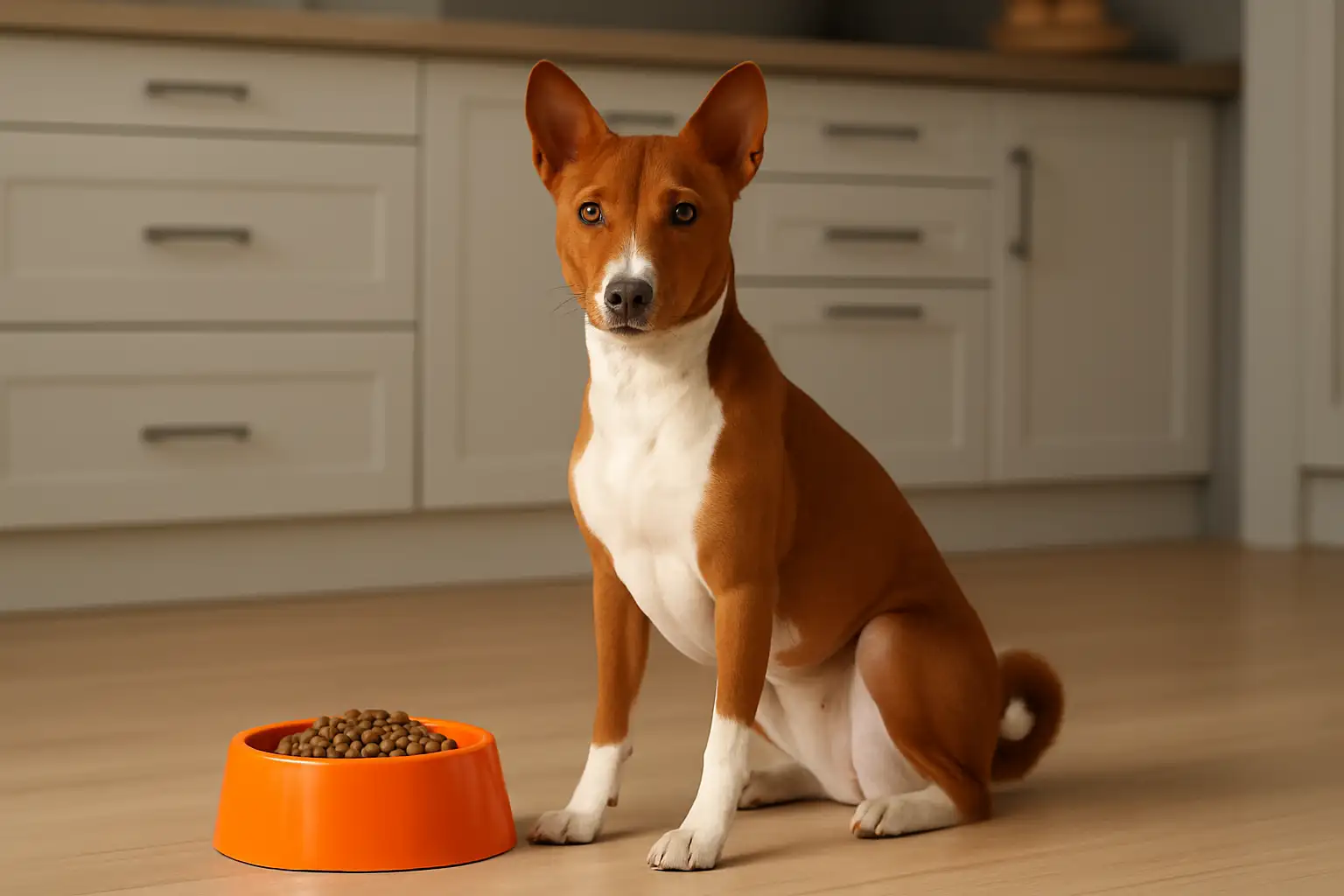
A healthy Basenji diet should support this breed’s lean body, active lifestyle, sensitive digestion, and steady energy needs. Basenjis are athletic, intelligent dogs with a naturally slim build, so their food should provide quality protein, healthy fats, digestible carbohydrates, and the right balance of vitamins and minerals.
Knowing how much to feed a Basenji is just as important as choosing the right food. Too little food can lead to low energy and poor muscle condition, while overfeeding can quickly cause weight gain. The right feeding plan depends on your Basenji’s age, weight, activity level, body condition, and life stage.
This guide explains the best food for Basenjis, daily feeding amounts, puppy and senior nutrition, safe foods, feeding schedules, and common diet mistakes. If you also want to understand the breed’s background, temperament, and care needs, read our Basenji Dog Breed Guide. You can also use the Basenji Age Calculator to better understand your dog’s age stage before adjusting their feeding routine.
Why Proper Nutrition Matters for Basenjis
Proper nutrition matters because Basenjis are naturally lean, energetic, and muscular dogs. They were originally bred for hunting, which means they often have quick bursts of energy and need food that supports stamina, muscle maintenance, digestion, and healthy weight control.
A balanced Basenji diet helps maintain a visible waistline, strong muscles, healthy skin, a shiny coat, and stable energy throughout the day. High-quality protein supports muscle repair, healthy fats support coat and brain health, and digestible carbohydrates provide steady fuel without unnecessary fillers.
Food also affects behavior and comfort. A Basenji that is underfed may become restless, overly hungry, or harder to focus during training. A Basenji that is overfed may gain weight, lose stamina, and place extra pressure on the joints. This is why portion control is one of the most important parts of feeding this breed.
The goal is simple: feed enough to support energy and muscle, but not so much that your Basenji loses their naturally athletic shape.
Understanding Basenji Nutrition
The best Basenji food should be complete, balanced, and easy to digest. Most healthy Basenjis do well on a diet built around quality animal protein, moderate fat, controlled calories, and simple carbohydrate sources such as rice, oats, barley, lentils, or sweet potato.
Because some Basenjis can have sensitive stomachs, it is better to choose foods with clear ingredients and avoid formulas that rely heavily on low-quality fillers, artificial additives, or sudden ingredient changes.
Macronutrients
Macronutrients are the main nutrients your Basenji gets from food: protein, fat, and carbohydrates. Getting this balance right helps support energy, digestion, lean muscle, and healthy body condition.
Protein:
Basenjis are athletic dogs, so protein should be a major part of their diet. For most adults, look for food with around 25–30% protein. Puppies may need higher protein levels, usually around 28–32%, to support growth. Good protein sources include chicken, turkey, lamb, beef, fish, duck, and other named meat ingredients.
Fats:
Healthy fats provide energy and help support skin, coat, brain function, and overall health. Many adult Basenjis do well with food containing around 12–18% fat. Active Basenjis may need slightly more, while overweight or senior Basenjis may need lower-fat formulas.
Carbohydrates:
Carbohydrates can provide steady energy and support digestion when they come from quality sources. Good options include rice, oats, barley, sweet potatoes, pumpkin, peas, and lentils. The goal is not to overload the diet with carbs, but to use digestible ingredients that help keep energy stable.
Micronutrients
Micronutrients are vitamins and minerals that support immunity, bones, skin, coat, metabolism, and healthy growth. A good Basenji dog food should be labeled as complete and balanced for your dog’s life stage, whether puppy, adult, or senior.
Important nutrients include calcium, phosphorus, zinc, magnesium, vitamin A, vitamin E, B vitamins, and essential fatty acids. Puppies especially need the right mineral balance because improper calcium and phosphorus levels can affect healthy bone development.
Supplements
Supplements may help some Basenjis, but they should not replace a complete and balanced diet. They are most useful when your dog has a specific need, such as sensitive digestion, aging joints, dry skin, or stool-quality issues.
- Omega-3 fatty acids for skin, coat, joint, and brain support
- Probiotics for digestion and sensitive stomach support
- Glucosamine and chondroitin for aging joints and mobility
- Fiber supplements for stool quality and digestive regularity
Always speak with your veterinarian before adding supplements, especially if your Basenji has allergies, digestive issues, kidney concerns, or any long-term medical condition.
How Much to Feed a Basenji
Most adult Basenjis need around 1 to 1.5 cups of dry dog food per day, divided into two meals. However, the exact amount depends on your dog’s weight, age, activity level, metabolism, and the calorie density of the food.
As a general rule, an adult Basenji may need around 600–800 calories per day. Smaller, less active Basenjis may need less, while highly active dogs may need more. Always check your dog’s body condition and adjust portions gradually.
Daily Calorie Needs by Weight
Use this Basenji feeding chart as a starting point. These are estimated daily calories, not fixed rules.
| Basenji Weight | Low Activity | Normal Activity | High Activity |
|---|---|---|---|
| 18 lbs (8 kg) | 450–550 kcal/day | 550–650 kcal/day | 650–750 kcal/day |
| 20 lbs (9 kg) | 500–600 kcal/day | 600–700 kcal/day | 700–825 kcal/day |
| 22 lbs (10 kg) | 525–650 kcal/day | 650–775 kcal/day | 775–900 kcal/day |
| 24 lbs (11 kg) | 550–675 kcal/day | 675–825 kcal/day | 825–950 kcal/day |
These numbers are only a starting point. Your Basenji’s body condition is more important than the feeding chart alone.
Using Body Condition Score
A healthy Basenji should look lean and athletic, not bulky or underweight. Use these signs to check whether your dog is eating the right amount:
- A visible waistline when viewed from above
- Ribs that can be felt easily without pressing hard
- A slim, tucked-up outline from the side
- Good energy without constant hunger or sluggishness
If the ribs feel too sharp, increase portions slightly. If the waistline disappears or your Basenji starts gaining weight, reduce calories slowly and increase activity where appropriate.
Basenji Feeding Frequency
Basenjis usually do best with scheduled meals instead of free-feeding. Structured meals help with digestion, appetite control, and weight management.
- Basenji puppies: 3 meals per day
- Adult Basenjis: 2 meals per day
- Senior Basenjis: 2 smaller meals, or 3 smaller meals if digestion is slower
Smaller, consistent meals are usually better than one large meal, especially for Basenjis with sensitive stomachs or fast energy changes during the day.
If your Basenji is moving from puppy, adult, or senior stage, use the Basenji Age Calculator to better understand their age stage before adjusting feeding amounts.
Basenji Feeding by Life Stage
A Basenji’s diet should change as they move from puppyhood to adulthood and then into their senior years. Puppies need more calories and nutrients for growth, adults need balanced food for lean muscle and daily energy, and seniors often need fewer calories with extra support for digestion, joints, and healthy weight.
Because feeding needs change with age, it helps to understand your dog’s current life stage before adjusting portions. You can use the Basenji Age Calculator to compare your Basenji’s age with human years and plan feeding changes more confidently.
Basenji Puppy Food and Nutrition
Basenji puppies need nutrient-dense puppy food because they are growing muscle, bones, brain tissue, and immune strength at the same time. The best food for a Basenji puppy should be complete and balanced for growth, easy to digest, and made with quality protein as one of the main ingredients.
Most Basenji puppies do well with:
- 28–32% protein to support growth and muscle development
- 14–20% fat for energy, brain development, and coat health
- 3 meals per day to support steady energy and avoid long gaps between meals
- Small, measured portions to prevent digestive upset and overfeeding
Avoid switching puppy food suddenly. If you change your Basenji puppy’s diet, transition slowly over several days so their stomach can adjust.
Adult Basenji Diet
An adult Basenji diet should maintain lean muscle, stable energy, and a healthy body condition. Adult Basenjis are active dogs, but they can still gain weight if portions are too large or treats are not controlled.
Most adult Basenjis do well with:
- 25–30% protein for muscle maintenance
- 12–18% fat for daily energy and coat support
- 2 meals per day instead of free-feeding
- Measured portions based on weight, activity level, and body condition
The best dog food for an adult Basenji is usually a balanced formula with named animal protein, moderate fat, and digestible ingredients. If your Basenji is highly active, they may need slightly more calories. If they are less active or gaining weight, they may need smaller portions or a lower-calorie formula.
Senior Basenji Food and Nutrition
Senior Basenjis may become less active as their metabolism slows. Their food should help maintain muscle while controlling calories, supporting digestion, and protecting joint comfort.
Older Basenjis often benefit from:
- Moderate protein to help preserve muscle
- Lower fat if weight gain becomes a problem
- Omega-3 fatty acids for skin, coat, brain, and joint support
- Glucosamine and chondroitin for mobility support when appropriate
- 2 smaller meals, or 3 smaller meals if digestion becomes sensitive
A senior Basenji should not be placed on a very low-protein diet unless a veterinarian recommends it for a specific medical reason. The goal is usually to keep calories controlled while still protecting lean muscle.
Basenji Feeding Summary by Life Stage
| Life Stage | Meals Per Day | Protein Range | Fat Range | Main Feeding Goal |
|---|---|---|---|---|
| Puppy | 3 meals | 28–32% | 14–20% | Support growth, energy, and development |
| Adult | 2 meals | 25–30% | 12–18% | Maintain lean muscle and stable energy |
| Senior | 2–3 smaller meals | Moderate protein | Often lower fat | Support healthy weight, joints, and digestion |
Feeding by life stage helps prevent common problems such as weight gain, low energy, poor stool quality, and age-related muscle loss.
Feeding a Basenji by Size and Weight
Basenjis are usually small-to-medium dogs, but their ideal feeding amount still depends on body size, weight, and activity level. A smaller Basenji may need fewer total calories, while a very active or larger Basenji may need more food to maintain healthy energy and muscle.
Use weight as a starting point, then adjust based on your dog’s waistline, ribs, energy, stool quality, and activity level.
Small Basenjis Under 20 lbs
Smaller Basenjis often need carefully measured meals because even small calorie changes can affect their weight. They may do best with nutrient-dense food, smaller kibble pieces, and consistent feeding times.
- Use measured portions instead of guessing
- Choose digestible food with quality protein
- Monitor ribs and waistline to avoid underfeeding or overfeeding
Standard Basenjis 20–26 lbs
This is the most common adult Basenji weight range. Most standard Basenjis need balanced dog food, two structured meals per day, and portion adjustments based on exercise.
- Feed balanced adult dog food with moderate fat
- Adjust calories for running, hiking, play, or dog sports
- Keep treats under control to prevent slow weight gain
Larger or Overweight Basenjis
A Basenji above 26–27 lbs may still be healthy if they are muscular and lean, but extra weight should be watched carefully. If the waistline disappears or ribs become hard to feel, reduce calories gradually and focus on measured meals.
- Use controlled portions instead of free-feeding
- Choose lower-fat or weight-management food if needed
- Use low-calorie treats and avoid frequent table scraps
- Track weight and body shape every few weeks
For age-related weight changes, compare your dog’s current age stage with the Basenji Age Chart so you can better understand whether feeding adjustments may be linked to puppy growth, adulthood, or senior aging.
Basenji Feeding by Size Quick Guide
| Basenji Size | Weight Range | Feeding Focus |
|---|---|---|
| Small Basenji | Under 20 lbs | Measured portions, nutrient-dense food, avoid underfeeding |
| Standard Basenji | 20–26 lbs | Balanced diet, two meals daily, adjust for activity |
| Larger / Overweight Basenji | 27+ lbs | Calorie control, lower-fat options, weight monitoring |
Feeding by size helps keep your Basenji lean, energetic, and satisfied without pushing them into unhealthy weight gain.
Best Types of Food for Basenjis
The best food for a Basenji depends on your dog’s age, digestion, activity level, weight, and personal preference. Some Basenjis do well on high-quality kibble, while others may benefit from wet food, fresh food, or carefully planned homemade meals.
Instead of choosing food based only on trends, focus on whether the food is complete, balanced, digestible, and appropriate for your Basenji’s life stage.
Dry Dog Food for Basenjis
Dry dog food is convenient, easy to measure, and practical for everyday feeding. A good dry Basenji dog food should include named meat protein, moderate fat, and digestible ingredients. It can also help with chewing texture, although dental care should still be handled separately.
Wet Dog Food for Basenjis
Wet food can be helpful for picky Basenjis, seniors, or dogs that need extra moisture in their diet. It is usually softer and more flavorful, but it can be higher in calories depending on the formula, so portions should still be measured.
Fresh Food for Basenjis
Fresh food may be easier for some Basenjis to digest and can be useful for dogs with picky eating habits or sensitive stomachs. The main downside is cost, so it works best when the meals are properly portioned and nutritionally complete.
Freeze-Dried or Air-Dried Food
Freeze-dried and air-dried foods are often rich in protein and highly appealing to dogs. They can work as a full diet if complete and balanced, or as toppers when used carefully. Because they can be calorie-dense, measure portions instead of feeding freely.
Raw Diet for Basenjis
Some owners choose raw feeding, but it requires careful planning and safe handling. A raw Basenji diet must be properly balanced to avoid nutrient gaps, and it may not be suitable for every dog or household. Speak with a veterinarian before using raw food as a long-term diet.
Homemade Basenji Diet
A homemade diet can be useful for some Basenjis with allergies, medical needs, or strong food sensitivities. However, homemade meals must be carefully balanced with the right protein, fat, calcium, vitamins, and minerals. Do not rely on random homemade recipes for long-term feeding.
Comparison of Basenji Dog Food Types
| Food Type | Pros | Cons | Best For |
|---|---|---|---|
| Dry food | Convenient, easy to measure, widely available | Quality varies by formula | Most healthy adult Basenjis |
| Wet food | Moist, flavorful, easier to chew | Can be calorie-dense; needs portion control | Picky eaters, seniors, dogs needing more moisture |
| Fresh food | Often digestible and appealing | Higher cost; must be complete and balanced | Sensitive stomachs or picky Basenjis |
| Freeze-dried / air-dried | Palatable, protein-rich, easy to store | Can be expensive and calorie-dense | Toppers or owners wanting less processed options |
| Raw food | High-protein and minimally processed | Requires safe handling and careful balancing | Experienced owners with veterinary guidance |
| Homemade food | Customizable for specific needs | High risk of nutrient imbalance if not formulated properly | Dogs with allergies or medical diet needs |
For most Basenjis, the best choice is not one specific food type. It is the food that keeps your dog lean, energetic, comfortable, and consistent in digestion.
Foods Basenjis Can and Cannot Eat
Basenjis can eat many healthy human foods in small amounts, but not every food is safe for them. Because some Basenjis have sensitive stomachs, new foods should be introduced slowly and in small portions. Treat human foods as occasional additions, not as the main part of your Basenji’s diet.
Safe Human Foods for Basenjis
These foods are generally safe for Basenjis when served plain, cooked where needed, and given in moderation:
- Lean cooked meats such as chicken, turkey, beef, or lamb
- Cooked fish such as salmon or sardines with bones removed
- Sweet potatoes
- Pumpkin for digestive support
- Carrots and green beans
- Blueberries, bananas, and apple slices without seeds
- Plain yogurt for dogs that tolerate dairy
- Cooked rice or oats for gentle digestion
These foods can work well as small treats, training rewards, or meal toppers. Keep portions small so they do not unbalance your Basenji’s regular food or add too many extra calories.
Toxic or Unsafe Foods for Basenjis
Some foods should never be given to Basenjis because they can cause serious illness, even in small amounts. Keep these foods away from your dog:
- Chocolate
- Grapes and raisins
- Onions and garlic
- Xylitol in sugar-free gum, candy, baked goods, or peanut butter
- Macadamia nuts
- Alcohol
- Caffeinated drinks
- Raw bread dough
- Cooked bones that can splinter
- Heavily seasoned, salty, or fatty table scraps
If your Basenji eats something toxic or you are unsure whether a food is safe, contact your veterinarian immediately.
Basenji Food Allergies and Sensitivities
Some Basenjis may react poorly to certain ingredients. Common triggers can include specific proteins, dairy, wheat, soy, or rich fatty foods. Food sensitivity does not always look the same in every dog, so it is important to watch for patterns after meals.
Possible signs of food allergies or food sensitivity include:
- Itching, redness, or irritated skin
- Excessive paw licking
- Recurring ear irritation
- Soft stools, diarrhea, or gas
- Vomiting after certain foods
- Dull coat or poor skin condition
If your Basenji shows repeated symptoms, do not keep changing foods randomly. A limited-ingredient diet or elimination diet may help, but it should be planned with veterinary guidance so your dog still gets complete nutrition.
Safe vs Unsafe Foods for Basenjis
| Food | Safe for Basenjis? | Feeding Notes |
|---|---|---|
| Cooked chicken, turkey, beef, or lamb | Yes | Serve plain, cooked, and unseasoned |
| Cooked salmon or sardines | Yes | Remove bones and avoid heavy oils or seasoning |
| Sweet potato or pumpkin | Yes | Helpful for digestion when served plain |
| Blueberries or apple slices | Yes | Use as small treats; remove apple seeds |
| Chocolate | No | Toxic and should be avoided completely |
| Grapes or raisins | No | Can be dangerous even in small amounts |
| Onions or garlic | No | Can damage red blood cells |
| Xylitol | No | Extremely dangerous and should never be given |
| Cooked bones | No | Can splinter and cause choking or internal injury |
The safest approach is to keep your Basenji’s main diet complete and balanced, then use safe human foods only as small extras.
Special Diets for Basenjis
Some Basenjis need a more specific diet because of allergies, sensitive digestion, weight gain, high activity, low activity, or senior health changes. A special diet should always solve a real problem. It should not be chosen only because it is popular or trendy.
Basenjis With Allergies or Sensitive Stomachs
If your Basenji often has itching, soft stools, gas, vomiting, or ear irritation, a simpler food formula may help. Many sensitive Basenjis do better with clear ingredients, fewer protein sources, and gentle carbohydrate options.
Helpful diet options may include:
- Limited-ingredient dog food with fewer ingredients
- Novel proteins such as duck, lamb, venison, or salmon
- Gentle carbohydrates such as rice, oats, pumpkin, or sweet potato
- Probiotic support if recommended for digestive health
Introduce any new food slowly. A sudden switch can make stomach symptoms worse, even if the new food is higher quality.
Weight Management Diet for Basenjis
Basenjis are naturally lean dogs, so weight gain should be taken seriously. If your Basenji’s waistline disappears or the ribs become hard to feel, they may be eating too many calories for their activity level.
A weight management plan should focus on:
- Measured meals instead of free-feeding
- Lower-fat food if weight gain continues
- Higher-fiber ingredients to support fullness
- Low-calorie treats
- Fewer table scraps and fewer calorie-dense toppers
- Regular weight and body-condition checks
Do not cut food aggressively. Gradual portion adjustments are safer and easier to maintain.
Diet for High-Energy Basenjis
Very active Basenjis that run, hike, train, or play intensely may need more calories than less active dogs. These dogs often do better with food that supports lean muscle and steady energy.
- Higher daily calories when activity increases
- Quality protein for muscle repair
- Healthy fats for energy and endurance
- Meal timing that avoids heavy feeding right before exercise
If your Basenji becomes too lean, loses energy, or seems constantly hungry during active periods, their portions may need to be adjusted upward.
Diet for Low-Activity Basenjis
A Basenji with lower daily activity needs fewer calories. This may include senior dogs, apartment dogs, dogs recovering from illness, or dogs with shorter exercise routines.
- Use controlled portions
- Choose moderate-fat food
- Limit rich treats and table scraps
- Adjust calories based on actual activity, not breed energy alone
Even active breeds can gain weight when exercise drops but food portions stay the same.
Senior Basenjis With Health Concerns
Senior Basenjis may need diet changes for joint comfort, digestion, weight control, or medical issues. Some older dogs also become pickier or need softer food as chewing becomes harder.
- Omega-3 fatty acids for skin, coat, brain, and joint support
- Moderate calories to prevent weight gain
- Digestible ingredients for sensitive stomachs
- Soft or wet food if chewing becomes difficult
- Veterinary guidance for kidney, liver, or long-term health concerns
If your Basenji’s appetite, weight, thirst, or stool quality changes suddenly in their senior years, speak with your veterinarian before making major diet changes.
Treats and Snacking Guidelines for Basenjis
Treats can be useful for training and bonding, but they should not take over your Basenji’s diet. Because Basenjis are lean dogs, too many treats can quickly lead to weight gain, especially when treats are given on top of full meals.
The 10% Treat Rule
Treats should make up no more than 10% of your Basenji’s daily calories. The other 90% should come from complete and balanced dog food. This keeps treats useful without weakening the overall diet.
Healthy Treat Options
Good Basenji treats are small, simple, and easy to digest. Useful options include:
- Small pieces of cooked chicken or turkey
- Freeze-dried meat treats
- Carrots or green beans
- Apple slices without seeds
- Blueberries
- Soft, low-calorie training treats
Use very small pieces during training. Basenjis can receive many rewards in one session, so each treat should be tiny.
Treats to Avoid
Avoid treats that are too rich, salty, sugary, or heavily processed. These can upset digestion and add unnecessary calories.
- Fatty meat scraps
- Sweet biscuits or sugary snacks
- Seasoned table food
- Large rawhide pieces that may be hard to digest
- Anything containing onion, garlic, chocolate, raisins, grapes, or xylitol
If your Basenji gets extra treats during training, reduce meal portions slightly that day to keep total calories balanced.
Basenji Hydration Guidelines
Water is an important part of a healthy Basenji diet. Proper hydration supports digestion, temperature control, joint movement, kidney function, and daily energy. Basenjis can become dehydrated more easily during hot weather, long walks, running, or active play.
How Much Water Does a Basenji Need?
Most Basenjis need about ½ to 1 ounce of water per pound of body weight per day. A 22-pound Basenji may need around 11–22 ounces of water daily, and active dogs may need more.
Wet food, fresh food, and rehydrated freeze-dried food can add moisture to the diet, but clean drinking water should still be available throughout the day.
Signs Your Basenji May Need More Water
Watch for possible signs of dehydration, especially after exercise or in warm weather:
- Dry gums
- Thick or sticky saliva
- Low energy
- Heavy panting
- Dark yellow urine
- Reduced interest in food or play
If these signs appear, encourage your Basenji to drink and move them to a cooler, calmer place. If symptoms continue, contact your veterinarian.
How to Encourage Better Hydration
Some Basenjis are not heavy drinkers, so small routine changes can help improve water intake:
- Refresh the water bowl several times a day
- Place water in more than one area of the home
- Use a pet water fountain if your dog prefers moving water
- Add a small amount of water to dry food
- Offer wet food or rehydrated freeze-dried food when appropriate
When Excessive Drinking Is a Warning Sign
Drinking much more water than usual can sometimes point to a health problem, especially if it comes with weight loss, appetite changes, accidents in the house, or low energy. If your Basenji suddenly starts drinking far more than normal, schedule a veterinary checkup.
Good hydration keeps your Basenji more comfortable, supports digestion, and helps their body handle daily activity safely.
Common Basenji Feeding Mistakes to Avoid
Even careful owners can make feeding mistakes that affect a Basenji’s weight, digestion, energy, and long-term health. Because Basenjis are lean, active dogs with sensitive stomachs, small feeding errors can show up quickly through weight gain, soft stools, picky eating, or low energy.
Free-Feeding Instead of Scheduled Meals
Leaving food out all day can make it harder to control calories and notice appetite changes. Most Basenjis do better with scheduled meals because fixed feeding times support digestion, appetite control, and healthy weight management.
Switching Foods Too Quickly
A sudden food change can cause soft stools, gas, vomiting, or reduced appetite. When changing your Basenji’s food, transition slowly over 7–10 days so their digestive system has time to adjust.
Overfeeding Treats
Training treats can add a lot of extra calories. Keep treats under 10% of your Basenji’s daily calories and reduce meal portions slightly on heavy training days if needed.
Ignoring Body Condition
Basenjis should look lean and athletic. Check your dog’s ribs, waistline, and side profile regularly. If the ribs become hard to feel or the waistline disappears, your Basenji may be eating too much for their activity level.
Choosing Food Based Only on Trends
The best Basenji food is not always the trendiest option. Grain-free, raw, boutique, or exotic-ingredient diets are not automatically better. Focus on whether the food is complete, balanced, digestible, and suitable for your dog’s age, weight, and health needs.
Feeding Only Once a Day
One large meal can lead to hunger spikes, uneven energy, and digestive discomfort. Most adult Basenjis do better with two measured meals per day, while puppies usually need three meals daily.
Not Adjusting Food for Activity Level
A Basenji that runs, hikes, trains, or plays intensely may need more calories than a less active dog. If activity drops, portions may need to decrease. Feeding should match your Basenji’s real daily routine, not just their breed reputation.
Avoiding these mistakes helps your Basenji maintain better digestion, steady energy, healthy weight, and a balanced feeding routine.
How to Switch Basenji Dog Food Safely
Changing your Basenji’s food should be done gradually. This breed can be sensitive to sudden diet changes, and switching too quickly may cause soft stools, gas, vomiting, itching, or refusal to eat. A slow transition gives the stomach time to adjust to the new ingredients.
Basenji Food Transition Schedule
Use this 7–10 day schedule when changing your Basenji’s food:
| Days | Old Food | New Food |
|---|---|---|
| Days 1–2 | 75% | 25% |
| Days 3–4 | 50% | 50% |
| Days 5–6 | 25% | 75% |
| Days 7–10 | 0% | 100% |
If your Basenji has a very sensitive stomach, stretch the transition over a longer period and move to the next step only when stools remain normal.
Signs the New Food May Not Be Working
Watch your Basenji closely during a food change. Pause the transition or speak with your veterinarian if you notice:
- Diarrhea or repeated soft stools
- Vomiting
- Excessive gas
- Itching, redness, or paw licking
- Refusing meals
- Low energy or discomfort after eating
If symptoms appear, go back to the last food ratio your Basenji handled well and slow the transition down.
When Should You Change a Basenji’s Food?
A diet change may be helpful if your Basenji has ongoing digestive problems, suspected food sensitivity, weight gain, weight loss, low energy, poor stool quality, or coat changes. However, do not change food repeatedly without a clear reason, because frequent switching can make digestion worse.
Switching food carefully helps your Basenji adjust without unnecessary stomach upset and makes it easier to see whether the new diet is actually helping.
When to Ask a Vet About Your Basenji’s Diet
Many Basenjis do well on a balanced commercial diet, but some feeding issues need professional guidance. Speak with a veterinarian if your Basenji has sudden appetite changes, ongoing digestive problems, unexplained weight changes, repeated skin issues, or symptoms that do not improve after simple feeding adjustments.
Digestive Problems That Continue
If your Basenji has repeated soft stools, vomiting, gas, or discomfort after eating, there may be an underlying issue beyond food choice. A vet can help check for allergies, infections, parasites, digestive disorders, or other health concerns.
Sudden Weight Gain or Weight Loss
Rapid weight changes should not be ignored. They may be linked to incorrect calorie intake, activity changes, thyroid issues, metabolic problems, malabsorption, or other medical concerns.
Suspected Food Allergies or Sensitivities
If your Basenji has itching, red skin, ear irritation, paw licking, vomiting, or repeated soft stools, they may need a more structured diet plan. A vet can guide you through an elimination diet instead of guessing and switching foods too often.
Senior Basenjis With Changing Needs
Older Basenjis may need adjustments for weight control, joint comfort, digestion, dental health, kidney concerns, or appetite changes. Before making major changes to a senior dog’s diet, it is safer to get professional guidance.
Homemade or Raw Diet Planning
Homemade and raw diets can become unbalanced if they are not planned correctly. If you want to feed your Basenji this way long term, work with a professional so the diet includes the right protein, fat, calcium, phosphorus, vitamins, and minerals.
Professional guidance is especially important when your Basenji is a puppy, senior, pregnant, underweight, overweight, or managing a health condition.
Basenji Diet and Feeding FAQs
These quick answers cover the most common questions about Basenji food, feeding amounts, puppy meals, safe foods, treats, and diet changes.
What is the best food for a Basenji?
The best food for a Basenji is complete, balanced, high in quality protein, moderate in fat, and easy to digest. Many Basenjis do well on dry food, wet food, fresh food, or carefully planned homemade diets, as long as the food matches their age, activity level, weight, and digestion.
How much should I feed my Basenji?
Most adult Basenjis need about 1 to 1.5 cups of dry food per day, usually split into two meals. In calories, many adult Basenjis need around 600–800 calories per day, depending on weight, activity level, metabolism, and the food’s calorie density.
How often should a Basenji eat?
Adult Basenjis usually do best with two measured meals per day. Basenji puppies usually need three meals per day, while senior Basenjis may do better with two smaller meals or three smaller meals if digestion becomes sensitive.
What should I feed a Basenji puppy?
A Basenji puppy should eat complete and balanced puppy food with enough protein, fat, calories, calcium, and phosphorus to support growth. Puppies usually need three meals per day and should not be switched to adult food too early.
Can Basenjis eat human food?
Yes, Basenjis can eat some plain human foods in small amounts, such as cooked chicken, turkey, salmon, sweet potato, pumpkin, carrots, green beans, blueberries, bananas, and apple slices without seeds. These should be treats or toppers, not the main diet.
What foods should Basenjis avoid?
Basenjis should avoid chocolate, grapes, raisins, onions, garlic, xylitol, macadamia nuts, alcohol, caffeine, raw bread dough, cooked bones, and heavily seasoned or fatty table scraps.
Are Basenjis prone to food allergies?
Some Basenjis can have food sensitivities or allergies. Signs may include itching, paw licking, ear irritation, soft stools, gas, vomiting, or recurring skin problems. If symptoms repeat, a limited-ingredient or elimination diet may be needed with veterinary guidance.
Is grain-free food good for Basenjis?
Grain-free food is not automatically better for Basenjis. Many Basenjis do well on grain-inclusive diets with rice, oats, or barley. Grain-free food may only be useful if your dog has a confirmed sensitivity to specific grains or if your veterinarian recommends it.
How do I know if my Basenji is overweight?
Your Basenji may be overweight if the waistline is hard to see, the ribs are difficult to feel, or they look round instead of lean and athletic. If weight changes seem linked to aging, you can compare their stage using the Basenji Age Calculator and adjust feeding with your vet’s guidance.
When should I switch my Basenji to senior food?
Many Basenjis begin needing senior diet adjustments around 7–8 years old, but the timing depends on activity level, weight, digestion, dental health, and overall condition. Some seniors need fewer calories, while others need support for joints, digestion, or appetite.
Final Thoughts on Feeding a Basenji
A healthy Basenji diet should keep your dog lean, energetic, comfortable, and consistent in digestion. The best feeding plan is not only about choosing good dog food. It is also about feeding the right amount, using scheduled meals, watching body condition, limiting treats, and adjusting portions as your Basenji grows older or becomes more or less active.
Most Basenjis do well with quality protein, moderate fat, digestible ingredients, clean water, and measured portions. Puppies need more frequent meals for growth, adults need balanced food for muscle and energy, and seniors may need calorie control with extra support for digestion and mobility.
Use this guide as a practical starting point, then adjust based on your Basenji’s age, weight, activity level, appetite, stool quality, and body shape. If you are planning feeding changes by age stage, the Basenji Age Calculator can help you understand where your dog is in their life stage before making routine changes.

Ata Ur Rehman is the founder of Pet Age in Human Years Calculator, an educational platform that provides age conversion charts and lifespan guides for dogs, cats, birds, and other companion animals. His work focuses on helping pet owners understand how animal ages translate into human years using commonly accepted age conversion formulas and published lifespan averages.
The website compiles breed and species lifespan data from kennel clubs, breed organizations, and general animal lifespan studies to present simple and easy-to-understand guides for pet owners worldwide.
This website was created to centralize animal age conversion charts into one easy reference platform for pet owners.