Absolutely! Let’s start with the first section of the Toybob Personality & Behavior article. I’ll follow your instructions: H2 heading, narrative style, skimmable content, with the table embedded for quick reference.
The Toybob is a small but spirited cat breed, often described as affectionate, curious, and playful. Despite their compact size, they carry a strong personality and can form deep bonds with their human companions. Understanding the Toybob’s temperament helps owners provide the right environment, predict behavior patterns, and strengthen the human-cat bond.
Toybobs’ personalities are shaped by a combination of genetics, early socialization, and their environment. Kittens that experience gentle handling, exposure to a variety of people, and playful interactions tend to grow into confident and sociable adults. Conversely, limited interaction or overly stressful early experiences can make a Toybob more cautious, though their natural curiosity often encourages them to explore once they feel safe.
While each Toybob is unique, there are some common personality traits that most owners can expect. These include a playful streak that lasts well into adulthood, a strong desire for social interaction, and a loyalty to their favorite humans. Toybobs may show different styles of affection—some prefer to sit on laps and snuggle, while others enjoy being near their owners without constant physical contact.
To help owners quickly understand these traits, the following table summarizes the core Toybob personality characteristics and what they typically indicate:
| Trait | Typical Expression | What it Means |
|---|---|---|
| Affectionate | Follows owner, purring, nuzzles | Seeks companionship and shows trust |
| Playful | Chasing toys, sudden bursts of energy | Healthy energy and natural curiosity |
| Curious | Investigates new objects or people | Normal exploratory behavior |
| Loyal | Stays near favorite person, greets on arrival | Strong bond formation and attachment |
Recognizing these traits early helps owners appreciate the unique personality of their Toybob. It also provides context for interpreting their behaviors in later sections, from communication and social interactions to play and comfort signals.
How Toybobs Communicate
Toybobs are small but expressive cats. They use their body language and vocal sounds to tell you how they feel. Learning these signals helps owners understand their cat without misunderstanding normal behaviors.
Body language includes the way a cat holds its tail, ears, and eyes, and how it moves its body. For example, a tail held high usually shows happiness, while flattened ears can mean the cat feels uneasy. Toybobs also use their voices to communicate. Soft meows can be a way to get attention, while chirping sounds may show excitement or curiosity. Purring often means contentment, but sometimes cats also purr when they feel a little stressed.
Observing these signals in context is important. A Toybob hiding under a bed might be playing, resting, or feeling cautious. By noticing patterns over time, owners can tell what their cat usually means with certain behaviors.
Here is a quick table to help you understand common Toybob communication signals:
| Signal | Body/Vocal Indicator | Meaning |
|---|---|---|
| Tail upright | Slight quiver | Happy and confident |
| Slow blink | Relaxed eyes | Trust and comfort |
| Chirp or soft meow | Repeated or gentle | Attention-seeking or playful |
| Hiding | Behind furniture or objects | Comfort-seeking or mild stress |
| Ears forward | Alert and facing front | Curious or interested |
Watching these behaviors regularly will help you understand your Toybob’s mood and needs. The more you notice these signs, the better you can respond in ways that make your cat feel safe and happy.
Social Behavior with Humans and Other Pets
Toybobs are friendly and enjoy spending time with people they trust. They often follow their favorite humans around, greet them when they come home, and like to sit nearby during quiet moments. Some Toybobs enjoy being held or sitting on laps, while others prefer being close without physical contact. Understanding how your Toybob likes to interact can make your bond stronger.
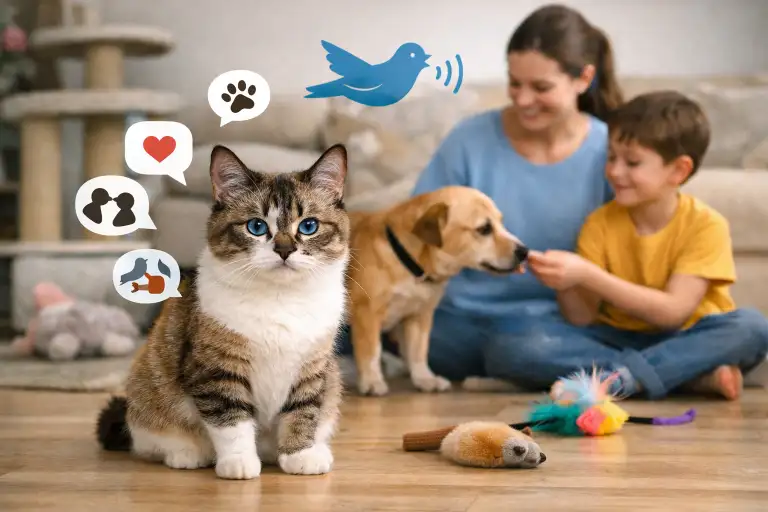
Toybobs can also get along with other cats and pets if they are introduced slowly and safely. They may play gently with other cats, groom each other, or simply observe from a distance. When around dogs or children, Toybobs are usually curious but careful. They may approach slowly and decide how much interaction they want. Playful swats or light chasing are normal behaviors, not signs of aggression.
Here is a quick table to help you understand Toybobs’ social behavior with humans and other pets:
| Social Target | Typical Behavior | What It Means |
|---|---|---|
| Owner | Follows, greets, sits nearby | Shows trust and affection |
| Other Cats | Play wrestling, grooming, or observing | Friendly socialization |
| Dogs | Cautious approach, sniffing, observing | Curious but careful |
| Children | Gentle play or watching | Tolerant and social |
By paying attention to these behaviors, owners can create a safe and happy environment where the Toybob feels comfortable interacting with everyone in the home.
Play, Hunting, and Natural Instincts
Toybobs are very playful and have strong hunting instincts, even inside a home. They enjoy chasing, pouncing, and swatting at toys that move. These behaviors are normal and healthy ways for your cat to use energy and practice skills their ancestors needed in the wild. Playtime is also a way for them to bond with their humans.
Kittens usually have the highest energy and will play for long periods, while adult Toybobs may have shorter, more focused bursts of activity. Some Toybobs also enjoy games that mimic hunting, like chasing small balls, laser pointers, or interactive toys. Providing different types of toys helps keep your cat happy and prevents boredom.
Here is a table to help you understand Toybobs’ play and hunting behaviors:
| Behavior | Example | Life Stage | Owner Tip |
|---|---|---|---|
| Stalking | Toy mouse or laser pointer | Kitten/Adult | Move toys slowly to mimic prey |
| Pouncing | Soft toys, balls | Kitten/Adult | Give space for safe landing |
| Zoomies (sudden bursts of energy) | Running around the room | Kitten | Ensure safe play area |
| Fetch-like play | Small toy returned by cat | Adult | Encourage gentle retrieval |
Watching your Toybob during play helps you see what types of games they enjoy most and what kind of energy level they have. Play also gives them mental stimulation and helps them stay healthy.
Stress, Comfort, and Misunderstood Behaviors
Toybobs show different behaviors when they feel comfortable or a little stressed. Understanding these signs helps owners respond in the right way and avoid misinterpreting normal behavior. Some behaviors that look unusual, like hiding or sudden zoomies, are often normal expressions of comfort, play, or curiosity.
Hiding is a common behavior in Toybobs. They may hide under furniture to feel safe or take a quiet break. Scratching is another normal behavior, used to mark territory and stretch muscles. Vocalizations, like chirping or sudden meows, often show excitement, attention-seeking, or playful energy. High bursts of energy, also called zoomies, are normal and healthy.
Here is a table to help you tell the difference between stress, comfort, and misunderstood behaviors in Toybobs:
| Behavior | Normal vs Misunderstood | What It Means |
|---|---|---|
| Hiding | Normal comfort vs stress if prolonged | Cat is feeling safe or taking a break |
| Scratching | Territory marking vs destructive | Natural behavior, provide posts |
| Vocal bursts | Playful vs annoyance | Observe context, respond calmly |
| Zoomies | Normal energy release | Healthy play, ensure safe space |
By learning to read these behaviors, owners can create a calm and happy environment. Toybobs often communicate their needs through small signals, and paying attention to them helps build trust and a strong bond between cat and owner.
To learn more about the official Toybob breed characteristics, temperament, and history from a respected cat organization, you can visit the Toybob breed page on the International Cat Association (TICA) website: https://tica.org/breed/toybob/

Ata Ur Rehman is the founder of Pet Age in Human Years Calculator, an educational platform that provides age conversion charts and lifespan guides for dogs, cats, birds, and other companion animals. His work focuses on helping pet owners understand how animal ages translate into human years using commonly accepted age conversion formulas and published lifespan averages.
The website compiles breed and species lifespan data from kennel clubs, breed organizations, and general animal lifespan studies to present simple and easy-to-understand guides for pet owners worldwide.
This website was created to centralize animal age conversion charts into one easy reference platform for pet owners.