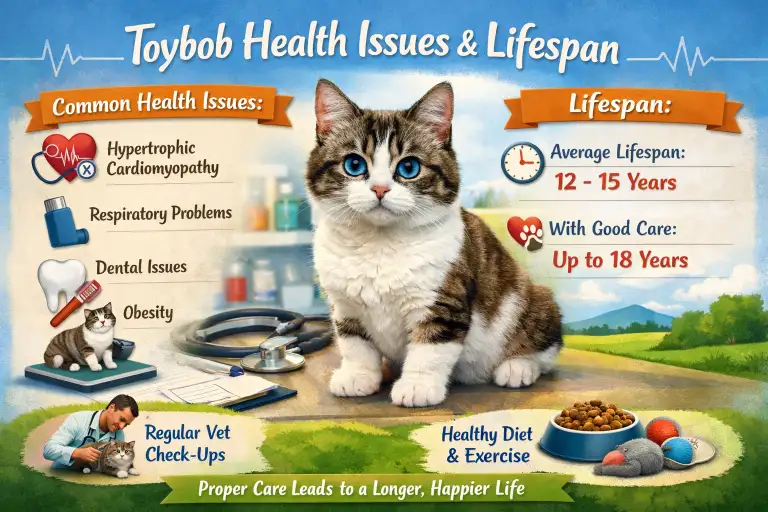
The Toybob is a distinctive small cat breed known for its compact size, playful temperament, and uniquely short, bobbed tail. These charming cats often attract attention for their energetic personality and affectionate nature, making them popular companions for families and single owners alike. Despite their tiny stature, Toybobs are known to be lively, curious, and highly interactive, enjoying playtime, exploration, and bonding with their human companions.
This guide focuses on understanding the general health considerations and lifespan expectations for Toybobs. It covers common health issues, preventive care strategies, and ways owners can support their cat’s quality of life as they age. It is intended for educational purposes only and is not a substitute for professional veterinary advice. Regular veterinary check-ups are essential to maintain your Toybob’s health and well-being.
By learning about typical lifespan ranges, potential health concerns, and preventive care practices, owners can make informed decisions to help their Toybob live a long, happy, and comfortable life.
Lifespan Expectations & Influencing Factors
Toybobs are generally healthy cats, and their lifespan can vary depending on how they live and the care they receive. On average, Toybobs live longer than many other cat breeds when kept indoors. Outdoor cats usually face more risks like accidents, infections, or predators, which can shorten their lifespan.
Several factors affect how long a Toybob may live:
- Genetics: Some cats may inherit traits from their parents that affect health.
- Nutrition: A balanced diet helps maintain a healthy weight and supports organs.
- Activity and environment: Regular play, mental stimulation, and a safe home help overall health.
- Preventive care: Regular vet visits and checkups catch problems early.
Here is a simple comparison of lifespan based on where the Toybob lives:
| Living Situation | Average Lifespan | Notes |
|---|---|---|
| Indoor | 13–16 years | Most Toybobs live long and healthy lives indoors |
| Outdoor | 10–13 years | More risks from accidents and infections |
Understanding these factors helps owners provide the best care for their Toybob. By keeping them safe, active, and well-fed, you can increase the chances of a longer, happier life.
Common Health Issues in Toybobs
Toybobs are usually healthy cats, but like all cats, they can still face some health problems over time. Most of these issues are not unique to Toybobs and are commonly seen in many pet cats. Knowing about them helps owners notice early changes and seek veterinary care sooner.
The most common health concerns seen in Toybobs are often linked to size, lifestyle, and aging, not serious genetic disease. Early care and regular checkups play a big role in keeping these problems under control.
Here is a simple overview of common health issues Toybob owners should be aware of:
| Health Issue | How Common It Is | Early Signs Owners May Notice | Prevention Focus |
|---|---|---|---|
| Dental disease | Common | Bad breath, dirty teeth, sore gums | Regular dental care and vet checks |
| Weight gain (obesity) | Moderate | Less movement, round body shape | Proper diet and daily play |
| Kidney and urinary issues | Less common | Drinking more water, litter box changes | Hydration and routine exams |
| Heart conditions | Rare | Low energy, breathing changes | Vet monitoring and early checks |
| Parasites | Preventable | Scratching, upset stomach | Parasite prevention plans |
Many of these issues develop slowly. Cats often hide discomfort, so small changes in behavior, appetite, or energy can be important clues. Regular vet visits help catch problems early, often before they become serious.
Preventive Care & Supporting Long-Term Health
Preventive care means taking small steps now to help avoid bigger health problems later. For Toybobs, simple daily care and regular vet visits can make a big difference in how long and how well they live.
Routine checkups help vets find health changes early, even before a cat looks sick. Dental care, good food, and regular play also support strong bones, healthy weight, and good organ function.
Here is a simple preventive care checklist for Toybob owners:
| Preventive Care Task | How Often | Why It Matters |
|---|---|---|
| Vet wellness check | 1–2 times a year | Finds health problems early |
| Dental care | Weekly brushing / vet cleanings | Prevents gum disease and tooth loss |
| Healthy diet | Daily | Supports weight and organ health |
| Weight checks | Monthly | Helps prevent obesity |
| Parasite prevention | As advised by vet | Protects against fleas and worms |
| Play and exercise | Daily | Keeps body and mind active |
As Toybobs grow older, their care needs may change. Senior cats may need softer food, easier access to litter boxes, and more rest time. Gentle play and a calm home environment help older Toybobs stay comfortable and relaxed.
Preventive care is not about doing everything perfectly. It is about being consistent and paying attention to small changes over time.
Owner Guidance & Quality of Life Considerations
A good quality of life means your Toybob feels comfortable, active, and happy at every age. Owners play a big role by watching daily habits and noticing small changes early. Cats often hide pain or discomfort, so gentle observation is important.
Some changes are normal as cats grow older, but others may be signs that a vet visit is needed. Paying attention to eating habits, litter box use, energy level, and behavior helps owners respond quickly and calmly.
Here is a simple guide to age-related changes and how owners can support their Toybob:
| Life Stage | Common Changes | How Owners Can Help |
|---|---|---|
| Adult (1–6 years) | High energy, strong appetite | Daily play, healthy food, routine vet visits |
| Mature (7–10 years) | Slightly less activity, weight changes | Monitor weight, adjust diet, gentle exercise |
| Senior (11+ years) | Slower movement, more sleeping | Soft bedding, easy litter access, calm routine |
Owners should contact a veterinarian if they notice:
- Sudden weight loss or gain
- Eating or drinking much more or less than usual
- Changes in litter box habits
- Trouble breathing or walking
- Hiding, low energy, or behavior changes
Supporting quality of life is not about doing everything at once. Small, steady care habits help Toybobs stay comfortable and confident as they age.
For more detailed guidance on feline health and preventive care, you can visit the American Association of Feline Practitioners (AAFP) website: https://catvets.com

Ata Ur Rehman is the founder of Pet Age in Human Years Calculator, an educational platform that provides age conversion charts and lifespan guides for dogs, cats, birds, and other companion animals. His work focuses on helping pet owners understand how animal ages translate into human years using commonly accepted age conversion formulas and published lifespan averages.
The website compiles breed and species lifespan data from kennel clubs, breed organizations, and general animal lifespan studies to present simple and easy-to-understand guides for pet owners worldwide.
This website was created to centralize animal age conversion charts into one easy reference platform for pet owners.